


Andrew
Bondi Junction
Acoustic guitar lessons are suitable for all ages and experience levels, helping students build confidence in chords, strumming, fingerpicking, rhythm, and technique. Whether you’re a complete beginner, an adult starting a new hobby, a teenager learning your favourite songs, a singer-songwriter, or returning to guitar after a break, lessons can be tailored to your goals and skill level.
If you’re located in the Inner West, we have teachers in Marrickville, Croydon Park, Arncliffe, and Camperdown. If you’re in the Eastern Suburbs, we have teachers in Bondi Junction and Paddington. For Southern Sydney and the St George area, our teachers are based in Bardwell Park, Loftus, and Haberfield. We also have teachers in Parramatta for students in Western Sydney, and in Mona Vale for those on the Northern Beaches.
 View Teachers





























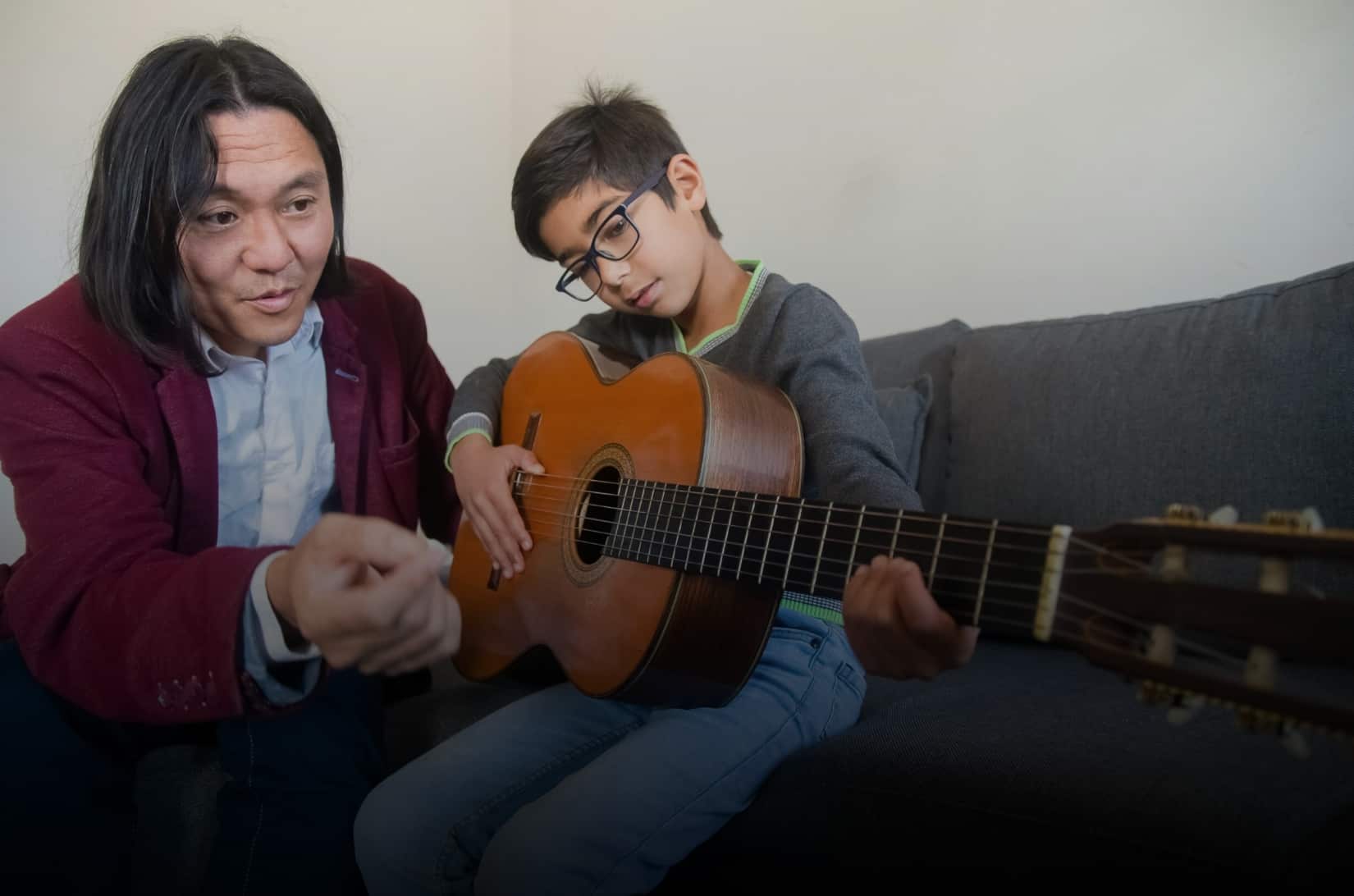
For children, acoustic guitar tuition focuses on making the learning process feel rewarding from the start. Our guitar teachers use age-appropriate songs, simple chord shapes, and structured practice routines to keep younger students engaged while building the finger strength and technique they will rely on for years. Kids who start early often develop a strong musical ear alongside their playing, and many go on to sit AMEB exams as their confidence grows, often alongside our music theory lessons. If you are looking for a guitar tutor for your child, we will match them with a teacher whose personality and teaching style keep them motivated from lesson one.
For adults, the approach is different. Most adults starting beginner acoustic guitar lessons are learning for enjoyment, to finally pick up something they always meant to try, or to get back to an instrument they set down years ago. There is no pressure to perform or sit exams unless that is what you want. Adult learners often progress faster than they expect, particularly when lessons are built around songs they actually want to play. Many of our teachers also offer electric guitar lessons if you are interested in developing both guitar types at the same time.
A good teacher fixes the small stuff that blocks progress: the right fretting pressure, a smoother strumming motion, and practical chord-shape shortcuts. You’ll also learn how to practise songs so your tone and timing improve week by week, not reset every session.

Acoustic guitar lesson prices in Sydney typically range from $60 to $150 per hour, depending on the teacher’s experience, qualifications, and location. Most students can expect to pay between $70 and $110 per hour for lessons with a qualified and experienced acoustic guitar teacher.
Several factors influence the price of acoustic guitar lessons:
Experience and qualifications: Teachers with formal music qualifications, extensive teaching experience, or professional performing backgrounds may charge higher rates. However, the best teacher for you depends on your learning goals, experience level, and budget.
Lesson length: typical lessons run 30, 45, or 60 minutes. For younger children, 30-minute lessons are optimal, while older students and adults typically benefit from 45- or 60-minute lessons.
Online vs in-home: online lessons are often slightly more affordable than in-home lessons because there are no travel costs.
At Sydney Music Lessons, acoustic guitar lessons range from $60 to $130 per hour, with experienced teachers who can help you build strong technique from the very beginning. When you enquire, we’ll match you with teachers in your local area and within your budget, allowing you to choose the right fit with no obligation.
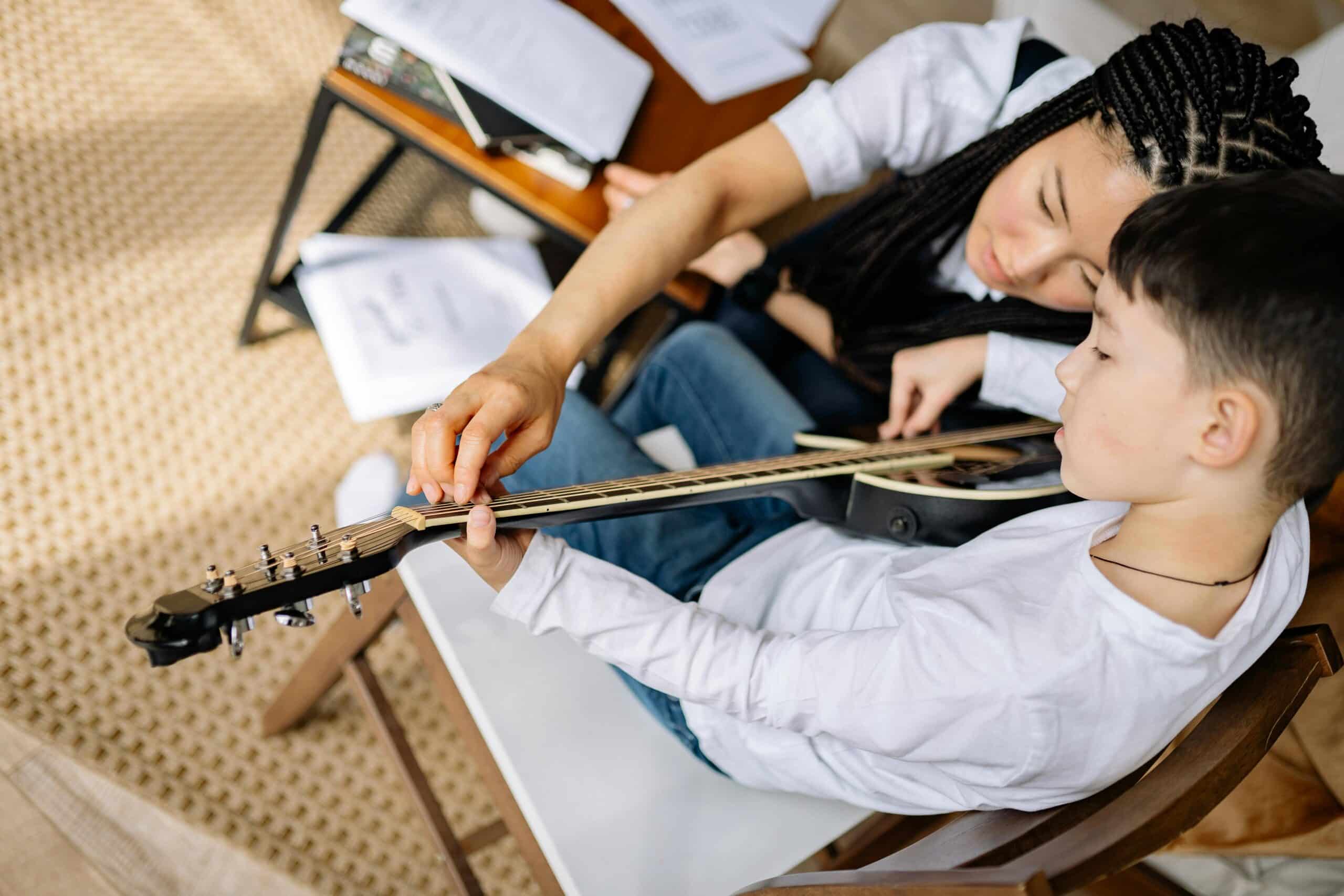
Our guitar teachers offer both online acoustic guitar lessons and in-person lessons across Sydney, giving you the flexibility to choose the format that suits your schedule and lifestyle. Many of our teachers offer both options, while some specialise in one or the other. For acoustic guitar, both formats work well, though in-person lessons have advantages for younger beginners and complete novices, where hands-on technique correction: posture, fretting hand position, picking angle – makes a real difference early on.
Share your goal, current level, and timeline, and we’ll match you with the right acoustic guitar teacher for focused, structured progress.
Learn from the comfort of your own home via Zoom, Google Meets, or your preferred platform
Choose from a wider range of specialist acoustic guitar teachers regardless of location
More flexible scheduling around work and school commitments
No travel time, parking, or traffic delays
More affordable than in-person in most cases
Ideal for adults, returning players, and regional students
Easier to continue lessons while travelling, moving, or living remotely
Australia-wide online acoustic guitar lessons
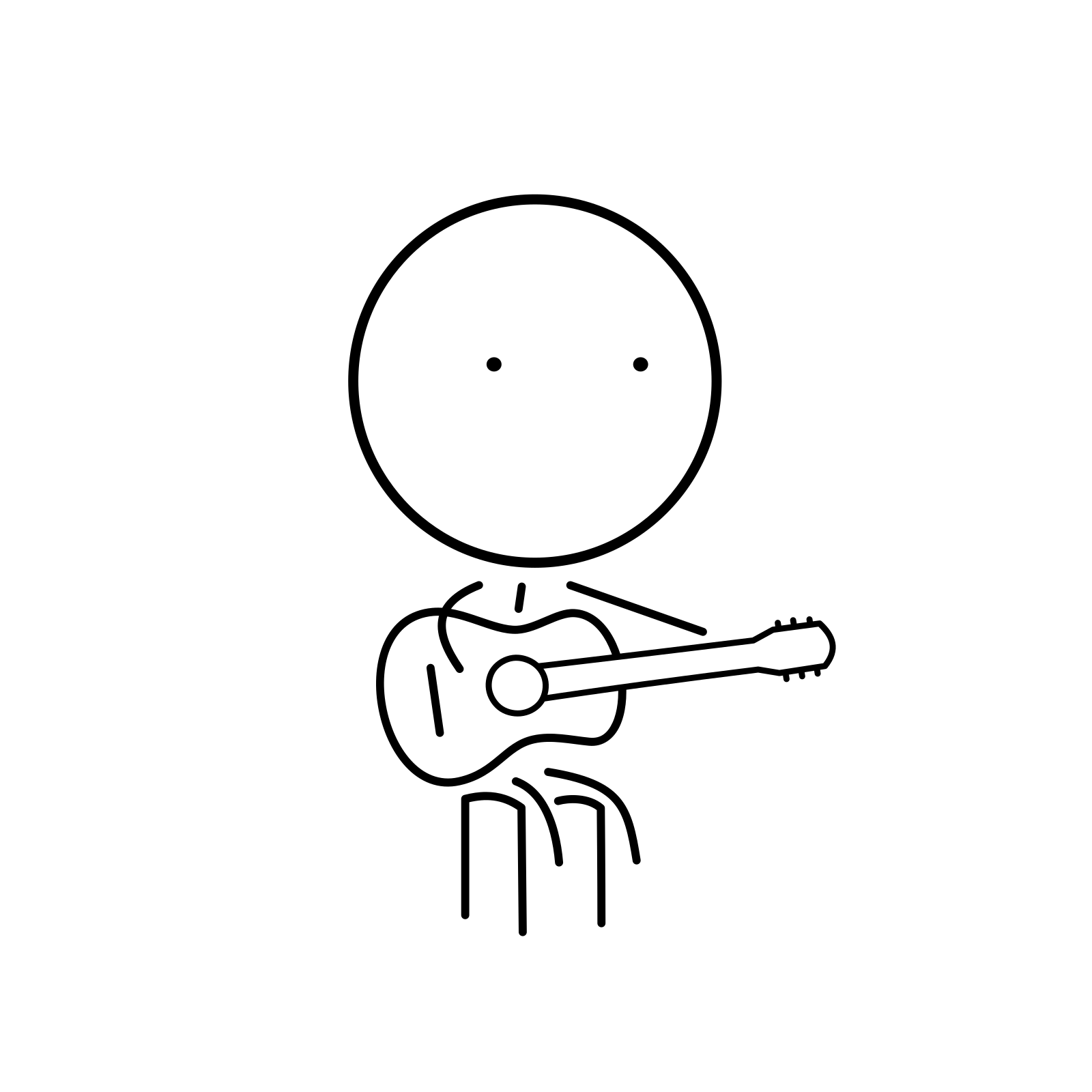
Comfortable seated playing position
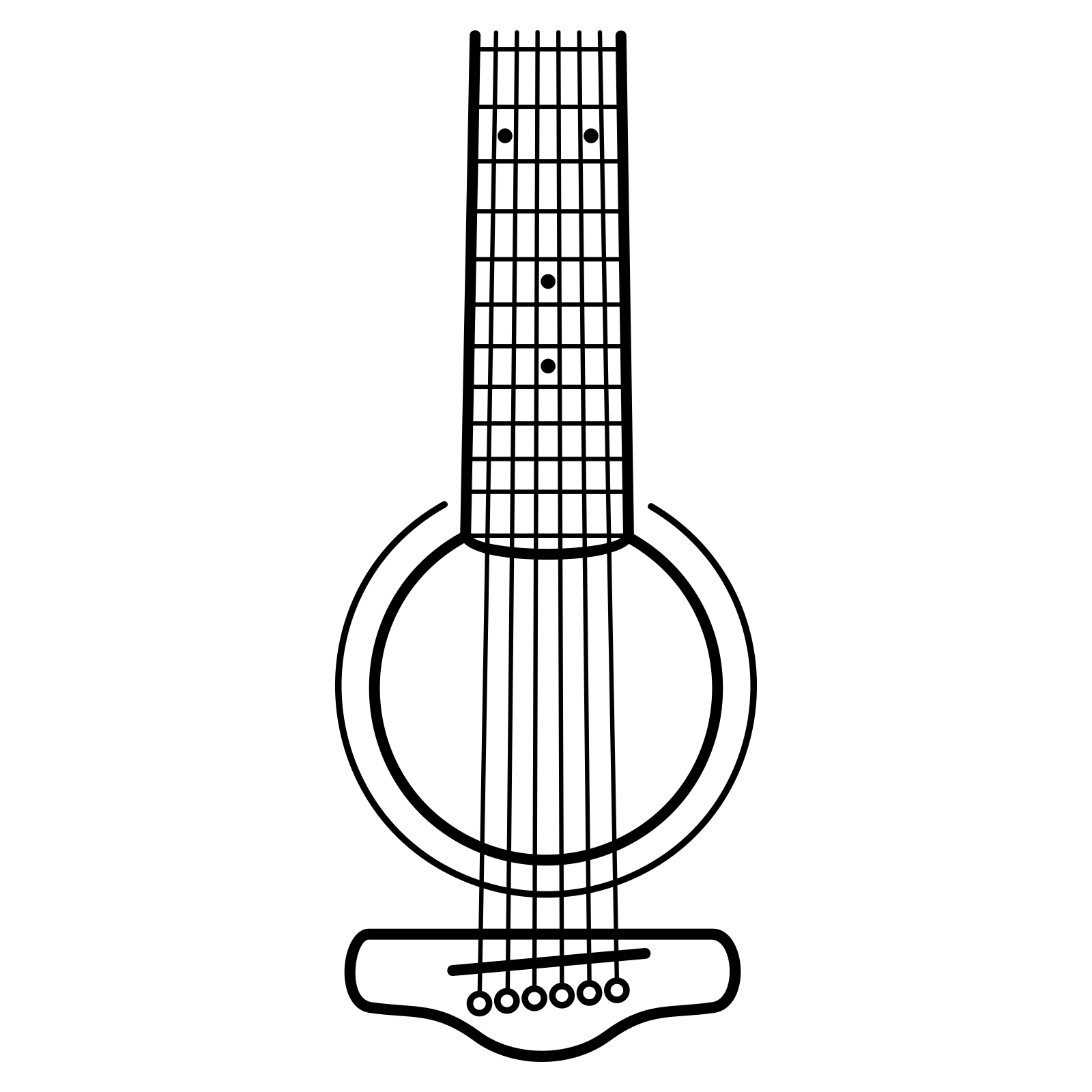
Clean fretting and chord clarity
Strumming patterns and rhythmic feel

Fingerpicking fundamentals

Reading chords, tabs and charts
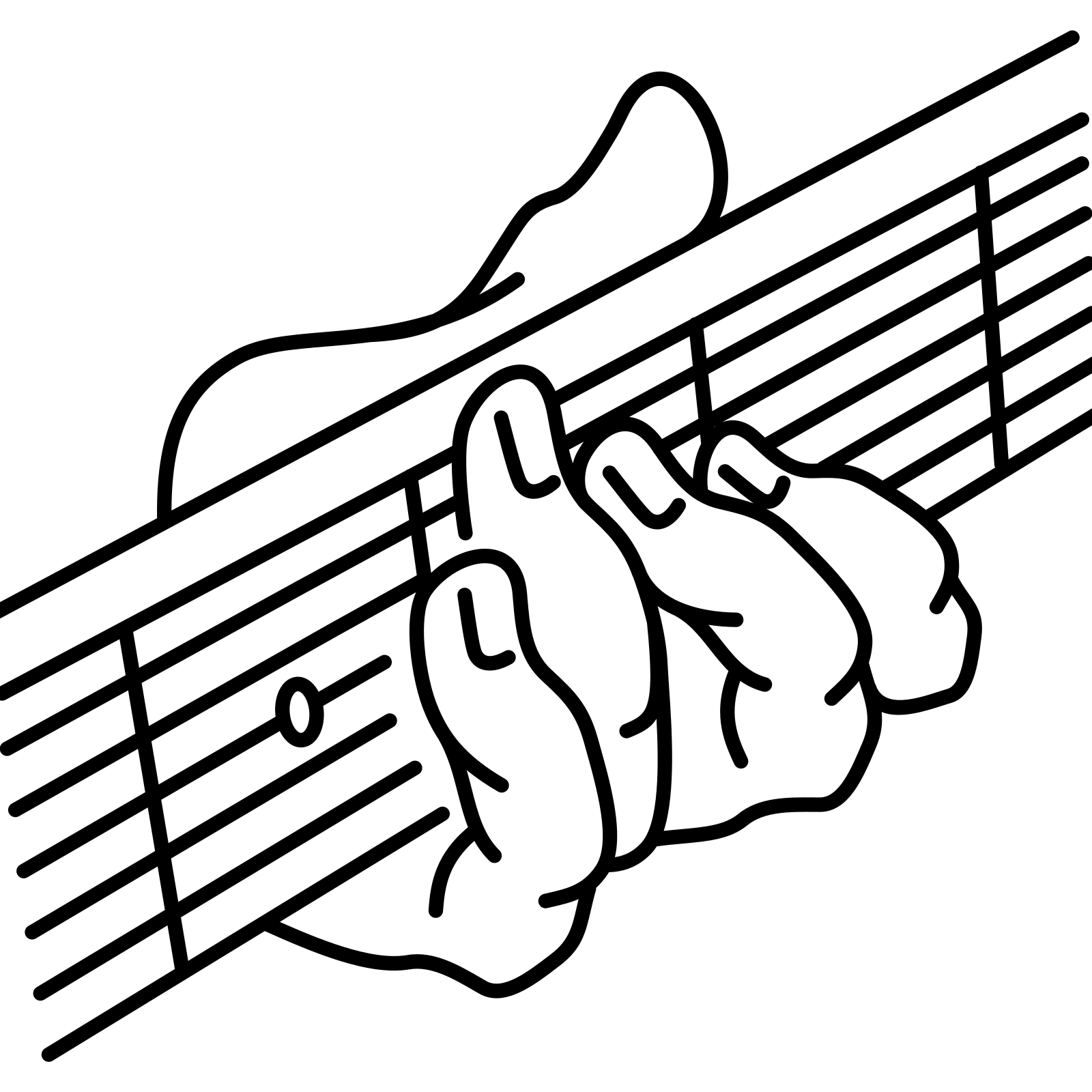
Smooth chord transitions

Song accompaniment and structure

Aural awareness and listening skills
Yes. Having your own instrument lets you practise between lessons. We can guide you toward a reliable beginner-friendly model.
Steel strings require a short adjustment period, while nylon strings are softer on the fingers. Your teacher can help you choose what suits your goals and comfort.
Most students can play simple progressions within a few weeks. More complex strumming or fingerpicking develops with regular practice.
Muted notes come from finger placement or hand angle. Your teacher will show you how to adjust both for clear tone.
Yes. Acoustic guitar is perfect for singers. You’ll learn strumming patterns and rhythms that support your voice.
Either is fine. Many students start with strumming, then add fingerpicking once chord shapes feel comfortable.
No. Acoustic guitar is commonly taught using chord charts and tabs. Notation becomes useful later if you want to expand your skills.
Short daily sessions build progress fastest. Even ten minutes consistently makes a difference.
Yes, as long as the guitar is the right size. We can help you choose an instrument that fits comfortably.
Absolutely. Fingerstyle is a popular pathway, and your teacher can help you build the technique step by step.
Acoustic lessons focus on steel-string technique, strumming patterns, pick use and contemporary styles. Classical training uses nylon strings, fingerstyle technique and formal notation.
I was surprised how quickly I picked up guitar with Roger. The focus on correct posture and technique made it easy to transfer my piano skills and build a solid foundation fast.
He has extensive experience working in various musical contexts with children and adults alike.In the first guitar lessons, you’ll lock in posture, pick/strum comfort, and clean fretting so notes don’t buzz and your hands don’t fatigue. You’ll likely learn a few core open chords and a simple strumming pattern, then use them on a real song straight away.
Typical focus: setup, clean fretting, open chords, basic strumming