

Brenda
Epping
Tuba lessons help students develop a strong, controlled sound while improving breathing, tone, range, music reading, and ensemble skills. Lessons are suitable for beginners, school band students, high school musicians preparing for performances, auditions or exams, adults joining community bands, and returning players looking to rebuild their confidence and technique.
We have a wide selection of teachers for online and in-person lessons. Currently, we have teachers based in Epping and Croydon for those living in or near Northern Sydney and the Inner West.
Find a teacher on the map below and enquire — we’ll match you to the right fit.
 View Teachers
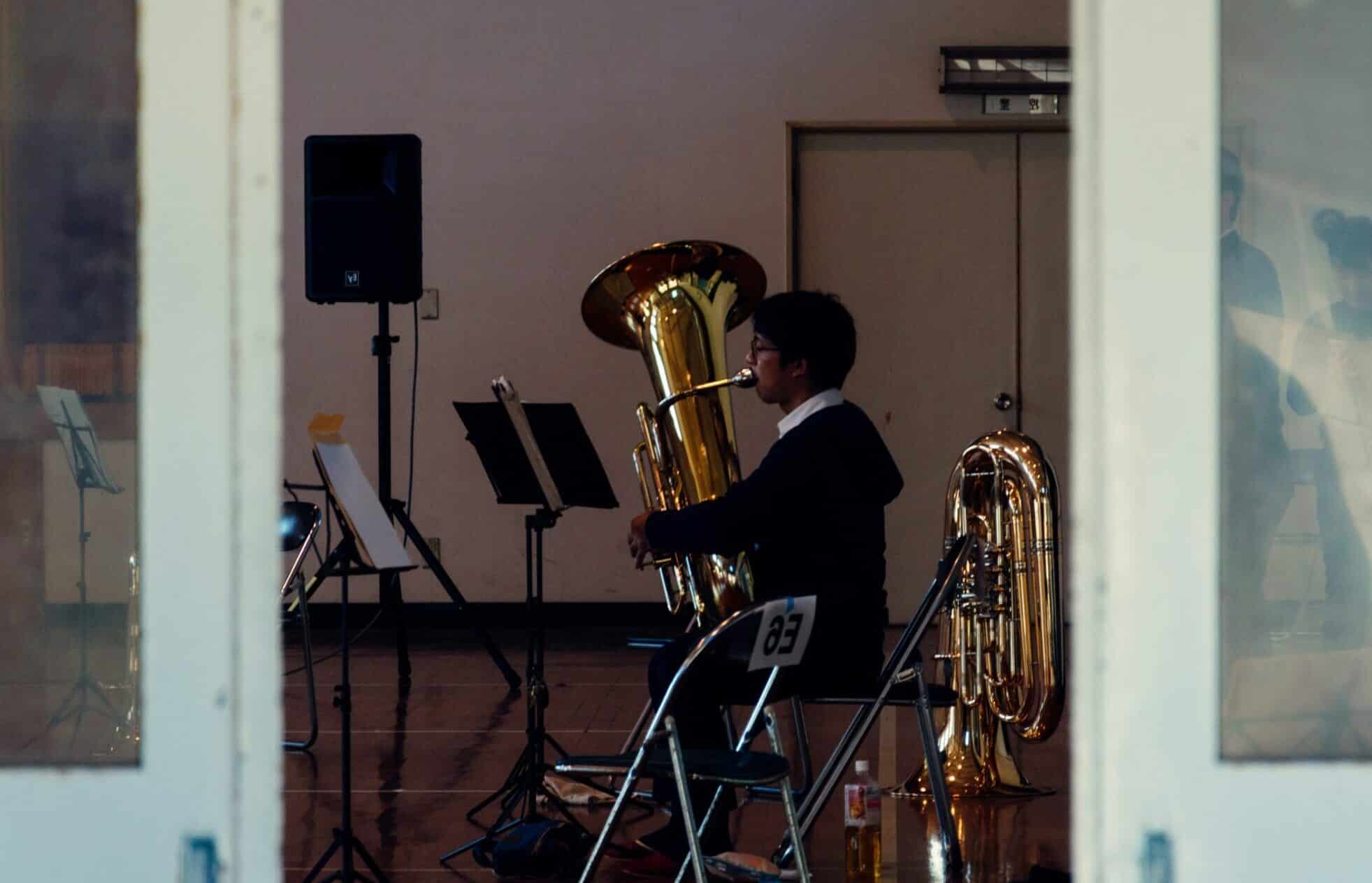
For children, tuba lessons focus on developing strong fundamentals from the very beginning. Our tuba teachers help young students build proper breathing technique, posture, embouchure, and tone through engaging exercises, familiar songs, and structured practice. As their confidence grows, students develop the skills needed to perform in school bands, youth ensembles, and, if they choose, AMEB/ABRSM exams. If you’re looking for a tuba teacher for your child, we’ll match them with someone whose teaching style keeps them motivated while building excellent technique.
For adults, lessons are tailored around your individual goals and experience. Whether you’re picking up the tuba for the first time, returning after years away, or joining a community concert band, lessons move at a pace that suits you. There is no pressure to perform or sit exams unless that’s something you want to pursue. Many adult students enjoy learning their favourite pieces while improving their tone, endurance, range, and overall musicianship in a relaxed, supportive environment.
Prefer a smaller instrument? See our euphonium lessons page.
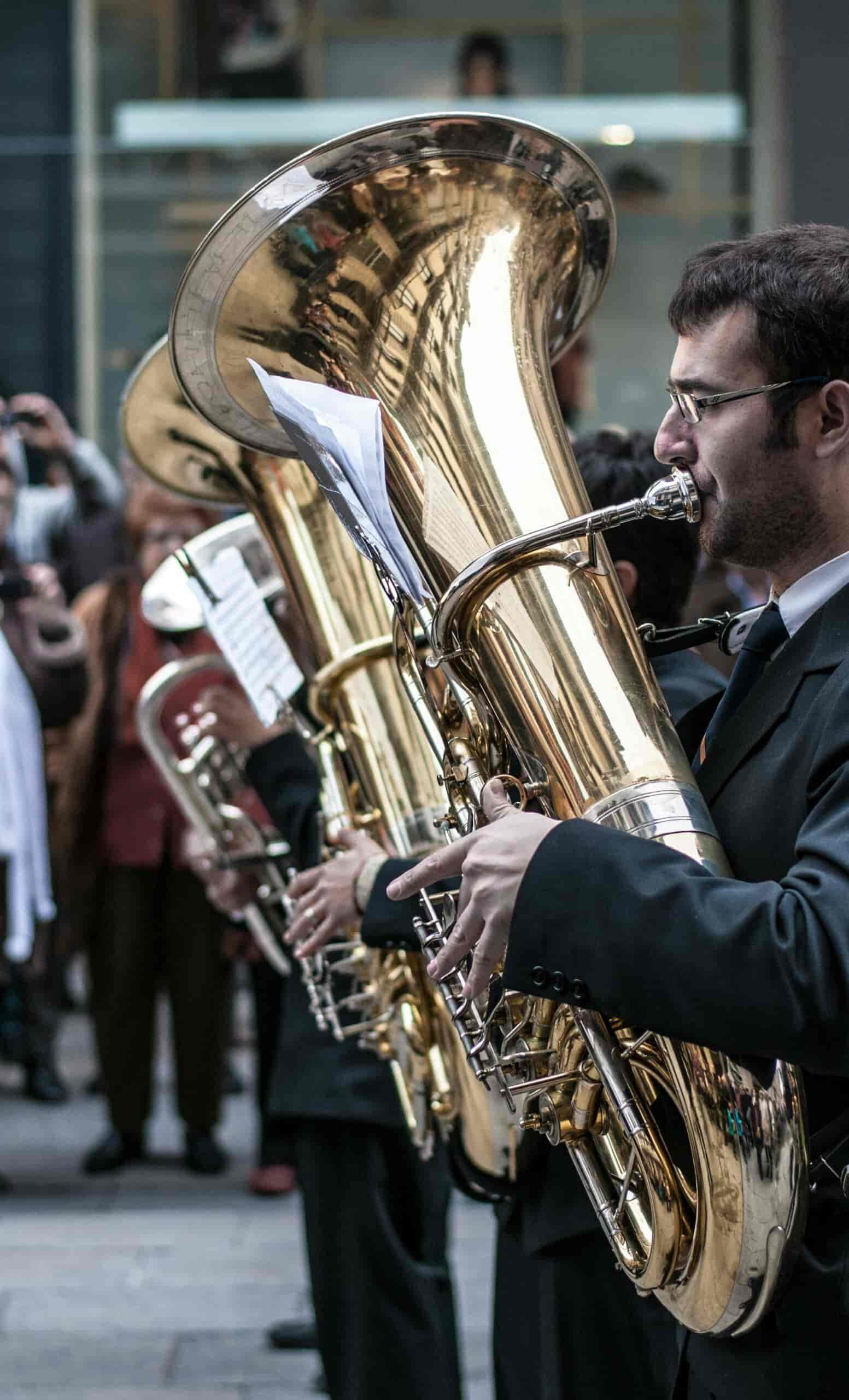
Tuba lesson costs in Sydney typically range from $60 to $180 per hour, depending on the teacher’s experience, qualifications, and location. Most students pay between $90 and $130 per hour for an experienced, qualified tuba teacher.
Several factors influence the price of tuba lessons:
Experience and qualifications: teachers with professional orchestral experience, conservatorium qualifications, or extensive teaching backgrounds generally charge more than those who are newer to teaching. The right choice depends on your goals, experience level, and budget.
Lesson length: most tuba lessons run for 30, 45, or 60 minutes. Younger beginners often start with 30-minute lessons, while intermediate, advanced, and adult students usually benefit from 45 or 60-minute sessions to allow time for technique, repertoire, and breathing exercises.
Online vs in-home: online tuba lessons are often slightly more affordable than in-home lessons, as teachers do not need to factor travel time into their pricing.
At Sydney Music Lessons, our tuba teachers charge between $120 and $140 per hour. We carefully select experienced teachers who build strong technique from the outset, helping students avoid developing bad habits that can be difficult to correct later. When you enquire, we’ll match you with suitable teachers in your area and preferred price range, allowing you to choose the right fit with no obligation.
Our tuba teachers offer both online tuba lessons and in-person lessons across Sydney, giving you the flexibility to choose the format that best suits your schedule and learning style. Many of our teachers offer both options, while others specialise in either online or face-to-face tuition. Both formats can be highly effective, although in-person lessons are often recommended for beginners, where hands-on guidance with breathing, posture, embouchure, and instrument handling can make a significant difference.
When you enquire, we’ll match you with a tuba teacher who offers your preferred lesson format, within your area and price range.
Learn tuba online via Zoom, Google Meet, or your preferred platform from home
Online tuba lessons available Australia-wide
More affordable than in-person lessons in most cases
Flexible scheduling that fits around work or school
Wide variety of online tuba teachers to choose from any location
Ideal for busy adults, returning players, and regional students
No cancellations due to traffic, parking, or travel delays
Access to specialist online tuba teachers regardless of your location
Breath support for full resonance
Embouchure shaping without pressure
Smooth, efficient valve technique
Comfortable posture and horn handling
Clean articulation and breath timing
Pitch accuracy across low register
Reading tuba notation confidently
Expressive tone and dynamic shaping
You’ll learn proper breathing, first notes, posture, instrument setup and simple exercises to build confidence.
Not at all. Producing a warm tone is easier than many expect, and lessons make technique clear and manageable.
No. Renting is very common. Your teacher can guide you toward suitable, student-friendly models.
10–20 minutes daily is a great minimum for building strong breath control and endurance.
Yes. Tuba players often join ensembles within a few months because their role is essential.
Concert band, brass band, orchestral repertoire, jazz tuba lines, film music and melodic solo pieces.
Yes, depending on size and strength. Many younger players use smaller ¾ tubas for comfortable handling.
Yes — you can practise quietly by focusing on soft long notes, lip slurs, articulation, and breathing drills. A practice mute can also help, but some mutes change resistance and intonation, so a teacher can show you how to use one without wrecking your feel. This is a common thing people work on in tuba lessons.
Generally, no. Puffing cheeks usually means you’re leaking air and losing control. In lessons, you’ll aim for firm corners, relaxed centre, and steady air support — you can play powerfully without ballooning your cheeks.
No. Lip size isn’t the deciding factor — technique is. What matters is how you set your embouchure, how you breathe, and how you manage pressure on the mouthpiece. Tuba lessons help you find a setup that suits your face so you’re not fighting the instrument.
Think “fast, relaxed inhale” and “supported, controlled exhale”. Most beginners either over-tense, under-breathe, or blow too hard. In tuba lessons you’ll learn how to take in enough air quickly, keep your chest/shoulders relaxed, and feed a steady airstream for a stable tone and better range.
For many beginners, the “best” option is the one that’s playable, the right size, and in good condition — not necessarily the fanciest model. Renting/hiring is often smarter at the start. A teacher can advise on size (including smaller options) and what to look for so you don’t waste money on a tuba that fights back.
They vary a lot, but “heavy and awkward to carry” is a real factor for younger students. If weight/size is an issue, a teacher can suggest smaller setups and show a safe holding posture so you don’t build tension during tuba lessons.
Thank you Brenda Yeo for your guidance and mentorship. We couldn’t have asked for a better teacher. His achievement is truly a testament to your patience, dedication, and passion. Thank you for nurturing his love for music and for instilling in him the importance of musical technique, interpretation, and a deep appreciation for music.
I met Simon around 10 years ago a friend of mind recommended him to me. I spent 11 years in the RAN Band as a trombone player, and I wanted to improve my technique.
Simon helped me gain confidence and made changes to my technique to my playing. I would recommend Simon to any beginner to advanced player that is interested in improving their technique and performance abilities.
In the beginning, we’ll make sure posture, breathing, and a relaxed embouchure are developed so you can produce a full sound without forcing. You’ll learn clean note starts, basic valve coordination, and play simple bass lines early — focusing on steady airflow and a centred tone.
Typical focus: breath support, embouchure, big tone, valve basics, first basslines