

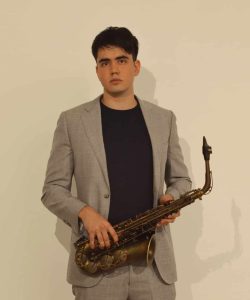
Luka
Kogarah
Last updated 21 November 2026
Sydney Music Lessons matches you with experienced, vetted saxophone teachers across Sydney. We currently list more than 12 saxophone teachers across more than 10 Sydney suburbs (and growing), teaching alto and tenor for AMEB exams, jazz, pop and school band. Tell us your suburb, schedule and goals and we match you with a teacher for home, studio or online lessons.
Luka, the founder, meets every teacher before they join and teaches saxophone himself. Every teacher we place with children has passed a background check such as a Working with Children Check.
We cater to all areas of Sydney including the Inner West, North Shore, Western Sydney, Kogarah, Frenchs Forest and Seven Hills. We have dedicated saxophone teachers in Hurstville, Chatswood, Burwood, Epping and Parramatta, with teachers across many surrounding suburbs as well.
 View Teachers
Luka

Diamantina
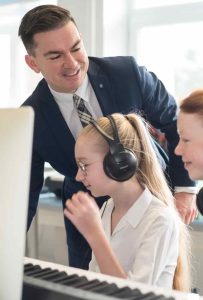
Jaime

Matthew
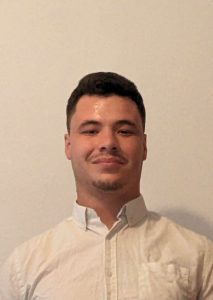
Anton (Online)
Edward
Benjamin

Caleb
Zoe
Brian
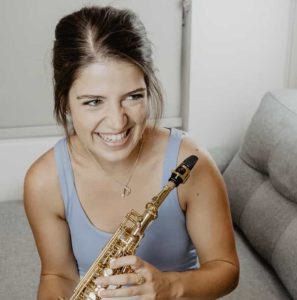
Kristina
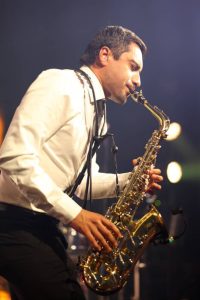
Andres
Daniel

Imogen
Where our saxophone teachers are based and what they charge, as at November 2026. Many also teach online or travel to you, so tell us your suburb and we will find the closest match.
| Area | Teachers | Typical rate (median) | Suburbs |
|---|---|---|---|
| Inner West & City | 4 | $115/hr ($50 to $130) | Belmore, Glebe, Marrickville, Strathfield |
| Northern Sydney | 5 | $75/hr ($70 to $100) | Beecroft, Epping, Frenchs Forest, Hornsby |
| The Hills & Western Sydney | 3 | $90/hr ($75 to $100) | Norwest, Seven Hills, West Pennant Hills |
| St George & South | 2 | $90/hr | Kogarah, Riverwood |
We teach children, teenagers and adults, and every teacher has the students they love teaching most. We’ll match you with a teacher who enjoys your age group and your goals, whether that’s school band, AMEB exams, jazz or just playing for fun.
Kids: 10 to 12 is the most comfortable age to start saxophone, because hands are big enough to reach the keys. Eight or nine is possible too. The stretch can be eased by taking off a couple of rarely used left-hand keys (they go back on later), and starting early leaves a child better prepared than waiting. Under eight is difficult, because the neck strap pulls a small child’s neck down. Lung power matters less than technique, so young kids can still get a good sound. Recorder is a great first step, and a 45 minute weekly lesson suits most kids.
Adults: there’s no pressure to perform or sit exams unless you want to. Most adults come to learn for enjoyment, pick up a new hobby or return after years away. Some then join a band or a community orchestra, and others work through the AMEB grades. Adults can usually manage a full one hour lesson.
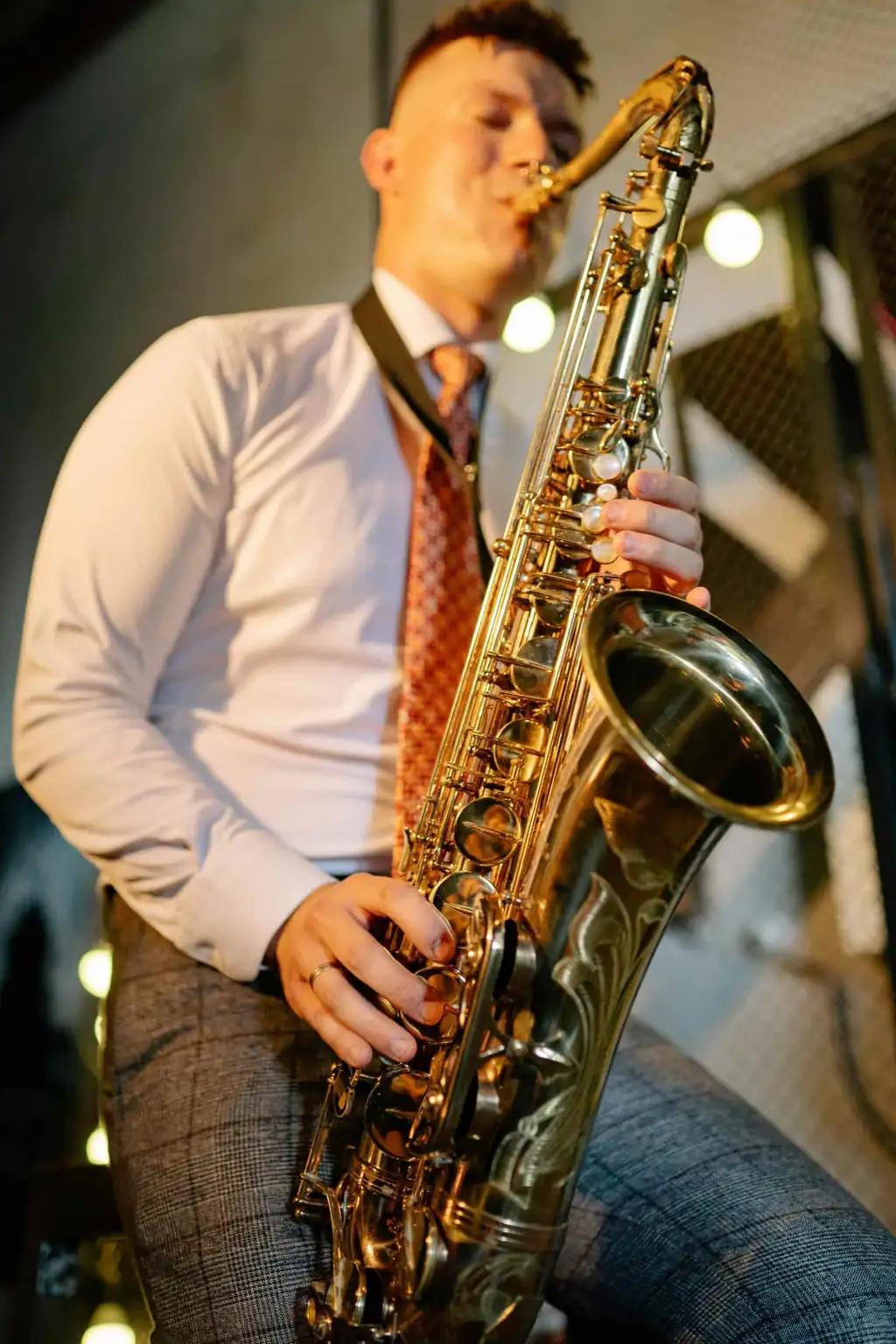
Saxophone lessons with our teachers cost between $50 and $130 an hour. The median is $90 an hour, and half of our saxophone teachers charge between $75 and $100. The teacher’s rate is the full price, with no booking or admin fees on top.
Here is how our saxophone teachers’ hourly rates broke down in November 2026. We keep adding teachers, so the cards above show the current list:
For comparison, the Music Teachers’ Association of NSW 2026 recommended base rate is $115 an hour excluding GST ($126.50 including GST). In November 2026, 12 of our 14 saxophone teachers charged less than that.
What changes the price:
Experience and qualifications: teachers with a conservatorium degree, diplomas or years of gigging and teaching usually charge more, and often help students progress faster.
Lesson format: online saxophone lessons are often cheaper than in-person ones. Teachers who travel to you charge a similar hourly rate plus a travel fee that depends on the distance. Studio and online lessons have no travel cost.
Lesson length: one hour is best if you can concentrate for it, because you get the most out of each lesson. If an hour is too much, 45 minutes is the next best, then 30. Most kids starting at 10 or older do well on 45 minutes.
How billing works: you pay for your first lesson on its own. Some teachers offer a free trial lesson, and most charge their normal rate, so you can try a teacher for the price of one lesson. If you want to continue, we bill the remaining weeks of the term.
We also offer piano, guitar and clarinet lessons. When you enquire, we match you with teachers in your area and price range, with no obligation.
Saxophone suits online lessons better than most instruments. You can hold it up to the camera to show a fingering or the mouthpiece, a teacher hears it clearly when the set-up is right, and sheet music can be sent straight to the computer. It needs much less of a dedicated set-up than a piano, which sits on the floor and is harder to show. Online lessons are often cheaper than in-person ones too, so they’re well worth considering.
In-person lessons still help absolute beginners, because the teacher can correct posture, breathing and embouchure (your mouth shape) hands-on. When you enquire we match you with a teacher who offers the format you want, in your area and price range.
Posture and relaxed hand position

Breath support and airflow control
Embouchure shaping and tone
Reading saxophone notation
Smooth finger coordination
Articulation and phrasing
Scales, patterns and technique
Aural skills and intonation awareness
Saxophone lessons with our teachers cost between $50 and $130 an hour, with a median of $90 an hour. Half of our saxophone teachers charge between $75 and $100. The teacher’s rate is the full price, with no booking or admin fees. Online lessons are often cheaper than in-person ones. See the cost section above for the full breakdown.
Ten to twelve is the most comfortable age, because hands are big enough to reach the keys. Eight or nine is possible: a couple of rarely used left-hand keys can be taken off to make reaching easier and put back later, and starting early gets a child more ready than waiting. Under eight is usually too hard, because the neck strap drags a small child’s neck down. Lung power matters less than technique, and recorder is a great place to start.
It’s usually easy to start, and many students get a nice first sound within a few lessons. Good tone, tuning and control take consistent practice, and a good teacher guides you through the usual early problems.
Alto, for almost every beginner. It’s smaller, easier to handle and easier to play. A confident adult can start on tenor if they’re comfortable holding it and pushing more air. Soprano is harder because the smaller mouthpiece needs a more precise embouchure, and baritone needs a lot of air and strength to hold, so it’s out of the question for kids. Play those only if you really want to.
Rent first. There’s no reason to buy until you know you’ll keep playing, although buying later helps firm up your commitment. The safest buy is a new student alto such as the Yamaha YAS-280, which Australian retailers listed at around $2,000 to $2,300 in November 2026. A good used saxophone can be cheaper if a teacher or technician checks it has no mechanical faults. Very cheap online or supermarket saxophones are riskier: many are poorly built and need repairs, and repairs can mean a long wait.
Buy a box of reeds, and a neck strap. For a beginner, Vandoren size 2 reeds are what we recommend (size 1.5 if size 2 feels too hard), and cheaper brands such as D’Addario are fine too. A reed lasts at least a month, or two to three weeks if you practise a lot. Replace it when your sound goes thin and a new one sounds much better, and be careful not to break the thin tip. You can use the mouthpiece that comes with the saxophone. If you want a better one, the Selmer S80 has a warm, classical tone and is versatile.
Your teacher shows you how to assemble, clean and pack away the saxophone, then your first notes, usually B, A and G. You might learn a simple song like Hot Cross Buns, and some students explore a few notes above or below. The goal is a first sound that sounds nice. If you don’t get a sound in the first lesson, that’s normal.
Most students sound good within two or three lessons. By the end of the first month you should play a few simple songs, start scales and hold a steady, in-tune tone. By month three you can work on harder pieces. Reaching a high level takes years, and it’s a long journey many students enjoy, from AMEB grades through to playing in a band.
No sound is usually too little airflow or a poor seal around the mouthpiece. Seal your lips evenly, not too tight and not too loose, and push your air properly. Squeaks can come from too much air, biting the reed with your bottom lip (or not enough lip), or playing from your throat instead of your stomach. Sore lips and jaw are normal: take breaks and you’ll build endurance. Running out of breath is normal too. To build lung capacity, breathe in, then breathe out as slowly as you can for as long as you can, and try to beat your record. These early problems are common, and a good teacher guides you through them.
One hour is best for most people. If you can’t focus for an hour, do 45 minutes, and if that’s too much, 30 minutes. Because kids usually start saxophone a bit older, 45 minutes works for many of them. Anyone with the attention span for an hour should do an hour to get the most out of each lesson.
Weekly lessons are best, because regular feedback means faster progress. Practise a little every day. Twenty minutes a day is plenty as long as it’s quality practice.
Beginners start by learning notes and playing songs from those notes, then move on to reading sheet music. You can also learn songs you love to stay motivated and enjoy the lessons.
Yes. Many adults start from scratch and some join a band and become part of a community orchestra. Adults can usually manage a full one hour lesson and can play a larger instrument like tenor if they want.
We’d recommend saxophone first, because it’s generally the easier instrument, but it’s a personal preference. If you like the sound of clarinet more, start with clarinet. For young children, recorder is a great place to start before either.
Yes. Saxophone is one of the easier instruments to teach online. You can hear it clearly when the set-up is right, hold it up to show buttons and fingerings, and read sheet music on the computer. It needs much less of a dedicated set-up than a piano, and online lessons are often cheaper than in-person ones.
Self-teaching is fine at the very start. To get properly good over the long term, you realistically need lessons, and that’s true of any instrument.
Yes, if everyone has their own saxophone, you’re at the same level and you share the same goals. Private one-on-one is still the most effective, because all the teacher’s attention goes to you. If you want a group for the fun, friends can share a lesson, and our teachers can teach more than one student in a private lesson if everyone has their own instrument.
Usually yes. Just avoid playing too early or too late, so not before about 8 or 9 am and not after about 8 or 9 pm.
The most requested are AMEB classical and jazz or improvisation. Our teachers cover many genres and styles, so we can match you with the right teacher for yours. We recommend AMEB for almost everyone, because it gives you a system where you level up.
Ideally once a year, and at least once every two years. Costs vary depending on where you go, and some repairers have long wait times. If you need help finding a repairer with a fair price and a short wait, let us know and we’ll try to help.
Yes. You pay for your first lesson on its own. Some teachers offer a free trial lesson, and most charge their normal rate, so you can try a teacher for the price of one lesson. If you want to continue, we bill the remaining weeks of the term.
Switching teachers is easy. Tell us what’s missing and we’ll match you with someone who suits your child better.
He has helped my daughter achieve an A mark for Grade 4 and 5 saxophone comprehensive exams. She is now working towards Grade 6 exam. I would recommend Luka as a saxophone teacher.Sima
Luka has been teaching my son both piano and saxophone for the past five years, and we feel incredibly fortunate to have found such an inspiring teacher.
What sets Luka apart is not only his musical expertise but also his thoughtful and effective approach to teaching. He has a unique ability to understand how my son learn and to explain musical concepts in a clear, engaging way. His lessons are always tailored to help my son make consistent progress while genuinely enjoying the learning process.
Over the years, Luka has inspired my son to develop a real love for music. He is a dedicated teacher who truly cares about his students’ growth. Luka often goes the extra mile to ensure my son understand not just how to play but how to practise effectively.
I highly recommend Luka to any parent looking for a passionate, knowledgeable, and genuinely dedicated piano or saxophone teacher.
David
We never have to ask him to practice, he plays for his own pleasure, and with a new confidence.Kristen
Jackson began band in Year 3 in 2025, and we feel very fortunate to have found Zoe. She
is incredibly patient, kind and nurturing, and has played a significant role in helping him
develop both confidence and a genuine love for the saxophone. Her gentle approach
creates a supportive learning environment without placing undue pressure on her
students.
Zoe is also a highly skilled and experienced saxophonist, which gives us great confidence
in both her teaching and her musical ability. She is consistently punctual, committed, and
dedicated — continuing lessons even during school holidays.
Her warm and encouraging demeanour is one of her greatest strengths, and I truly believe
Jackson’s passion for music will continue to flourish under her guidance.I would highly recommend Zoe to any student seeking a dedicated and inspiring music teacher.
Amy
Zoe has been my daughter’s saxophone tutor for the past year. Having no prior experience playing in a band, my daughter was quite apprehensive to begin with. Zoe’s patience, encouragement, genuine care for her students and natural ability to establish rapport with children has motivated my daughter to take a huge leap in her music journey. She now looks forward to her lesson with Zoe each week.
Ada
She helped me improve after a lot of self-study during COVID, and brought some much needed discipline to my practice, as well as helping me to gain the confidence to improvise. Working with Kristina is fun and engaging and the hour lesson always flew by. She has a lot of musical knowledge to share, and would love to work with her again.Andrew
I’m making real progress with my saxophone playing and would recommend her to anyone wanting to take up an instrument in later life.Sarah
“Andres is an exceptional teacher who meets you where you need to be. His lessons are engaging, dynamic and fun. I learn so much in the space of an hour, and his teaching has helped me find real joy in playing an instrument again. Best of all, Andres is always encouraging and supportive, making the learning experience enjoyable and motivating.”
Cindy
Daniel has been a great teacher for my child who was completely new to saxophone. He took the time to understand my child and what he was interested in, and adapted the lessons to suit him. My child really enjoys the lessons and has become much more interested in playing. We’re very happy with Daniel.
Frank
Daniel has been really helpful with my son‘s saxophone and AMEB preparation. He first assessed his level and talked through his goals, and the lessons are always clear and practical. My child knows what he needs to work on after each lesson. Very happy with Daniel as a teacher.
William
Your teacher shows you how to assemble, clean and pack away the saxophone, then your first notes: B, A and G. A simple song like Hot Cross Buns is often learnt in the very first lesson. Getting a first sound out can take a bit longer, and that is normal. Most students sound good within two or three lessons.
Typical focus: assembly and care, posture, embouchure, breath, first notes, first tune