

Adele
Newtown
Sydney Music Lessons pairs students with reliable, professional viola instructors throughout Sydney. Our mission is to help you discover a teacher who fits your unique goals, learning pace, and availability.
Our network includes experienced viola teachers in areas such as Newtown and Canterbury. We thoroughly vet every teacher, focusing on finding the best personal connection for the student rather than just the nearest location.
Browse our viola teachers below and reach out! We’ll find the perfect match for you.
 View Teachers
Whether you are looking for viola lessons for kids or viola lessons for adults, our viola teachers adapt each session to your experience level, goals, and learning style.
Viola lessons for kids focus on building strong musical foundations from the start. Students develop essential skills such as proper posture, bow hold and technique, left-hand positioning, through a combination of structured exercises and practical playing. Learning the viola also supports cognitive development, fine motor skills, and confidence. Many young students enjoy working towards AMEB exams or school ensemble performances as well. If you are looking for a viola teacher for your child, we will match them with someone who can keep lessons fun and appropriately structured while nurturing good habits early.
Viola lessons for adults are typically more goal-oriented and flexible. Some students are complete beginners, while others are returning to the instrument after years away. There is no requirement to take exams unless desired. Many adult learners focus on personal enjoyment, stress relief, or mastering beautiful classical pieces, folk music, or other styles they love. Our teachers tailor lessons to your musical interests and schedule, helping you build skills progressively while enjoying the rich, warm tone of the viola at your own pace.
Many viola students are also interested in our violin lessons.
Our viola teachers charge between $90 and $150 per hour, and we focus on connecting students with experienced instructors who can develop strong foundations from the beginning.
Several factors can influence the cost of viola lessons:
If you enquire, we’ll match you with suitable teachers based on your location, goals, and budget, with no obligation to book.
Viola teachers offer both online viola lessons and in-person lessons across Sydney, giving students flexibility based on their schedule, location, and learning preferences. Many of our teachers offer both formats, while others specialise in one.
Both options can be effective for learning the viola.
Online lessons are convenient and allow students to learn from home
In-person lessons are particularly helpful for beginners who benefit from hands-on guidance with posture, bow hold, left-hand positioning, and intonation.
Proper posture and relaxed setup
Bow technique for warm tone
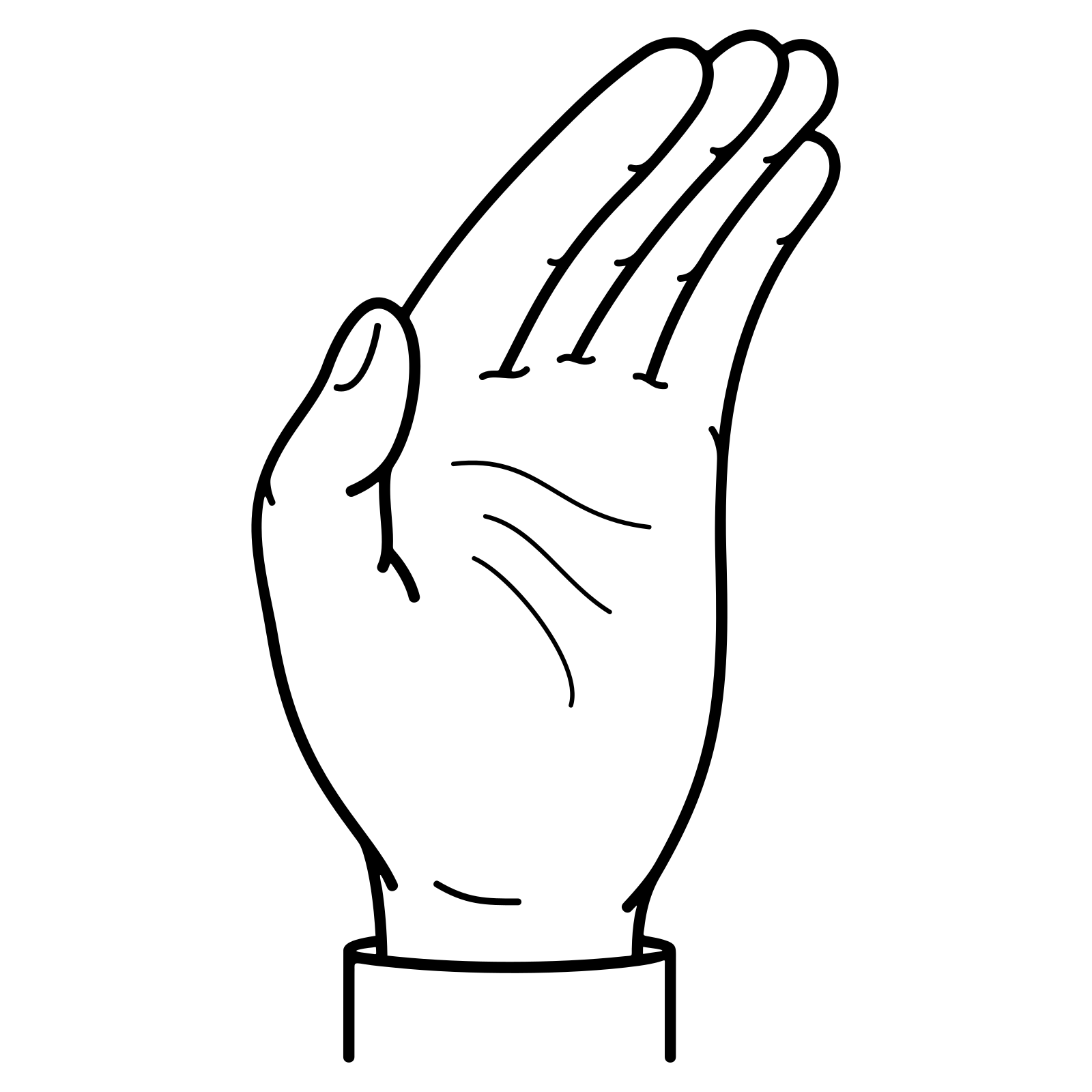
Left-hand shape and shifting
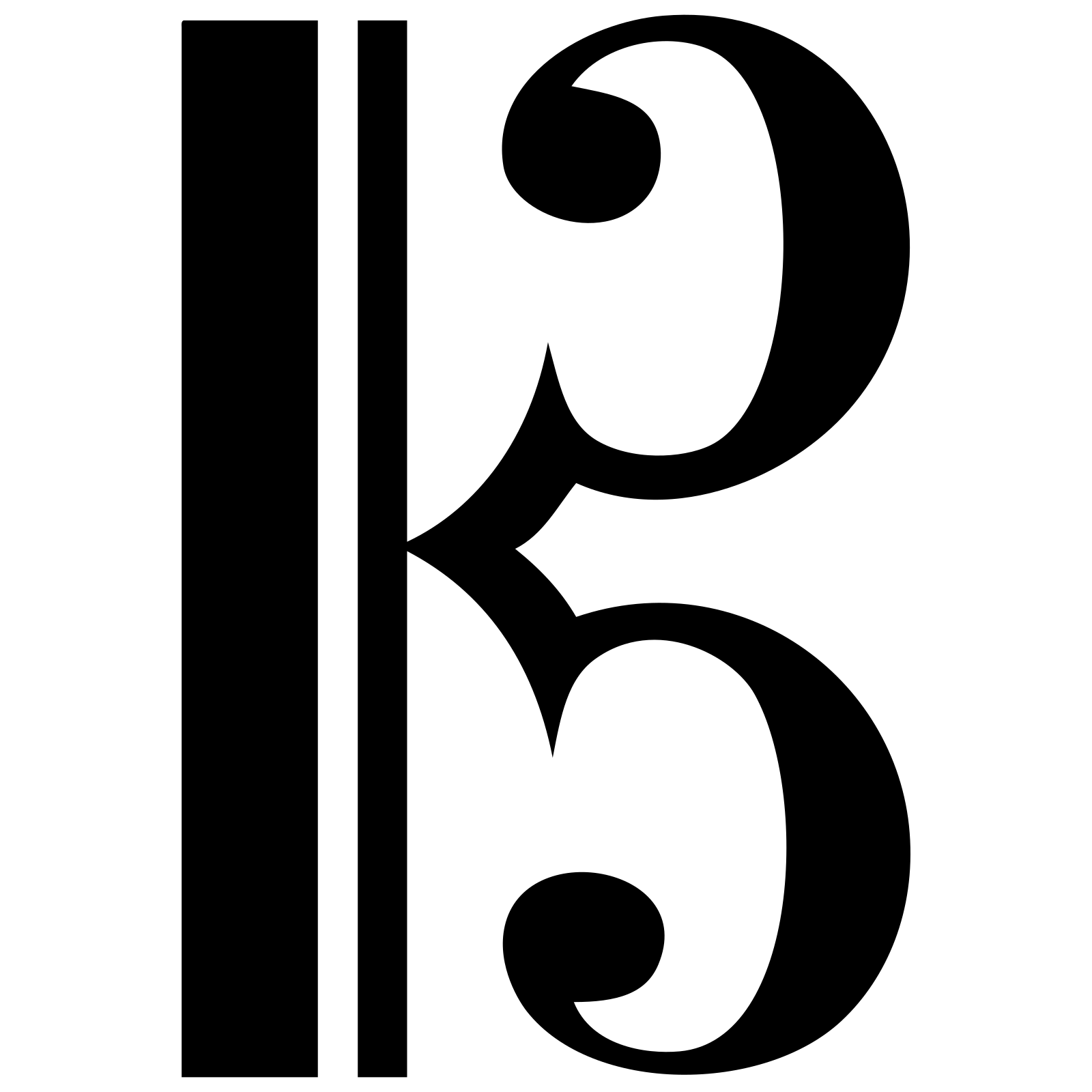
Reading alto clef (C-clef) confidently
Rhythmic accuracy and bow control
Learning pieces efficiently
Musical expression and tone colour
Aural skills and pitch awareness
Either works, but viola is a great first instrument if you love the warmer, deeper sound and want strong ensemble opportunities. In viola lessons, we teach the fundamentals from day one — posture, bowing, intonation, and reading — so you’re not “behind” by starting on viola.
Yes. Beginners do well when they start with the right setup, a comfortable instrument size, and a clear practise routine.
A viola is slightly larger, tuned a fifth lower (C–G–D–A), and uses alto clef more often. The sound is darker and warmer, and the role is often inner harmony rather than the lead line.
Not overall — they’re challenging in different ways. Viola can feel a bit more physical (size and string tension), and alto clef is new for many, but viola lessons make those hurdles very manageable.
Most violinists transition quickly because the bowing and left-hand fundamentals transfer well. The main adjustments are instrument size/spacing, tone production on thicker strings, and reading alto clef.
Viola players are often in demand because ensembles need them and fewer students start on viola compared to violin. That combination can make viola a smart choice for students aiming for orchestras, chamber groups, and pathways.
You can sound noticeably better within weeks if you practise consistently, but “good” depends on your goal (songs vs ensemble vs exams). In viola lessons, progress is fastest when you’re working on tone, intonation, and rhythm with a simple weekly plan.
You can start alone, but most people plateau (or pick up bad habits) without feedback on posture, bow hold, and intonation. Viola lessons usually save time by fixing the things you can’t easily self-check.
Viola sizing is about comfort and reach, not age alone. Many adults sit around 15.5–16.5 inch, while some smaller adults and younger students use 14–15 inch; a teacher can measure arm length and check left-hand stretch so you don’t strain.
Not automatically. Bigger instruments can have more depth, but the “best” viola is the one you can play comfortably with a relaxed setup — that’s what produces the best tone long-term.
Most students start with stable, easy-to-play strings (often synthetic core) and upgrade as tone goals and budget change. In lessons, we’ll match strings to your viola, level, and sound preference so you’re not fighting the instrument.
Our son seems to like the viola lessons he's taking right now, with a good teacher who helps him whenever he's stuck. Will definitely be continuing lessons in the future.
We have opted for viola as it’s less competitive for scholarships and more in demand for orchestra. Our teacher is patient and caring and explains concepts very clearly. We are looking forward to our daughter taking her scholarship exam next year.
Your first lessons focus on the fundamentals that make viola playing feel comfortable and natural. You’ll learn correct posture, bow hold, and left-hand position while producing a clear, even tone across the strings. From the beginning, you’ll play simple melodies and exercises that establish good technique and musicianship.
Typical focus: posture, bow hold, left-hand position, tone production, first notes, basic music reading