TL;DR
- Music composition is the craft of creating a whole piece of music, from a single idea to a finished work.
- You can start today with one short melody or rhythm. You do not need to write a symphony first.
- You do not need years of theory. A little goes a long way, and you can learn it as you go.
- Free tools like MuseScore or any basic DAW are enough to begin. Expensive gear is not the point.
- Composing is a skill, not a gift. Anyone can learn it, and a teacher speeds it up a lot.
Most people think composing music is for a rare, gifted few, usually pictured hunched over a piano writing a symphony. The truth is far more welcoming. Composing means creating your own piece of music, and it starts with a single idea you can capture today.
If you have ever hummed a tune that was not a song you knew, you have already taken the first step a composer takes. The rest is a set of skills you can learn and practice, the same as any instrument. Here is what composing actually involves, how to write your first piece, and where music composition lessons fit in if you want a faster, clearer path.
What is music composition?
Music composition is the craft of creating an original piece of music by arranging its core elements, melody, harmony, rhythm and structure, into a complete work. A composer decides what happens, when, and on which instruments.
The building blocks are worth knowing, because almost every piece is made from them. Melody is the line of notes a listener remembers. Harmony is the chords that sit underneath and give it mood. Rhythm is how the notes are placed in time. Structure is how the sections fit together, the musical equivalent of chapters in a story. Learn to work with these four and you can shape almost any idea into a piece.
Composition covers a wider range of music than most beginners realise. All of these are compositions:
- Film scores and video game soundtracks
- Classical works for orchestra, string quartet or solo piano
- Pieces for school concert band or wind ensemble
What they share is intent: someone decided how the music would unfold rather than improvising it. That decision-making is the actual skill, and it is what separates composing from simply playing an instrument.
How do I start composing music as a beginner?
Start with one small idea, not the whole piece. That idea can be a short melody you hum, a rhythm you tap out, a chord progression you like, or even just a mood you want the music to capture. The goal on day one is to catch a single seed and save it.
From that seed, a simple first approach works well:
- Capture an idea. Hum, tap or record a short phrase into your phone before it slips away.
- Shape a melody. Turn that phrase into a short motif of a few notes you can repeat and recognise.
- Add harmony. Find two or three chords that fit the melody and give it a mood.
- Give it shape. Repeat, vary and arrange your ideas into short sections so the piece goes somewhere.
Do not wait for inspiration. Most working composers treat it as a routine, sitting down at a set time and developing whatever material they have. Ideas arrive far more often while you are already working than while you are waiting to feel ready.
The single most important habit is finishing. A short, rough, finished piece teaches you more than a brilliant idea you never complete. Professional composers work the same way, developing a small motif through variation and repetition, an approach Berklee describes as the core of the craft. As a first exercise, write an eight-bar melody over two chords, then play it twice with a small change the second time. That is already a composition.
What is the difference between composing and songwriting?
They overlap, but they are not the same. Songwriting means creating a song, words and music together, usually in verse-chorus form. Composing is broader: any piece of music, including instrumental works with no lyrics, such as film scores, classical pieces or music for an ensemble.
Put simply, every song is a composition, but not every composition is a song. A songwriter is focused on melody and lyrics that serve a singer. A composer might be writing for a string quartet, a game soundtrack or a solo piano, where structure, instrumentation and how the parts interact carry the piece instead of words.
Many people do both, and moving between them helps. Songwriting sharpens your instinct for a memorable melody. Composing teaches you to develop material, write for instruments other than your own, and hold a listener without a lyric to lean on. Here is how the three sit alongside each other.
| Composing | Songwriting | Music theory | |
| Main focus | Whole pieces of music | Songs with lyrics | The rules behind music |
| Typical output | Instrumental or scored works | Verse-chorus songs | Understanding, not a piece |
| Common tools | Notation software, a DAW | Voice, guitar or piano | Pen, paper, an instrument |
| Best for | Film, classical, ensembles | Pop, folk, singer-writers | Any musician, any style |
Do you need to know music theory to compose?
No. Plenty of respected composers work largely by ear, and you can write a complete, moving piece knowing only a handful of chords. Music theory is a tool that speeds you up, not a gate you must pass through first.
That said, a little theory genuinely helps. Understanding why certain chords pull towards each other, or how a melody sits over a harmony, means you spend less time guessing and more time creating. The honest order is this: start composing now with what you know, and pick up theory gradually as real questions come up. Learning every rule before you write a note is like studying grammar before you ever tell a story.
If you want a practical starting point, three things in music theory carry most beginner composers a long way:
- Major and minor scales
- How to build basic chords from those scales
- How common chord progressions move
That is a few weeks of casual learning, not years of study. Everything beyond it is best picked up when a specific problem in your own music demands it.
What software do you need to compose music?
Less than you might think, and you can start for free. There are two broad types of tool, and which you reach for depends on the music you want to write.
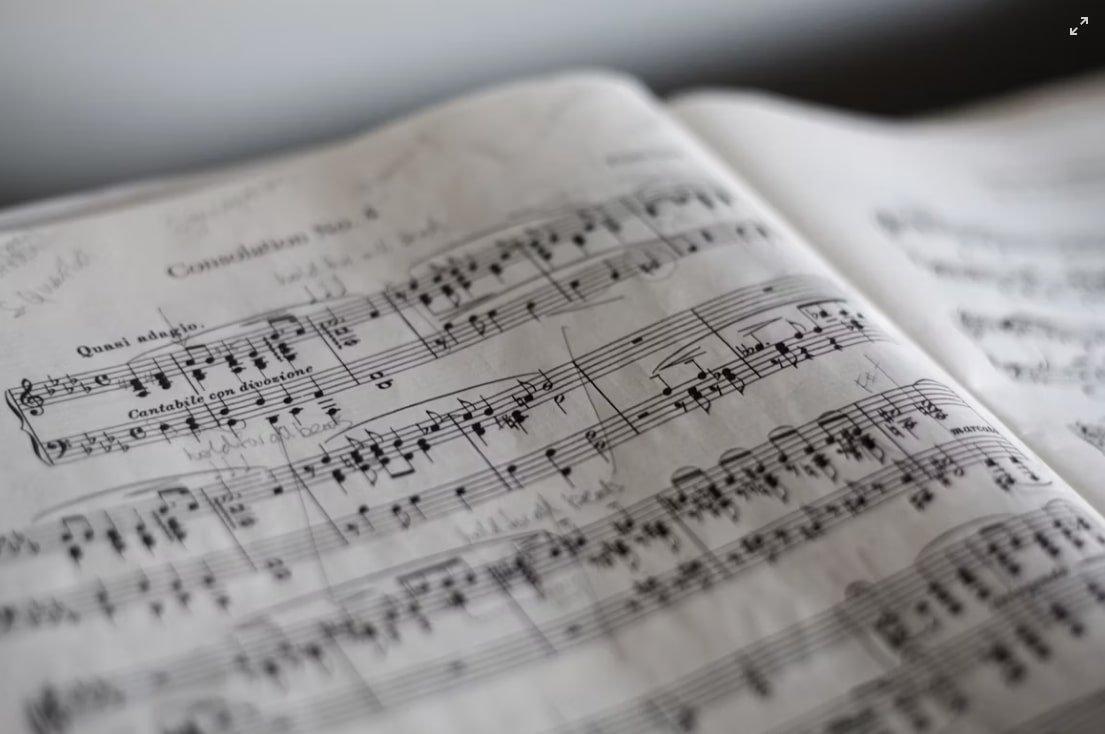
- Notation software writes music as traditional sheet music. MuseScore is free and widely used, while Sibelius and Dorico are the professional standards. This is the natural choice for classical, orchestral or any scored music.
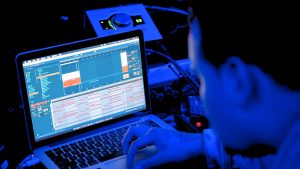
- A DAW, or digital audio workstation, builds music from recorded and programmed sounds. GarageBand is free on a Mac, and Logic Pro, Ableton Live and FL Studio are common paid options. This suits film, electronic and modern production.
A beginner does not need to buy anything to begin. A free notation program or the DAW already on your computer will take you a long way, and there are plenty of step-by-step guides to composing in software. The tool matters far less than the ideas you put into it, so start with what you have and upgrade only when you hit a real limit.
Hear your work played by real musicians where you can. Notation software plays everything perfectly in time and in tune, which hides problems: a phrase may be unplayably fast, sit outside an instrument’s range, or need a breath the player will never get.
How long does it take to learn music composition?
You can write your first short piece in a single afternoon. Getting genuinely comfortable, able to sketch ideas, harmonise them and shape a satisfying structure, usually takes one to three years of regular practice.
| Stage | Roughly how long | What you can do |
| Your first piece | A single afternoon | A short melody over two chords |
| Finding your feet | 1 to 3 months | Short complete pieces, simple structure |
| Comfortable beginner | 6 to 12 months | Harmonised ideas, clear sections |
| Confident | 1 to 3 years | Sketch, develop and finish without stalling |
| Advanced | 5+ years | Writing fluently for ensembles and film |
The pace is set by how much you actually compose, not by natural talent. Even experienced writers discard far more than they keep, so a piece taking a while does not mean it is bad.
A useful way to measure progress is how quickly you can solve a problem in your own music. Early on, a section that will not resolve can stall you for weeks. After a year of steady work you will have reliable moves to try, and the same problem takes an afternoon.
Can anyone learn to compose music?
Yes. Composition is a craft, and like any craft it rewards practice far more than talent. The composers who improve fastest are the ones who write the most and finish what they start. You do not need to be a prodigy or a trained pianist to begin.
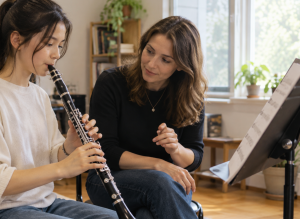
What speeds it up most is feedback. Working alone, it is hard to hear why a section falls flat or an idea does not develop. This is where structured lessons make the biggest difference, because a composition teacher can point to the exact reason something is not working and hand you the tools to fix it. Whichever path you take, the secret is the same: keep writing, keep finishing, and let each piece teach you the next.
 September 30, 2026
Where Could I Find an Affordable Clarinet Teacher in Sydney?
TL;DR A limited monthly budget can still leave you with options for clarinet lessons in Sydney. Start with the price… September 26, 2026
Where to Actually Look Before You Buy an Instrument
The obvious first search usually isn't the right one. The instinct is almost always the same. A lesson gets booked,… September 23, 2026
What Should I Learn First on Piano? A Beginner’s Step-by-Step Guide
TL;DR Start by learning the keyboard pattern, a small group of notes, finger numbers and a steady beat. Practise a… September 23, 2026
How Much Does Logic Pro Cost for Beginners?
TL;DR Logic Pro is Apple's music production software for Mac. In Australia, Logic Pro for Mac costs $299.99 as a…