TL;DR
- A euphonium and a baritone are two different brass instruments that people constantly mix up.
- The core difference is the bore: a euphonium is conical (widens gradually), a baritone is cylindrical (stays even, then flares).
- That gives the euphonium a rounder, warmer sound and the baritone a brighter, more focused one.
- Both are pitched in B flat, share the same tubing length, and read the same music.
- Both are beginner-friendly, and a good euphonium teacher will have you playing tunes within weeks.
The euphonium and the baritone look like close cousins, sound broadly similar to an untrained ear, and are often sold side by side. So what actually separates them?
The short answer is the shape of the tubing inside. That one difference changes the size of the bell, the number of valves you usually find, and the character of the sound. Everything else, the B flat pitch, the tubing length, the music you read, is shared. Here is how they compare, what each one is like to play, and where euphonium lessons fit in if you decide to pick one up.
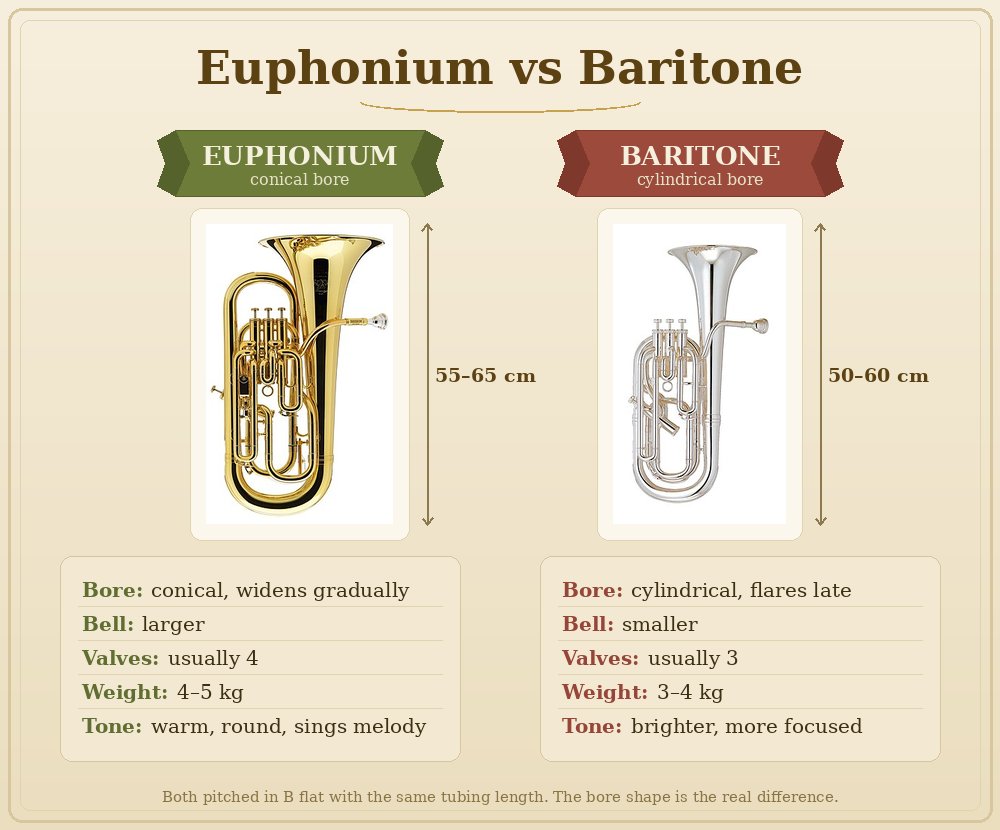
Euphonium (gold lacquer) and baritone (silver plate) side by side. Photos via Wikimedia Commons, CC BY-SA 4.0.
Is a euphonium the same as a baritone?
No, though the confusion is so common that even instrument sellers and music publishers get it wrong. They are two separate instruments in the same brass family, both descended from the saxhorns Adolphe Sax patented in the 1840s, and both pitched in B flat.
The defining difference is the bore, the internal shape of the tubing. A euphonium has a conical bore, meaning the tube grows steadily wider from the mouthpiece to the bell. A baritone has a mostly cylindrical bore, staying the same width for most of its length before flaring out at the end. The euphonium also carries a larger bell and usually a fourth valve, while the baritone is more compact with three.
This mix-up is not new. The naming has been muddled for well over a century. British brass bands have always kept the two firmly apart, each with its own seat and written part, while American school bands often lumped them together under one name. If you have ever been handed a part marked baritone and found yourself holding something much larger, that history is why.
What does a euphonium sound like?
Warm, round and singing. The name comes from the ancient Greek word euphonos, meaning “sweet-voiced”. The conical bore produces a rich, dark tone with plenty of body, which is why composers so often hand the euphonium the melody or counter-melody in a brass band or wind ensemble.
The baritone, by contrast, is usually described as brighter and more focused. Its cylindrical tubing strips away some of the lower overtones, giving a leaner sound that cuts through and blends well in harmony parts. Put simply, the euphonium tends to sing while the baritone tends to support.
You can hear the difference most clearly in a brass band:
- Euphonium: a warm, vocal line rising out of the middle of the ensemble, usually carrying the tune.
- Baritone: a firmer, more clipped line filling out the harmony underneath.
Euphonium vs baritone: a quick comparison
If you want the differences at a glance, here is how the two instruments line up side by side.
| Euphonium | Baritone | |
| Bore shape | Conical, widens gradually | Cylindrical, even until the bell |
| Bell size | Larger | Smaller |
| Tone | Rounder, warmer, darker | Brighter, more focused |
| Valves | Usually four | Usually three |
| Pitch | B flat | B flat |
| Typical role | Melody and counter-melody | Harmony lines |
Is the euphonium hard to learn?
It is one of the more approachable brass instruments to start on, and easier than the trumpet or French horn for most beginners. The valve system is simple, only three or four valves, and the mouthpiece is large enough that producing a first note is far less fiddly than on the smaller, higher brass.
The main physical challenge is the size. A euphonium is not a light instrument, so younger players and beginners spend a little time getting used to supporting the weight and sitting with good posture. Beyond that, the early wins come quickly. With regular practice and a good teacher, most beginners are playing simple, recognisable tunes within a few weeks. Reaching a confident, ensemble-ready standard is more a matter of months of steady work than years.
What actually challenges beginner euphonium players:
- Breath support. Brass playing runs on air, and a euphonium takes a lot of it.
- Embouchure. The shape your lips make in the mouthpiece separates a thin, wobbly note from a full one.
- Weight and posture. Supporting the instrument without slouching takes a few weeks to feel natural.
None of these are hard so much as gradual, and airflow is the single thing a euphonium teacher fixes fastest, because it is very difficult to diagnose your own breathing by ear.
What’s the difference between a euphonium and a tuba?
Both are conical-bore, low-brass instruments from the same family, but the tuba is much larger and pitched lower. The tuba is the deepest voice in the brass section and provides the bass foundation of a band or orchestra, while the euphonium sits in the tenor range above it, closer to a trombone in pitch.
There is a nice practical link between the two. Because the euphonium is smaller and lighter, it is often where younger players start before they have the lung capacity and reach for a full-sized tuba. The skills carry across neatly, so time spent on the euphonium is rarely wasted if the tuba is the long-term goal. For a fuller account of how the instrument developed, this university reading on the euphonium traces its history from the ophicleide onward.
Is the euphonium a good instrument for beginners?
Yes. The euphonium is one of the best beginner brass instruments, and a popular first choice for school students and adult learners alike. What makes it beginner-friendly:
- Forgiving to get a first sound out of, compared with trumpet or French horn.
- Music sits in a comfortable range, so early pieces are playable quickly.
- In demand in brass bands, concert bands and wind ensembles, so there are plenty of chances to play with others.
It also tends to win parents over. The tone is gentle rather than piercing, which makes home practice more bearable than with some of the louder, brighter brass. And because the euphonium is in demand in most community and school ensembles, a keen beginner usually finds a seat waiting for them.
There is a practical bonus too. In brass band music, euphonium parts are usually written in treble clef with the same fingerings a trumpet player would recognise, so switching to trombone, tuba or baritone later takes very little relearning.
How heavy is a euphonium?
A euphonium typically weighs somewhere in the region of 4 to 5 kilograms, more than a trumpet but far less than a tuba. The exact figure depends on the model, the materials, and whether it has three valves or four, with compensating four-valve instruments sitting at the heavier end.
Because of that weight, most players perform seated, resting the instrument on the lap and wrapping the left arm around the body to support it while the right hand works the valves. Good posture matters here. Sitting upright lets the lungs fill properly, which is what produces a full, steady sound. It is worth building the habit early rather than unlearning a slouch later.
For younger students, check the size before buying or hiring. A three-valve student model is noticeably lighter than a four-valve compensating instrument, and many schools and euphonium teachers keep smaller horns for children. If a child is straining to hold it, that shows up quickly as poor tone and sore arms.
How long does it take to learn the euphonium?
Your first clear notes come on day one, and simple tunes follow within the first few weeks of regular practice. Getting to a comfortable, ensemble-ready standard, where you can hold your own part in a band, generally takes somewhere between six months and a couple of years, depending on how consistently you practice.
A rough timeline for a beginner practising regularly:
- Day one to week two: your first clear notes.
- 1 to 2 months: steady notes across a comfortable range, simple tunes.
- 6 months: playing simple band parts with an ensemble.
- 1 to 2 years: confident sight-reading of most amateur ensemble music.
Players who practice 20 minutes on most days consistently outpace those doing an hour once a week, because embouchure strength fades quickly without regular use.
As with any instrument, the pace is set less by talent than by turning up regularly. Short, frequent practice sessions beat occasional long ones, because tone and technique are built on repetition. The fastest way to skip the guesswork is to learn with a teacher who can correct small habits before they set. If you are ready to start, you can compare and connect with euphonium teachers and find one who suits how you like to learn.
 September 30, 2026
Where Could I Find an Affordable Clarinet Teacher in Sydney?
TL;DR A limited monthly budget can still leave you with options for clarinet lessons in Sydney. Start with the price… September 26, 2026
Where to Actually Look Before You Buy an Instrument
The obvious first search usually isn't the right one. The instinct is almost always the same. A lesson gets booked,… September 23, 2026
What Should I Learn First on Piano? A Beginner’s Step-by-Step Guide
TL;DR Start by learning the keyboard pattern, a small group of notes, finger numbers and a steady beat. Practise a… September 23, 2026
How Much Does Logic Pro Cost for Beginners?
TL;DR Logic Pro is Apple's music production software for Mac. In Australia, Logic Pro for Mac costs $299.99 as a…