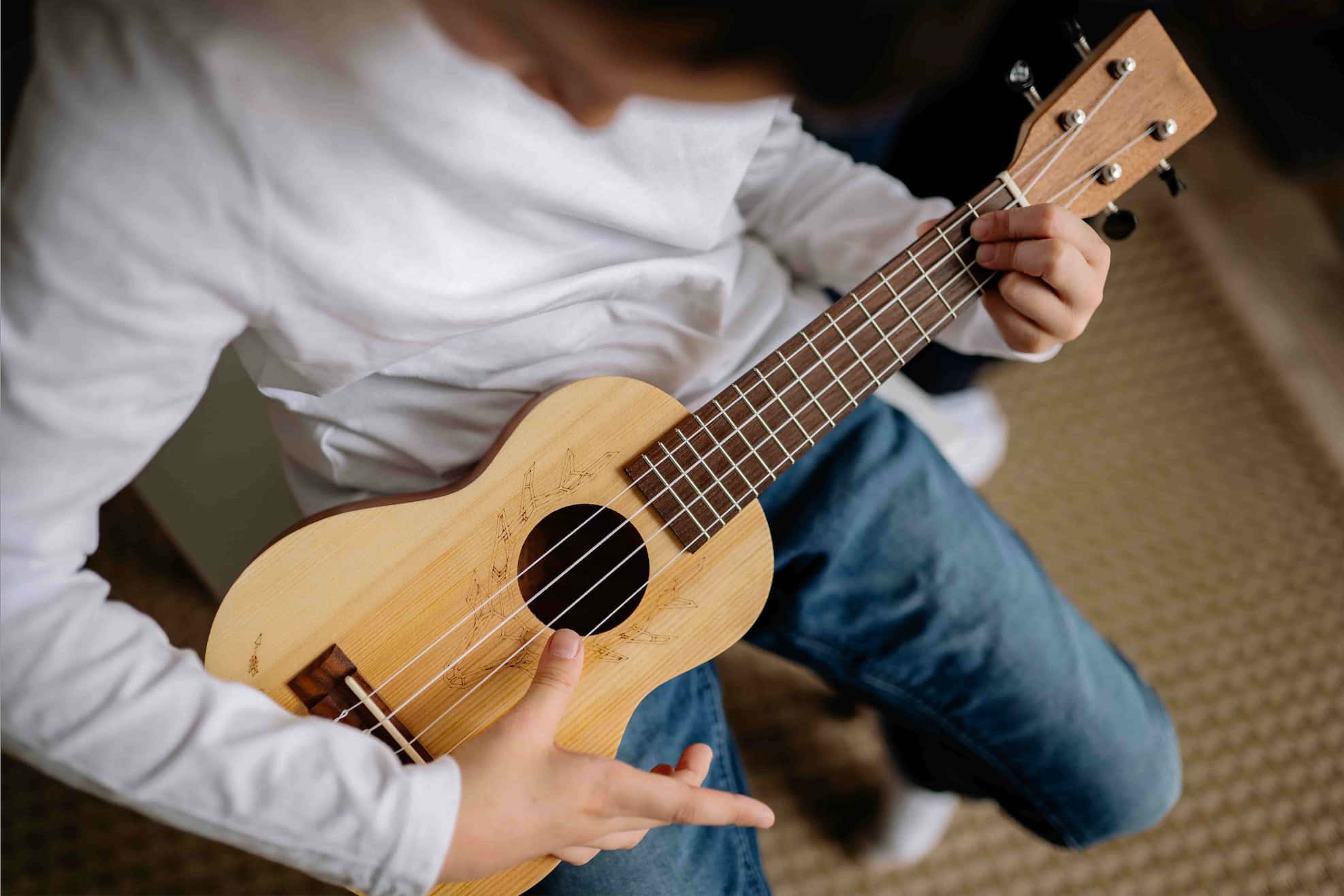
Yes, ukulele is one of the easiest instruments to learn for beginners. It has only four nylon strings, a compact body, and a small number of chords that unlock a huge range of songs. Most people who start ukulele lessons can play a recognisable song within their first few sessions, which makes it one of the most immediately rewarding instruments to pick up.
That said, easy to start doesn’t mean there’s nothing to learn. Here’s an honest breakdown of what to expect.
Why Do Beginners Choose the Ukulele?
Four strings instead of six: Guitar has six strings and requires coordinating more fingers from the start. Ukulele’s four strings mean simpler chord shapes, less finger stretching, and a less overwhelming introduction to fretted instruments.
Nylon strings are gentle on fingers: Steel string guitars are notoriously hard on fingertips in the early weeks, and beginners often have to push through soreness before calluses develop. Ukulele’s nylon strings are soft enough that this isn’t really an issue, which removes one of the most common early barriers to sticking with an instrument.
Chords are simpler to form: Some of the most useful ukulele chords, C major, for example, require only one finger. Even full four-finger chords sit comfortably within a small fretboard space, making them physically achievable for most hand sizes.
The instrument is lightweight and compact: There’s no awkward positioning to master before you can start playing. You can sit comfortably, rest the body of the ukulele against your chest, and focus on actually learning music rather than fighting the instrument.
Common Challenges When Learning the Ukulele
Staying in Tune: Ukuleles, especially cheaper ones, go out of tune frequently, particularly when new strings are stretching in. Learning to tune by ear takes time, and playing on an out-of-tune instrument makes everything sound off, regardless of how well you’re playing. A clip-on turner solves this immediately and is worth buying alongside the instrument.
Strumming Rhythm: Fretting chords is one skill; strumming them with consistent rhythm is another. Many beginners can form a chord shape but struggle to strum evenly and switch between chords smoothly at the same time. This coordination takes practice and is where most of the early plateau feeling comes from.
Chord Transitions: The jump between chords mid-song is where beginners stall most often. Each chord individually might feel manageable, but switching between them quickly enough to keep up with a song is its own skill. This improves faster than people expect with consistent practice, even 10-15 minutes a day makes a noticeable difference within a few weeks.
Should I Start on Soprano, Concert, or Tenor?
Since ukuleles come in different sizes, this question comes up early for most beginners. The short answer is that concert size is the best all-round starting point for most adults, it’s slightly larger than soprano, which gives more fret space and a slightly fuller sound, without being as large as tenor.
Soprano is the most traditional and iconic size, and is perfectly fine for beginners with smaller hands. Tenor suits players who want a bigger sound and more room on the fretboard. This guide has a full breakdown of ukulele sizes if you want to go deeper on this before buying.
Does a Ukulele Sound Like a Guitar?
Because the strings are nylon and the body is small, ukulele has a bright, soft tone that doesn’t project loudly. For some beginners, this is a surprise, particularly if they expected something closer to an acoustic guitar sound. It’s not a difficulty as such, but worth knowing going in.
How Fast Can You Learn the Ukulele?
Most beginners can play simple songs comfortably within 4 to 8 weeks of regular practice. “Regular” here means practising most days, even if only for 15-20 minutes at a time. Short, consistent sessions beat occasional long ones.
Within 3 to 6 months, most players can move through chord changes smoothly, play songs at a reasonable tempo, and start working on fingerpicking patterns beyond basic strumming. At this point, the instrument starts to feel genuinely expressive rather than just functional.
Reaching an intermediate level where you can pick up a new song, learn it, and perform it confidently, typically takes around a year of consistent practice. Beyond that, like any instrument, there’s always more to explore: fingerstyle arrangements, music theory, improvisation, and different playing styles.
Can Learning the Ukulele Help You Learn Other Instruments?
Yes, and this is one of its underappreciated advantages. Learning ukulele builds several skills that transfer directly to other instruments:
- Guitar: The chord shapes and strumming patterns are closely related. Many ukulele players find the transition to guitar faster than starting from scratch, though they do need to adjust to six strings and steel string tension.
- Bass guitar: Understanding rhythm, timing, and how to lock into a groove, all things ukulele develops, translates well to bass playing.
- Music theory generally: Learning any fretted instrument builds an intuitive understanding of how notes and chords relate to each other, which carries into any future musical study.
What Kind of Music Can You Play on Ukulele?
Far more than many people realise, while the ukulele is often associated with Hawaiian music and simple sing-along songs, it is a surprisingly versatile instrument. Players use it for everything from pop, rock, and folk to jazz, blues, and intricate fingerstyle arrangements. Its compact size and distinctive sound have helped it find a place in a wide range of musical genres.
As players develop their skills, they often discover techniques and styles that extend well beyond the instrument’s traditional repertoire. Many learn these skills from experienced ukulele teachers, who can introduce different genres, strumming patterns, and fingerstyle techniques while helping students build confidence and musicality. This versatility is one reason the ukulele continues to appeal to beginners and experienced musicians alike.
That said, the ukulele does have some limitations. Its smaller body produces less volume and a narrower tonal range than larger string instruments. For genres that rely on deep bass frequencies or a heavier sound, instruments such as the guitar or bass are generally better suited.
 September 30, 2026
Where Could I Find an Affordable Clarinet Teacher in Sydney?
TL;DR A limited monthly budget can still leave you with options for clarinet lessons in Sydney. Start with the price… September 26, 2026
Where to Actually Look Before You Buy an Instrument
The obvious first search usually isn't the right one. The instinct is almost always the same. A lesson gets booked,… September 23, 2026
What Should I Learn First on Piano? A Beginner’s Step-by-Step Guide
TL;DR Start by learning the keyboard pattern, a small group of notes, finger numbers and a steady beat. Practise a… September 23, 2026
How Much Does Logic Pro Cost for Beginners?
TL;DR Logic Pro is Apple's music production software for Mac. In Australia, Logic Pro for Mac costs $299.99 as a…