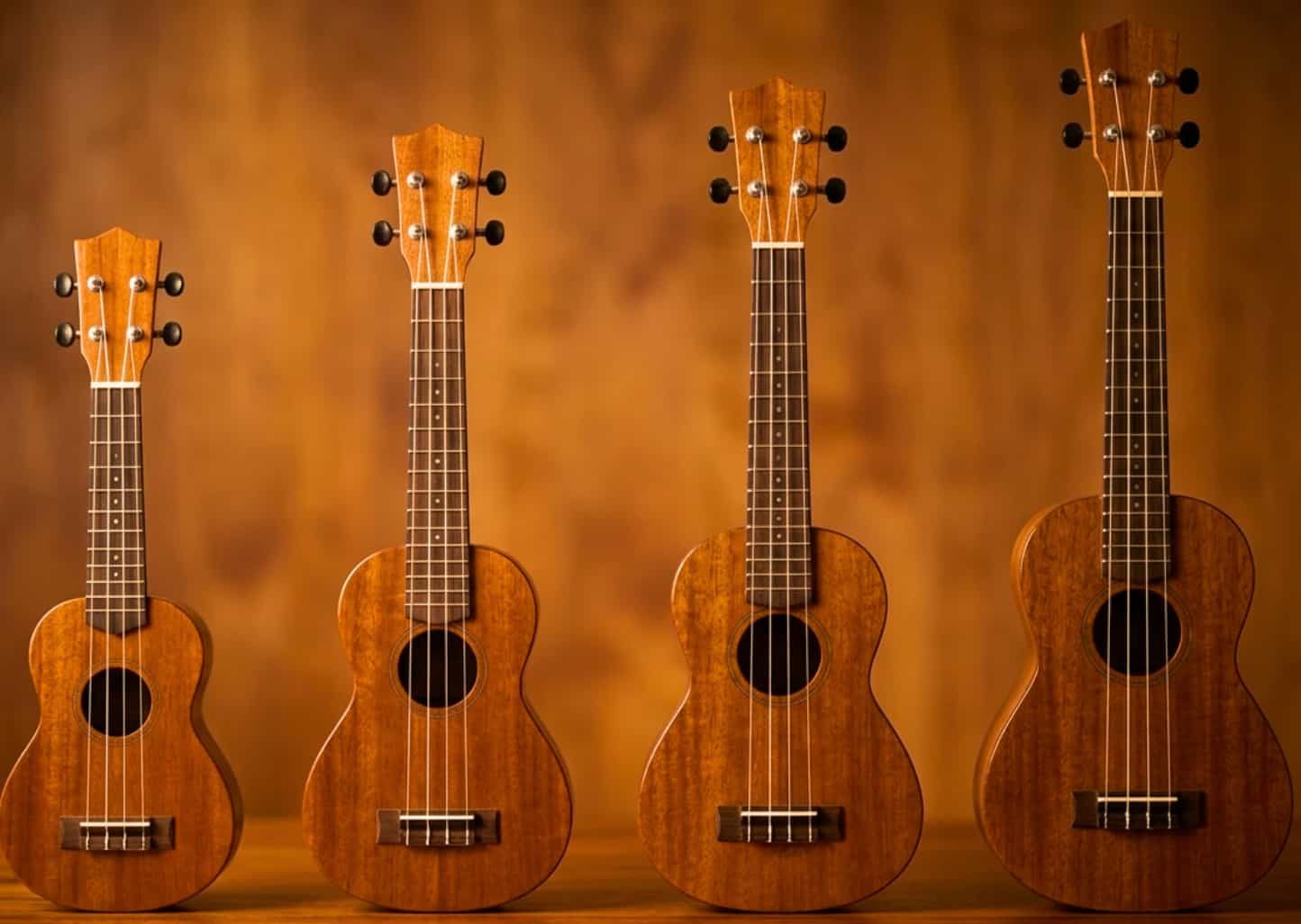
For most beginners, a concert ukulele is the best all-round choice because it balances comfortable fret spacing with the classic ukulele sound. Soprano works well for small hands or kids who want the bright traditional island sound. Tenor suits adult beginners with larger hands, guitarists transitioning to ukulele, and players who want a fuller, richer tone. Baritone is the outlier of the four because it’s tuned like the top four strings of a guitar and produces a sound closer to a small guitar than a traditional ukulele. The most surefire way of choosing the right ukulele for you is getting ukulele lessons, and asking your teacher what they recommend for you.
What’s the actual difference between the four ukulele sizes?
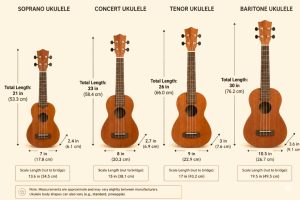
The four ukulele sizes (soprano, concert, tenor, baritone) differ in body size, neck length, fret spacing, and tonal character. Soprano is the smallest and brightest, concert sits in the middle as the all-rounder, tenor is larger with a deeper voice, and baritone is the largest with a completely different tuning that gives it a guitar-like sound.
The size differences in rough numbers:
- Soprano: Around 53cm total length, smallest body, closest fret spacing
- Concert: Around 59cm total length, slightly bigger body, moderate fret spacing
- Tenor: Around 66cm total length, larger body, widest fret spacing of the standard ukulele family
- Baritone: Around 76cm total length, largest body, fret spacing comparable to a small guitar
The key thing most beginner guides miss: soprano, concert, and tenor all share the same standard G-C-E-A tuning, so the chord shapes you learn on one size transfer directly to the others. Baritone is the exception because it’s tuned D-G-B-E, which matches the highest four strings of a guitar. This means baritone chord shapes are different from the other three sizes, and any songs or chord charts written for “ukulele” without specifying size assume the soprano/concert/tenor tuning.
Why do soprano, concert, and tenor sound different if they’re tuned the same?
The size of the body changes how the ukulele resonates, which produces noticeably different tones even though the notes are identical. A larger body has more air volume inside, so it produces deeper, fuller sound with more sustain. A smaller body has less air to vibrate, which gives it a brighter, snappier, more percussive character.
Think of it like guitars. A classical guitar, a parlour guitar, and a dreadnought are all tuned the same way but sound completely different because of body size. Same principle applies to ukulele.
The soprano produces what most people picture as the classic ukulele sound, that bright bouncy “plinky” tone associated with traditional Hawaiian and island music. The concert keeps much of that character but adds warmth and volume. The tenor moves further toward a fuller, richer sound that some players describe as “guitar-like” without losing the ukulele identity. The wood the ukulele is made from also affects the sound (more on that below), but body size is the bigger factor for beginners deciding which to buy.
Which ukulele size is best for beginners?
The concert ukulele is the most commonly recommended size for adult beginners because it offers the right balance of comfort, sound, and price. The body is small enough to feel like a proper ukulele but big enough that adult fingers have room to form chords cleanly. The tone is balanced rather than overly bright or overly deep, which makes it versatile across most styles.
That said, beginner needs vary:
- Kids under 10: Soprano is usually the better fit because of the smaller body and easier reach
- Adult beginners with average hands: Concert is the standard recommendation
- Adult beginners with larger hands: Tenor avoids the cramped feeling some people get on smaller sizes
- Beginners who already play guitar: Tenor or baritone, depending on whether you want traditional ukulele tuning or guitar-like tuning
- Beginners who want the iconic “ukulele sound”: Soprano, even though it’s slightly harder to play cleanly
The mistake most beginners make is buying soprano because it’s the cheapest and most recognisable, then struggling with finger placement because the frets are too close together. A concert costs only slightly more and is significantly more comfortable for most adult learners.
Should I get a soprano ukulele?
Get a soprano if you have small hands, you want the traditional bright island sound, you’re buying for a child, or portability is a top priority. The soprano is the original ukulele and remains the most iconic of the four sizes.
The soprano’s strengths are real. It’s the lightest and most compact size, which makes it ideal for travel, camping, or carrying to picnics. The bright, snappy tone cuts through group singing and feels right for traditional Hawaiian music, folk, and casual strumming. For kids learning their first instrument, the size matches their bodies and the price point (entry-level sopranos start around $80 to $150 in Sydney) makes it a low-risk choice.
The downsides matter for some players. The close fret spacing means adult fingers can crowd each other when forming chords. The shorter sustain limits how expressive solo passages can be. Some adult learners find the soprano feels like a toy rather than a serious instrument, which can affect motivation. If any of those concerns apply, concert is the safer choice even though it costs a bit more.
Should I get a concert ukulele?
Get a concert ukulele if you’re an adult beginner without a specific reason to choose another size. The concert hits the sweet spot for most learners because the body is big enough for comfortable playing but small enough to retain that distinctive ukulele character.
The concert ukulele’s neck is slightly longer than the soprano’s, which gives your fretting hand more room to form chords cleanly. The body is larger, which produces a warmer and more resonant tone with greater volume. The combination makes it forgiving for beginners learning their first chord shapes while still sounding genuinely like a ukulele.
The concert also handles a wider range of musical styles than the soprano. Strumming-based pop covers, fingerpicked folk songs, traditional Hawaiian music, and even basic jazz chords all work well on a concert. For someone who isn’t sure yet what style they want to play, the concert is the most flexible starting point.
Should I get a tenor ukulele?
Get a tenor ukulele if you have larger hands, you’re a guitarist exploring ukulele, you want a richer fuller sound, or you’re drawn to fingerpicking and solo playing rather than strumming. The tenor is the most popular size among intermediate and advanced players for good reason.
The extra body size gives the tenor noticeably more volume, sustain, and tonal depth than the smaller sizes. Notes ring longer, chords sound fuller, and individual string articulation is clearer in fingerpicking passages. This makes tenor the go-to size for ukulele players who write their own music, perform live, or play in styles that need more sonic presence than soprano or concert can deliver.
The tenor is also the friendliest size for guitarists picking up ukulele. The wider fret spacing accommodates fingers used to a guitar’s neck, and the larger body feels more substantial under the arm. The chord shapes are still standard ukulele (so they’re new to learn), but the physical feel is closer to what a guitarist is used to.
The trade-off is portability and that iconic “ukulele plinkiness.” A tenor is more guitar-shaped and less ukulele-shaped in feel, which some traditional ukulele players feel loses part of the instrument’s charm. If you want the classic bright island sound specifically, concert is a better choice.
What’s a baritone ukulele and is it actually a ukulele?
A baritone ukulele is the largest of the four standard sizes, tuned D-G-B-E (same as the top four strings of a guitar), which gives it a sound much closer to a small guitar than a traditional ukulele. Whether it counts as a “real” ukulele is a long-running debate in the ukulele community, but for buying purposes the answer is: it’s a ukulele in name and shape, but it plays and sounds like a guitar.
The baritone’s unique character creates both its appeal and its limitations:
- Tuning: D-G-B-E instead of G-C-E-A, so chord shapes don’t transfer from other ukulele sizes
- Sound: Deeper, mellower, and closer to a parlour guitar than a traditional ukulele
- Strings: Heavier gauge, typically using a low-D string rather than the re-entrant high-G found on other ukuleles
- Playing style: Better for fingerstyle, classical-influenced arrangements, and blues than strumming pop covers
Baritone makes sense for two specific groups. First, guitarists who want a smaller, more travel-friendly instrument that maintains guitar chord shapes. Second, players drawn to deeper, more contemplative ukulele music rather than the bright island sound. For most beginners learning ukulele as a first instrument, baritone is the wrong starting point because the bulk of ukulele resources, songs, and chord charts are written for the standard G-C-E-A tuning, which baritone doesn’t share.
Does the wood the ukulele is made from really matter?
Yes, the wood affects the sound significantly, and the type of construction (solid wood vs laminate) matters even more than the specific wood species at the beginner level. Solid wood ukuleles produce richer tone with more sustain and resonance than laminate (layered, glued wood) construction, but they cost more and need more careful humidity management.
For a beginner ukulele under $200 in Sydney, the construction is almost always laminate. This is fine for learning. Laminate ukuleles are durable, hold their tuning reasonably well, and respond less to humidity swings, which suits Sydney’s coastal climate. The sound won’t be as warm or as resonant as a solid wood instrument, but it’ll be plenty for the first year or two of learning.
The common ukulele woods and what they sound like:
- Mahogany: Balanced tone with equal emphasis on highs and lows, the most common beginner wood
- Spruce top: Bright and articulate, often paired with darker woods for the back and sides
- Koa: The traditional Hawaiian ukulele wood, bright with a sweet character but expensive
- Acacia: Often used as an affordable koa alternative, similar bright tone with attractive grain
- Ebony: Rich, bassy, often used for fretboards and bridges rather than the body
Most beginners overthink wood choice. Pick a ukulele with a comfortable body size and clean construction first, then worry about wood once you’re committed to the instrument long-term.
How much should I spend on my first ukulele in Sydney?
Plan to spend $120 to $300 on a quality beginner ukulele in Sydney. Below $80, the instruments are typically toys with poor intonation, plastic components, and unreliable tuning. Above $300, you’re paying for solid wood construction and features that beginners don’t need yet.
The price ranges by size in the Sydney market:
- Beginner soprano: $80 to $200
- Beginner concert: $120 to $280
- Beginner tenor: $180 to $350
- Beginner baritone: $200 to $400
The sweet spot for most adult beginners is a $150 to $250 concert from an established ukulele brand. Brands like Kala, Cordoba, Lanikai, and Flight all produce reliable beginner instruments in this range, and most Sydney music shops stock them. Check the Kala Brand Music and Cordoba Music websites for full ranges.
If you’re buying for a child, a $80 to $150 soprano from a reputable brand is fine. Kids often outgrow their first instrument within a year or two anyway, so the bigger investment doesn’t pay off until you’re sure they’re sticking with it.
Which size do Sydney ukulele teachers usually recommend?
Most Sydney ukulele teachers recommend concert size for adult beginners and soprano for children under 10. This matches the general industry consensus and reflects what works in practice when teaching new students each week.
The reasoning behind teacher recommendations:
- Concert size lets adult students form clean chord shapes in the first lesson rather than struggling with cramped fingers
- Soprano size matches kids’ bodies and keeps lessons engaging because the instrument feels right under their arms
- Tenor is recommended for guitarists transitioning to ukulele or students with hand discomfort on smaller sizes
- Baritone is rarely recommended for absolute beginners because the different tuning isolates the student from the wider ukulele resource ecosystem
Sydney ukulele teachers also tend to recommend buying from a music shop you can visit in person rather than ordering online, at least for your first instrument. A short visit to a music shop in Inner West, North Shore, or the Eastern Suburbs lets you hold a few sizes, try a few brands, and confirm the size that feels right for your hands. Online ordering works fine once you know what you want, but the first instrument benefits from being chosen in person.
 September 30, 2026
Where Could I Find an Affordable Clarinet Teacher in Sydney?
TL;DR A limited monthly budget can still leave you with options for clarinet lessons in Sydney. Start with the price… September 26, 2026
Where to Actually Look Before You Buy an Instrument
The obvious first search usually isn't the right one. The instinct is almost always the same. A lesson gets booked,… September 23, 2026
What Should I Learn First on Piano? A Beginner’s Step-by-Step Guide
TL;DR Start by learning the keyboard pattern, a small group of notes, finger numbers and a steady beat. Practise a… September 23, 2026
How Much Does Logic Pro Cost for Beginners?
TL;DR Logic Pro is Apple's music production software for Mac. In Australia, Logic Pro for Mac costs $299.99 as a…