People underestimate the power of habits, but they’re the moving force in our lives. In fact, learning habits matter more than motivation. You can fail not because you lack motivation, but because you lack a system. Small steps each day lead to greater results than occasional practice once a week.
So how can you use the power of habits to your benefit? In his book Atomic Habits, James Clear outlines four laws of behavioural change as a practical framework: cue, craving, response, and reward.
1st law: cue, make it obvious
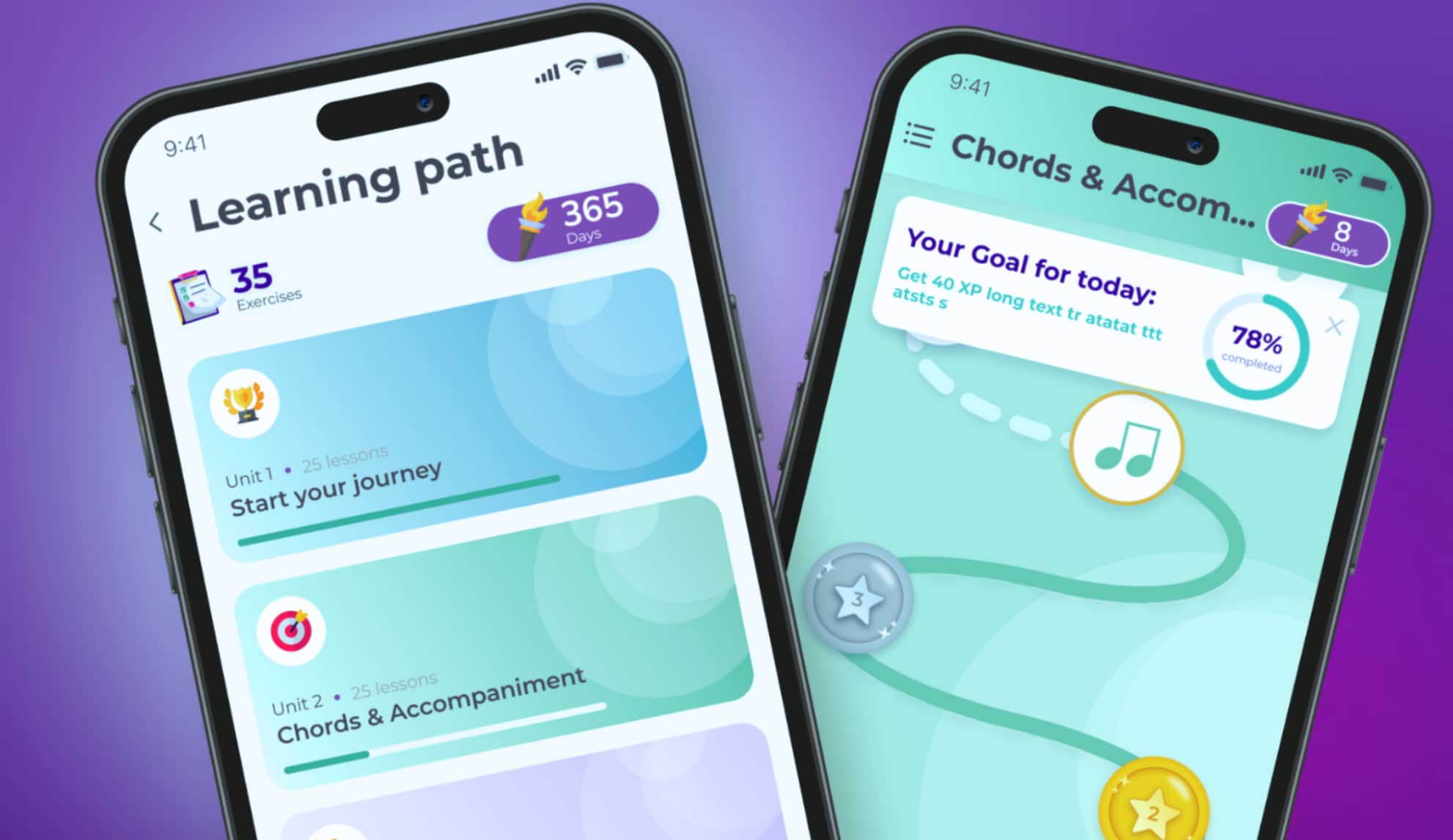
The cue triggers your brain to initiate the habit, so it helps to design your environment to highlight positive cues and dim negative ones. In practice, this can look like an implementation intention, such as “After my morning coffee, I’ll do one lesson.” Another effective approach is habit stacking, attaching a new habit to an existing part of your day so it becomes cemented into your routine. This is one of the ideas that Talented, a music learning app, builds directly into its design, encouraging users to slot lessons into an existing daily habit.
2nd law: craving, make it attractive
If you can’t beat cravings, you can lead them. This is where gamification comes in, turning practice into a dopamine boosting activity rather than a chore. Talented uses this principle well, awarding stars and XP for completed lessons, which reinforces the desire to keep going in order to earn rewards.
3rd law: response, make it easy
Prioritise action over perfection. If a fast tempo exercise feels out of reach, tools like a built in metronome can adjust practice to a comfortable pace, keeping responses frictionless and repeatable. Talented includes this kind of tool, letting users adjust difficulty so practice never feels like a wall.
4th law: reward, make it satisfying
Rewards can be internal, like a feeling of achievement, or external, like streaks, leaderboards, and leagues. These reinforce the loop, which is why apps like Talented track streaks for visible wins and use scorecards, such as three stars on a completed lesson, to celebrate consistency. A never miss a day streak taps into loss aversion, making breaks feel painful, while leaderboards add the variable joy of competition.
Together, these four laws form a loop that turns behaviours into habits, explaining why we do things automatically. Over time and repetition, that loop becomes second nature.
Why do most people fail at building a learning habit?
Instead of building a system, many people rely on pure motivation and practise sporadically. They go hard at the start, studying for days on end, then gradually lose focus. Lessons pile up, and what once felt exciting becomes a burden. Making learning too difficult or time consuming has the same effect.
Both approaches fail because they break the four laws loop. They make studying harder, skip the system building step, and lack the dopamine rich reinforcement that keeps people coming back.
Habits are built through systems, not sheer effort. In fact, jumping to a harder level too soon can actively discourage continued practice.
Start small and build a system
Motivation is always strongest at the beginning, so the smart move is to use it to build a system rather than rely on it long term. This might mean completing one or two lessons a day to cover the fundamentals, alongside a short daily skills workout covering intervals, melodies, chords, sight reading, and rhythm. Talented structures its app around exactly this idea, giving users an easier entry point that reduces mental pushback and lets the habit form with less friction.
What Talented gets right
The four laws of behavioural change are powerful on their own, but they work even better when paired with the right tools, and this is where Talented stands out.
Gamification
Talented makes learning feel less like a chore by layering in game like elements. Every completed lesson earns stars and XP, mimicking the reward structure of finishing a game level and reinforcing habit formation through positive feedback. Points move users through leagues and leaderboards, adding a layer of competition that fuels the desire to keep progressing. A talent tree feature also makes progress visible and tangible, giving users a sense of control as they unlock new features along their learning journey.
Learning Path
Self directed music practice can quickly become overwhelming, with countless standalone lessons to sift through regardless of skill level. Talented’s Learning Path solves this by guiding users step by step through one lesson at a time. This structure removes decision fatigue and helps users build a strong foundation, whether they’re starting from scratch or exploring more advanced music theory. A short onboarding survey tailors the path to each user’s existing knowledge, so lessons stay relevant rather than repetitive.
Talent Gym
One of the more overlooked learning challenges is hidden avoidance, the tendency to keep practising what we’re already good at while skipping what feels difficult. Over time, this creates real skills gaps. Talented’s Talent Gym addresses this directly by letting users target specific areas like rhythm, ear training, chords, or sight reading. It also shows clearly how developed each skill branch is, highlighting where more work is needed. Each exercise takes just two to three minutes, making it easy to fit into a daily routine.
Building the habit
Talented provides the tools, but building the habit still takes effort. Applying the four laws of behavioural change, embedding lessons into a daily routine, and taking small consistent steps are what turn practice into a lasting habit.
As the saying goes, the journey of a thousand miles begins with a single step.
 September 30, 2026
Where Could I Find an Affordable Clarinet Teacher in Sydney?
TL;DR A limited monthly budget can still leave you with options for clarinet lessons in Sydney. Start with the price… September 26, 2026
Where to Actually Look Before You Buy an Instrument
The obvious first search usually isn't the right one. The instinct is almost always the same. A lesson gets booked,… September 23, 2026
What Should I Learn First on Piano? A Beginner’s Step-by-Step Guide
TL;DR Start by learning the keyboard pattern, a small group of notes, finger numbers and a steady beat. Practise a… September 23, 2026
How Much Does Logic Pro Cost for Beginners?
TL;DR Logic Pro is Apple's music production software for Mac. In Australia, Logic Pro for Mac costs $299.99 as a…