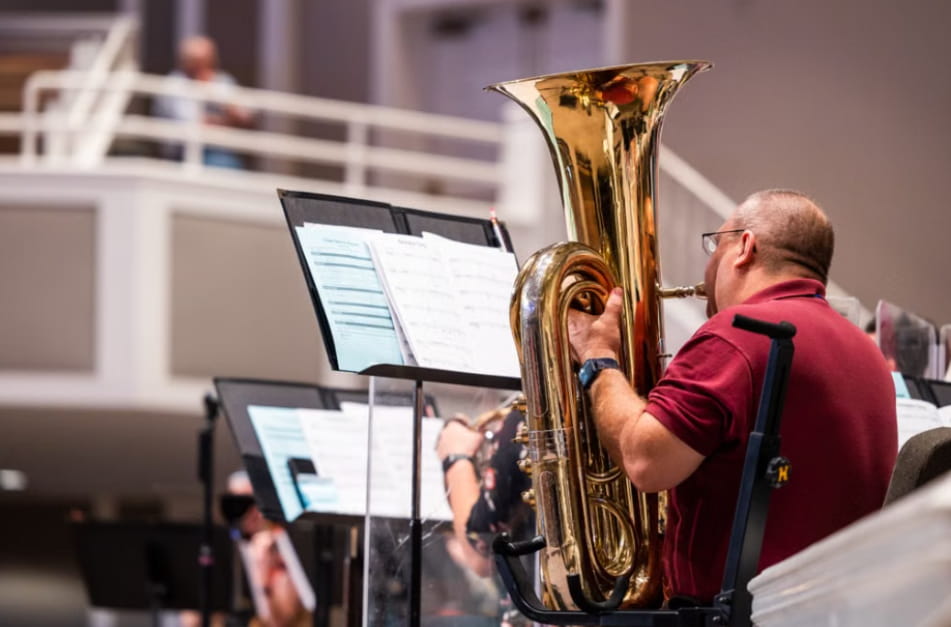
If you have just started learning tuba, you might wonder how often you need to practice. Do you need to play every day? Or should you be practicing for an hour?
For most beginners, you do not need to spend hours playing every day. Regular practice is more useful than doing one very long session and then not touching your tuba for the rest of the week.
Tuba practice also takes a lot of focus. You are thinking about your breathing, airflow, lips, fingers, rhythm and sound at the same time. When you are still learning, even a short session can give you plenty to work on.
The goal is to find a routine that you can actually stick to. Some days you might have 30 minutes available. On a busy day, you might only have 10 or 15 minutes. That is still better than skipping practice because you think every session needs to be long.
If you are not sure what to work on between practice sessions, tuba lessons in Sydney can help you build a routine around your level and goals.
How Long Should You Practice Tuba Each Day?
A beginner can start with around 20 to 30 minutes a day. If you are completely new to the instrument, even 15 or 20 minutes may be enough at first. As you get more comfortable, you can slowly increase your practice time.
The important thing is how you use those minutes.
Imagine one beginner practices for 20 minutes. They spend five minutes warming up, five minutes on long notes and scales, and ten minutes working on a difficult part of a piece. Another beginner plays for an hour but keeps playing the same piece from beginning to end without stopping to fix mistakes.
The first practice session may be shorter, but it has a clear purpose. This is why you should not judge your practice only by how long you play.
If you have 20 focused minutes, use them well. Pick one or two things that you want to improve and work directly on them.
You could tell yourself:
- I want to make my long notes sound steadier.
- I want to practise this scale without stopping.
- I want to fix these four difficult bars.
- I want to improve my breathing in this section.
These are much easier goals to work towards than simply saying, “I need to practice for an hour.” If you start feeling tired after 20 minutes, stop and take a break. You can always practice again later. As you improve, longer sessions will become easier. There is no need to rush.
How Many Days a Week Should You Practice Tuba?
For a beginner, five to six days a week is a simple target.
This gives you regular time with the instrument while still leaving room for a rest day. You do not have to follow this perfectly every week either. School, university, work and other commitments can sometimes get in the way.
What matters is that you practice regularly. For example, practicing for 25 minutes on five different days gives you five chances to work on your sound, breathing and technique. If you only practice once a week for two hours, you may spend more time trying to remember what you worked on during your last session.
A simple weekly schedule could look like this:
| Day | Practice Time |
| Monday | 20-30 minutes |
| Tuesday | 20-30 minutes |
| Wednesday | 20-30 minutes |
| Thursday | rest |
| Friday | 20-30 minutes |
| Saturday | 25-30 minutes |
| Sunday | 20 minutes or rest |
You do not have to copy this exact schedule. It is just an example.
If weekdays are busy, you could practice for a shorter time during the week and have a slightly longer session on the weekend. If you have more free time in the morning, you might prefer practicing before school or work.
Try to choose times that are realistic for you. It is also okay to miss a day. Missing one practice session will not suddenly make you a worse player. Just return to your normal routine the next day instead of trying to make up for it with a very long session.
Regular practice can help you:
- remember what you worked on previously
- improve your finger coordination
- work on a steadier sound
- become more comfortable with your breathing
- gradually build your playing endurance
You should also pay attention to how you feel while playing. If your lips feel very tired or your sound becomes harder to control, continuing for another 30 minutes may not help. Take a break and come back to the instrument later.
A rest day is part of a practice routine too. You do not need to feel guilty about taking one.
The aim is not to see how many days in a row you can practice. The aim is to build a routine that helps you improve without making tuba feel exhausting.
How Should a Beginner Practice Tuba?
A simple routine can make your practice much easier.
Instead of picking up your tuba and wondering what to do, split your session into a few small parts. Here is an easy 25-minute tuba practice routine for beginners.
Step 1: Warm Up for 5 Minutes
Start slowly.
Take a few relaxed breaths and then play some comfortable long notes. Do not worry about playing loudly. Focus on getting a steady and comfortable sound.
Use this time to settle into your playing.
Check that you are sitting comfortably and that your shoulders are not becoming tense. Your warm-up should feel easy rather than tiring.
Step 2: Practice Long Notes for 5 Minutes
Long notes are a simple way to focus on your sound and airflow.
Choose comfortable notes and try to keep the sound steady from beginning to end.
Listen while you play.
Does the note stay steady? Does it suddenly become quieter? Are you running out of air too quickly?
You do not have to fix everything at once. Simply listening carefully can help you understand what you need to work on.
Step 3: Practice Scales for 5 Minutes
Next, spend a few minutes on a scale or another simple technique exercise.
Start slowly and focus on playing the correct notes.
If you make a mistake, stop and try that part again. There is no need to keep going just because you started the scale.
Once it feels comfortable at a slow speed, you can gradually make it faster.
Step 4: Work on Your Music for 8 Minutes
Now spend some time on the piece you are learning.
You do not always need to start from the beginning.
Find a part that you find difficult and work on that section first. It might only be two or four bars.
Play it slowly. Work out what is causing the problem. Is it the notes? The rhythm? Your breathing? A difficult change between notes?
Once that small section feels better, try playing it together with the bars around it.
This can be more useful than playing the entire piece again and again while making the same mistake.
Step 5: Finish for 2 Minutes
Finish your session with something comfortable.
You could play a few easy long notes or a section of music that you enjoy.
Before putting our tuba away, think about one thing that improved.
It could be something very small, such as a note sounding clearer or a difficult section feeling slightly easier.
You can then make that your starting point for the next practice session.
What Happens If You Don’t Practice Tuba Enough?
If you miss one or two days, nothing terrible is going to happen.
The bigger problem is when short breaks turn into long periods without playing. When you practice very irregularly, you may find that you spend more of each session getting comfortable with the instrument again.
You might notice:
- your breathing feels less controlled
- your fingers feel less confident
- difficult sections take longer to learn
- your sound feels less consistent
- you forget things you worked on previously
This does not mean you need to practice every single day.
It simply means that regular practice makes it easier to continue from where you left off. If you have a busy week and only manage three practice sessions, do not try to fix it by practicing for two hours on Sunday. Just return to your normal schedule when you can.
It is better to think about your progress over months rather than worrying about one bad week.
How to You Stay Motivated to Practice Tuba?
Everyone has days when they do not feel like practicing.
Sometimes you are tired. Sometimes you are busy. And sometimes you simply do not feel like picking up the instrument. One easy way to stay motivated is to make your goals smaller.
Instead of saying: “I need to get better at tuba.”
Try: “I want to play this scale smoothly by Friday.”
Or: “I want these four bars to sound better than they did yesterday.”
A small goal gives you something clear to work towards.
You can also record yourself every few weeks. Small improvements can be difficult to notice when you hear yourself every day. Listening to an older recording can help you hear how you’re playing has changed.
Another simple idea is to include music you actually enjoy. Scales and exercises are useful, but they do not need to take up your entire practice session. Leave some time to play something that makes you want to pick up the tuba again tomorrow.
You can also try:
- practicing at the same time each day
- setting one small goal each week
- tracking your practice days
- recording yourself occasionally
- playing music you enjoy
- taking a break when you genuinely need one
You do not need every practice session to feel amazing.
Some days will feel easy. Other days you might struggle with something that felt simple yesterday. That is normal. What matters is that you keep coming back.
Five short and focused practice sessions during the week can be much more useful than waiting for one day when you have enough time and motivation for a huge session.
If you want a routine that fits your goals, lessons make a big difference. A teacher can help you with breathing, posture, and technique so you progress faster and avoid bad habits. You can find personalized guidance through tuba lessons in Sydney, where you’ll learn how to practice smarter, not harder.
 September 7, 2026
What Will I Do In My First Harp Lesson?
TL;DR: Your first harp lesson is usually about getting comfortable at the instrument, producing a clear sound and leaving with… September 2, 2026
How Often Should You Practice Violin as a Beginner?
When you’re starting the violin for the first time, it’s completely normal to wonder how much practice actually makes a… August 27, 2026
How Often Should You Practice Tuba as a Beginner?
If you have just started learning tuba, you might wonder how often you need to practice. Do you need to… August 23, 2026
Top Flute to Buy in 2026
Buying a flute is one of the most important decisions you will make when starting or advancing your musical journey.…