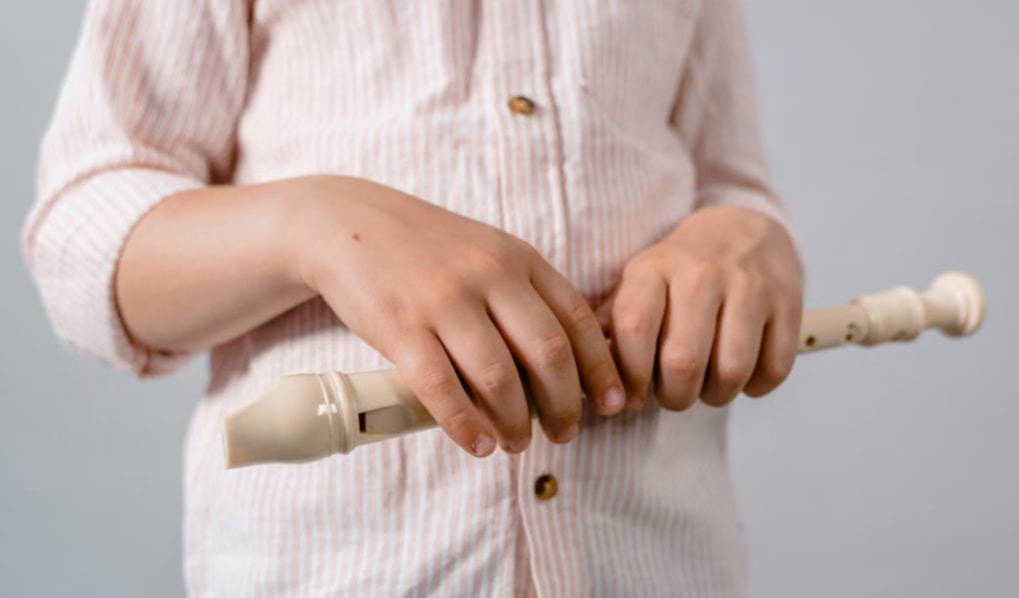
Playing a recorder is simpler than you think. You cover a few holes, blow into it and expect a clean note to come out.
Then you actually play it.
One note sounds fine, the next one squeaks, another sounds strangely airy, and the high notes seem to have a mind of their own. If you remember playing recorder at school, you might even think that slightly painful sound is just what a recorder is supposed to sound like.
It isn’t.
A recorder can have a warm, clear, and surprisingly expressive sound when played properly. The problem is that small changes in your breath, fingers and tongue can make a big difference to the sound coming out of the instrument.
This is also why beginners sometimes get frustrated with the recorder. The instrument is easy to make a sound on, but making that sound consistently good takes more control than people expect.
If your recorder sounds bad, something specific is usually causing it. You may be blowing too hard, leaving a tiny gap over one of the holes, using too much air or not starting each note clearly.
The good news is that most of these problems can be improved once you know what to listen for.
If you want someone to identify problems you may not notice yourself, recorder lessons in Sydney can help you work specifically on breath control, finger coordination, articulation and tone. Sydney Music Lessons lists these as core skills covered during recorder learning.
Why Does My Recorder Squeak?
Squeaking is probably the most familiar recorder problem.
You are playing normally and suddenly a sharp, high sound jumps out. It can feel completely random, but recorder squeaks usually have a reason.
The three most common causes are:
- Blowing too hard: A recorder needs a controlled stream of air rather than a powerful blast. Too much air can make the note jump into a higher register or become unstable.
- Finger holes are not fully covered: Even a tiny gap can affect the note. Your finger may feel like it is covering the hole when part of it is still exposed.
- Your fingers are moving at different times: When changing notes quickly, one finger may arrive slightly later than the others.
If you think you are blowing too hard, play the same note again with slightly less pressure. Think about producing a steady stream of air rather than trying to blow out candles on a birthday cake.
Finger position is also worth checking carefully. This is especially important if the recorder only squeaks when you move between certain notes.
For example, you may be able to play a note perfectly when your fingers are already in position. However, when you reach that same note during a song, it suddenly squeaks. One of your fingers may simply be arriving a little late.
Why Does My Recorder Sound Airy?
An airy recorder sounds weak or breathy rather than clear and centred.
Sometimes beginners respond by blowing harder, but that can actually make the problem worse.
Before changing your breath, check these three things:
- Finger Holes: A small gap may be allowing air to escape
- Airflow: Your breath may be changing too much while holding the note
- Hand Tension: Pressing too hard can make your fingers less comfortable and flexible
Once your fingers are secure, pay attention to your airflow. Choose one comfortable note and hold it for several seconds.
You can try this while you are playing, you can listen carefully and ask yourself:
- Does the volume stay roughly the same?
- Does the note start clearly and then become shaky?
- Does the tone become weaker near the end?
- Does the pitch seem to move as you run out of air?
Try the note again and aim for a smoother, more consistent stream of air.
This exercise might seem boring compared with learning another song, but it teaches you something important. You are learning to listen to the sound you are producing instead of simply checking whether you played the correct note.
As your playing improves, that difference becomes increasingly important.
Am I Blowing Too Hard Into My Recorder?
Probably, if your recorder regularly sounds sharp, harsh or unstable.
One of the first things beginners discover is that the recorder does not need as much air pressure as they expect.
Producing your first sound is relatively easy, but controlling the airflow is what makes the note pleasant. Beginner guidance commonly warns that blowing too hard can produce a loud squeak.
Try this simple exercise:
- Step 1: Play one comfortable note using what feels like your normal amount of air.
- step 2: Now play it again, but slightly softer.
- step 3: Then play it softer again.
At some point, there will not be enough air to support the note properly. Your goal is to notice the range between too little air and too much.
That middle area is where you start developing control.
It is also important to understand that every note does not necessarily respond to your breath in exactly the same way. As your range develops, you will learn how small changes in airflow affect different notes.
This is one reason good recorder playing is more sophisticated than simply “blowing gently”.
You are controlling the air rather than just reducing it.
A useful comparison is speaking. You naturally change your airflow when you whisper, speak normally or call across a room. You do not consciously calculate how much air is required for every word.
With enough practice, recorder breathing starts becoming more natural too.
How Can I Make My Recorder Sound Better?
Instead of trying to fix everything at once, spend a little time listening to one part of your playing.
A simple practice routine could look like this:
| Practice Area | Time | What to Listen For |
|---|---|---|
| Long notes | 3–5 minutes | Steady, clear tone |
| Finger changes | 5 minutes | Smooth movement without squeaks |
| Tonguing | 3–5 minutes | Clean beginning to each note |
| Difficult section | 5–10 minutes | Correct notes and steady rhythm |
| Full song | 5 minutes | Overall musical sound |
You do not need to follow those times exactly. The point is to stop treating every practice session as “play songs for 20 minutes”.
Give yourself one small thing to improve.
If your tone sounds weak today, spend a few minutes on long notes.
If you keep squeaking during one particular transition, practice those two notes.
If the whole piece sounds rushed, slow it down and concentrate on rhythm.
Short, regular practice is usually more useful than waiting for one large practice session. General beginner recorder guidance commonly recommends practicing most days rather than relying on occasional long sessions.
You also do not need to play everything at full speed.
Beginners sometimes think slowing a piece down means they are not good enough to play it properly. In reality, playing slowly gives you time to notice what your fingers, breath and tongue are actually doing.
Once those movements are reliable, speed becomes much easier.
Why Does My Recorder Sound Worse After Playing for a While?
 September 30, 2026
Where Could I Find an Affordable Clarinet Teacher in Sydney?
TL;DR A limited monthly budget can still leave you with options for clarinet lessons in Sydney. Start with the price… September 26, 2026
Where to Actually Look Before You Buy an Instrument
The obvious first search usually isn't the right one. The instinct is almost always the same. A lesson gets booked,… September 23, 2026
What Should I Learn First on Piano? A Beginner’s Step-by-Step Guide
TL;DR Start by learning the keyboard pattern, a small group of notes, finger numbers and a steady beat. Practise a… September 23, 2026
How Much Does Logic Pro Cost for Beginners?
TL;DR Logic Pro is Apple's music production software for Mac. In Australia, Logic Pro for Mac costs $299.99 as a…