The honest answer is: it depends on what you mean by hard. Getting your first sound out of a flute is genuinely one of the trickier beginner moments in music, harder than pressing a piano key, harder than strumming a guitar. But once that first tone clicks, the flute opens up faster than most wind instruments. Most beginners in Sydney are playing simple melodies within a few weeks.
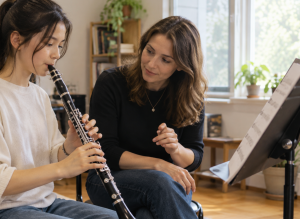
The real challenge with flute isn’t learning the notes. It’s building the physical habits of embouchure, breath control, posture, which determine whether you sound good rather than just technically correct. Those habits take consistent practice and, crucially, a good flute lesson to guide them in the early months.
So yes, flute has a learning curve. But it’s not an instrument that gatekeeps beginners for long.
Is the Flute Expensive?
Flute sits in the mid-range for instrument cost — cheaper than violin or cello at the serious end, more expensive than a basic recorder, and broadly comparable to clarinet or trumpet for a student-grade model.
| Level | Typical Price Range | What You’re Getting |
| Beginner (student model) | $300 – $700 | Plateau or closed-hole, nickel or silver-plated, brands like Jupiter or Yamaha |
| Intermediate | $800 – $2,000 | Open-hole, B-foot joint, better keywork, solid silver headjoint |
| Advanced / Professional | $2,500 – $10,000+ | Solid silver or gold body, handmade pads, professional performance quality |
For most Sydney beginners, a student-model flute in the $400–$600 range from a reputable brand is the right starting point. Avoid the very cheapest instruments on marketplaces — poorly made keys and pads make learning significantly harder and can actually slow down progress in the first year.
A few other costs to factor in:
- Annual servicing. Flutes need a service every one to two years. Basic servicing in Sydney typically starts in the low hundreds; a full pad replacement costs more.
- Sheet music and method books. Around $50 per year at lower AMEB grades, climbing to $100–$200 at higher grades.
- AMEB exam fees. Around $150–$250 per exam, plus an accompanist fee if your teacher doesn’t cover it.
How Do You Play the Flute?
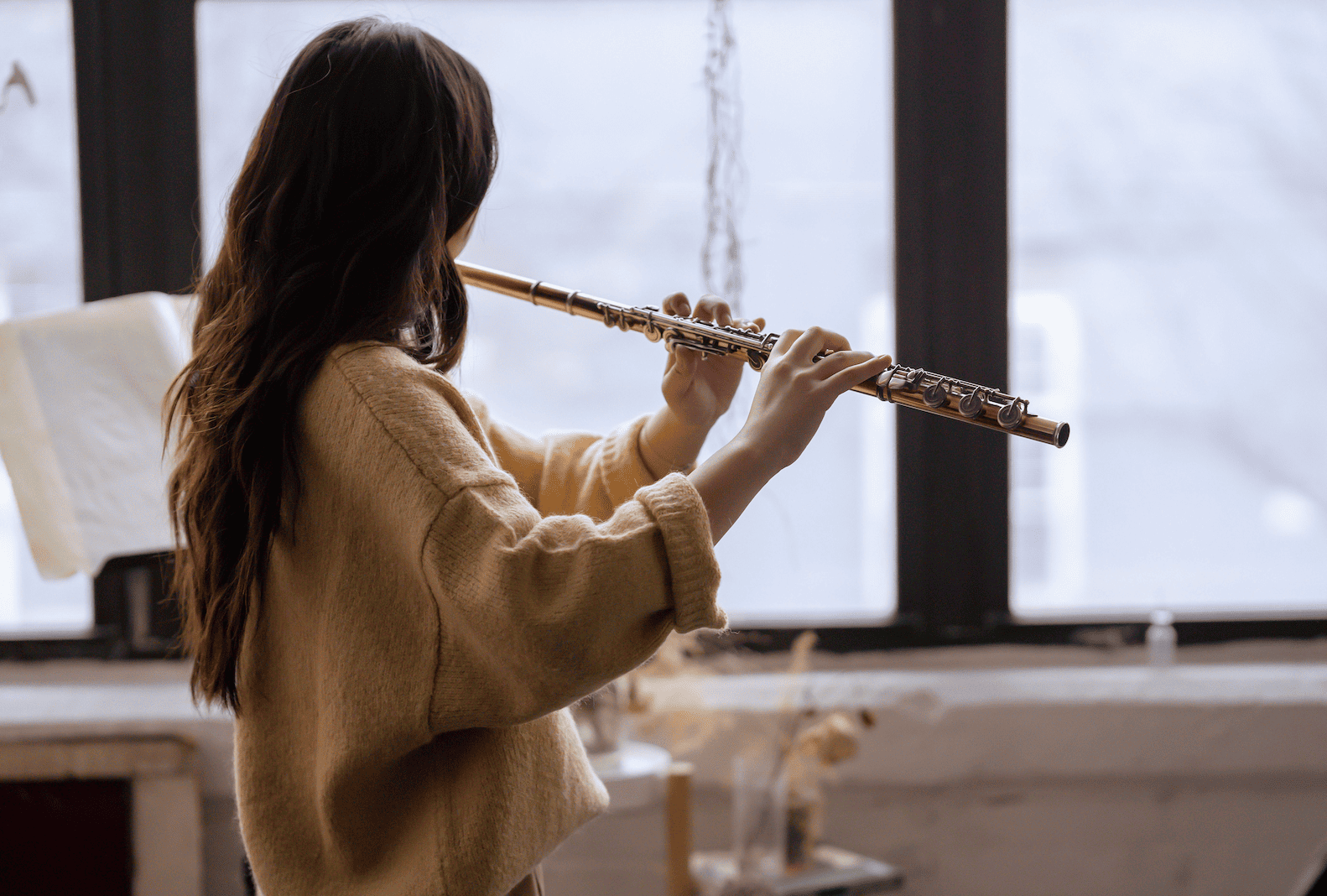
Playing the flute involves three things working together simultaneously: your lips (embouchure), your breath, and your fingers. The tricky part for beginners is that none of these happens automatically. All three aspects have to be learned and then coordinated.
Embouchure is the word for the shape your lips and mouth make to produce sound. On a flute, you blow air across the mouthhole (not into it), angling the airstream so it vibrates the edge of the hole. Getting this angle right is the hardest part of the first few weeks. Too much angle and you get nothing. Too little and you get a breathy, unfocused tone. A good teacher will get you there far faster than self-teaching.
Breath support is what drives the sound. Flute requires a steady, controlled stream of air — not just blowing hard. Beginners often overblow, which produces a sharp, thin tone. Learning to support your breath from the diaphragm rather than forcing air from the throat is a key early milestone.
Fingering is where most beginners expect difficulty but often find it easier than anticipated. The standard Boehm system flute has 16 keys, and most of the common notes in the first year use logical, consistent patterns. Reading music and translating it to finger positions is a learnable skill that comes with practice.
A typical beginner’s learning arc in Sydney looks something like this:
- Weeks 1–4: First tone on the headjoint alone, then full instrument. Learning the first five notes (B, A, G, F, E). Reading basic notation.
- Months 2–4: One full octave. Simple melodies. Introduction to breathing exercises.
- Months 5–12: Second octave, basic dynamics, first AMEB preliminary or grade 1 material.
- Year 2 onwards: Scales, arpeggios, more complex repertoire, and exam preparation if relevant.
Progress is faster with weekly lessons than fortnightly, and faster still if the student practises consistently between sessions such as 15 to 20 minutes daily.
What Is the Best Age to Learn Flute?
The most common starting age for flute in Sydney is between 7 and 10, and that range exists for good reasons. But it’s not a hard rule though, adults pick up the flute successfully all the time, while some children might start earlier.
Suggestion for Kids:
Starting between 6 and 8 is the most common and practical starting age when students typically have the necessary hand size, lung capacity, and focus to make steady progress. Teenagers are also an excellent group to begin learning, as they often progress quickly once their embouchure develops, sometimes catching up to peers who started earlier within 12 to 18 months of consistent practice.
Suggestion for Adults:
There is no upper age limit for adults, who often learn differently from children; while they may not progress in the same way physically, they frequently advance faster in music theory and note reading, making adult beginners common and welcomed by many teachers, including those in Sydney.
The one physical consideration worth knowing: flute requires holding the instrument horizontally to the right for extended periods, which puts asymmetric load on the arms, wrists, and neck. Very young children (under 7) can develop strain from this before their musculature is ready.
Flute vs Recorder: Which Should You Learn?
For most Sydney beginners, flute is the better long-term investment. It has a full orchestral role, a complete AMEB exam pathway to diploma level, and a repertoire that spans classical, contemporary, jazz, and film.
Yet, one honest advantage recorder has is accessibility. A beginner picks it up and gets a sound immediately. While the flute asks more of you upfront. Producing your first tone requires getting the embouchure angle right, which takes most beginners anywhere from a single lesson to a few weeks. That early gap is real, but it’s also temporary.
| Flute | Recorder | |
| First sound | Harder — days to weeks | Immediate |
| Cost to start | $300–$700 | $20–$80 |
| AMEB pathway | Full (through to diploma) | Limited, rarely past grade 4 |
| Orchestral / band role | Standard | Rarely used |
| Long-term ceiling | Professional performance | Hobbyist / early education |
The other thing worth knowing is that recorder habits don’t transfer cleanly to flute. The blowing technique is different enough that students who start on recorder sometimes have to actively unlearn the instinct to blow directly into the instrument. It’s not a dealbreaker, but it does add a transition cost that starting on flute avoids entirely.
Key Takeaways of Playing the Flute:
- The first sound is the hardest part. Most beginners struggle to produce a tone in the first lesson or two, but this almost always resolves quickly with the right guidance.
- Embouchure and breath support are more important than fingering. The notes are learnable. The physical habits that produce a quality tone are what separate a student who plateaus at grade 3 from one who reaches grade 6 and beyond.
- Teacher quality compounds over time. Flute is one of the instruments where poor early habits are hardest to unlearn. An experienced teacher genuinely worth more than a cheaper tutor, even if the lessons look similar from the outside.
- Weekly lessons beat fortnightly. Embouchure and breath support decay faster between sessions than most instrument skills. Two weeks without feedback is long enough for a small technical flaw to become a habit.
- The flute is not as hard as it looks. The sideways hold, the keywork, the breath technique, none of it is as complex as it appears to non-players. Most students are playing simple tunes they recognise within a month.
- Practice time matters more than lesson length. A student doing 15 minutes daily will outpace one doing an hour on weekends, regardless of how good the teacher is.
If you’re weighing up whether to start, the realistic picture is this: flute has a genuine early challenge in producing tone, a few months of building physical habits, and then a relatively smooth progression through the lower AMEB grades for students who practise regularly. It’s not an instrument that stays hard, but it’s an instrument that asks for patience in the first few months and rewards it steadily after that.
 September 30, 2026
Where Could I Find an Affordable Clarinet Teacher in Sydney?
TL;DR A limited monthly budget can still leave you with options for clarinet lessons in Sydney. Start with the price… September 26, 2026
Where to Actually Look Before You Buy an Instrument
The obvious first search usually isn't the right one. The instinct is almost always the same. A lesson gets booked,… September 23, 2026
What Should I Learn First on Piano? A Beginner’s Step-by-Step Guide
TL;DR Start by learning the keyboard pattern, a small group of notes, finger numbers and a steady beat. Practise a… September 23, 2026
How Much Does Logic Pro Cost for Beginners?
TL;DR Logic Pro is Apple's music production software for Mac. In Australia, Logic Pro for Mac costs $299.99 as a…