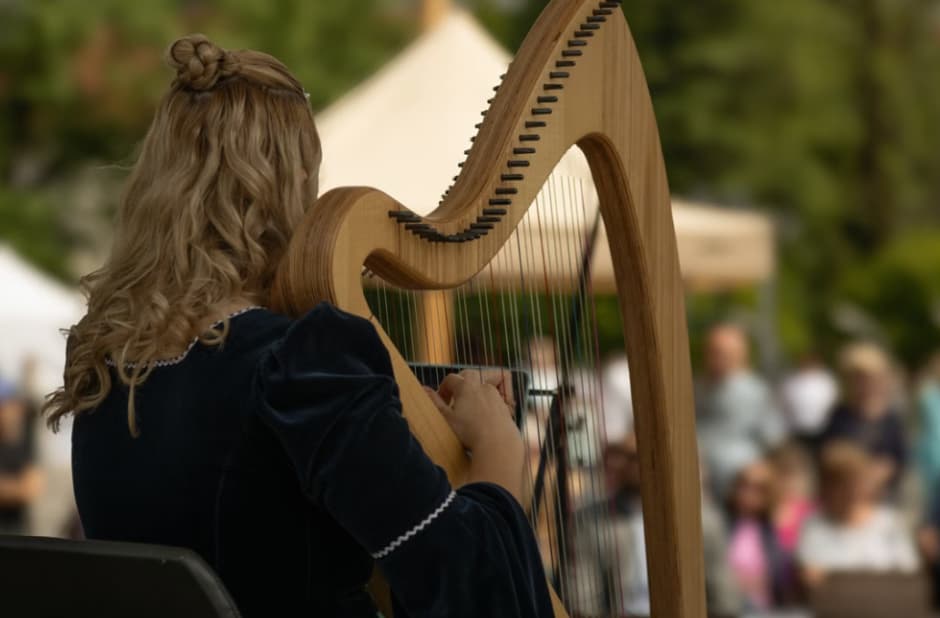
Learning the harp can feel like a struggle at first. There are so many strings in front of you. Both hands need to work together, and experienced harpists make everything look much easier than it actually is.
But beginners are often surprised by how quickly they can start making music.
You do not need months of training just to produce a nice sound. When a harp is tuned correctly, even a single plucked string already gives you a clear musical note. Within the first few weeks, many beginners can start working on simple melodies and basic finger patterns.
The longer journey is learning to play smoothly and confidently.
For most people, a few months of regular practice can build a good foundation. After six months to a year, you may feel much more comfortable reading simple music, using both hands and playing several beginner pieces. Becoming a confident intermediate or advanced harpist takes longer, usually several years of continued learning.
There is no exact timeline that applies to everyone. Someone practising for 20 minutes five days a week will probably develop differently from someone who only plays occasionally. Previous musical experience, practice habits and the difficulty of the music you choose also make a difference.
A simple way to look at the first year is:
| Time Learning | What You Might Be Working On |
| First few weeks | Finding strings, basic finger movements and simple melodies |
| 1 to 3 months | Finger patterns, rhythm and easy pieces |
| 3 to 6 months | Using both hands and playing with fewer pauses |
| 6 to 12 months | Longer pieces, smoother coordination and better music reading |
| 1 year and beyond | Building repertoire, expression and more challenging techniques |
These are not deadlines. You might move through one stage quickly and spend much longer on another. That is a normal part of learning an instrument.
For beginners who want more structure while developing these skills, regular harp lessons in Sydney can also help you understand what to focus on with your harp.
Is Harp Hard to Learn?
The harp is quite friendly to beginners in some ways, but it becomes more challenging as you progress.
One thing that helps at the beginning is the string layout. Harps use colored strings as reference points. C strings are red, while F strings are usually blue or black. Once you become familiar with those colors, finding the notes around them becomes much easier.
At first, you might only be thinking about finding the correct string and making a clear sound. Later, several things start happening at the same time.
A beginner gradually needs to think about:
- Finding the correct strings without constantly looking
- Choosing the right fingers for each group of notes
- Keeping a steady rhythm
- Preparing the fingers for the next notes
- Getting both hands to do different things at the same time
The last point is often where things start feeling more difficult. You might be able to play a melody comfortably with your right hand, then suddenly feel like you are starting again when the left hand is added.
Your brain is trying to manage two different patterns at once.
Think about typing on a keyboard. When you first learned, you probably had to look for individual letters. After enough repetition, you started typing whole words without consciously thinking about every key.
Harp playing develops in a similar way. Movements that initially require a lot of concentration gradually become more familiar.
So, is harp hard to learn? It can be challenging, but beginners do not need to learn everything at once. The difficulty builds gradually as the music becomes more advanced.
How Much Should a Beginner Practice Harp?
For a beginner, around 15 to 30 minutes of focused practice on most days is a good place to start. You do not need to sit at the harp for hours every day. In fact, a short session where you are actually concentrating can be much more useful than a long session where you are tired, distracted or simply playing the same thing over and over.
The key is what you do with those 20 or 30 minutes.
A common beginner habit is to start at the beginning of a piece, play until something goes wrong, restart, and repeat the same process. It feels like practice because you are playing for a long time, but the difficult section may not actually be improving.
Instead, give each part of your practice a purpose.
A simple 25-minute practice session could look like this:
- Start slowly for five minutes. Play a few simple patterns and give your hands time to settle in.
- Spend five minutes on technique. Focus on one particular movement or exercise instead of trying to improve everything at once.
- Work on your difficult section for ten minutes. If two bars keep causing problems, practice those two bars rather than playing the entire piece again.
- Finish with something you enjoy. Spend the final five minutes playing a piece you already know.
You do not have to follow those times exactly. Some days you might spend nearly the whole session solving one difficult section.
What matters more is practicing regularly.
Twenty minutes several times during the week gives your hands repeated opportunities to remember what you have learned. If you practice for two hours on Sunday and then do not touch the harp for another week, you may spend part of the next session trying to remember what you did.
There will also be days when you are not playing particularly well. That happens to everyone. Your fingers might feel slow or a piece that sounded fine yesterday suddenly feels awkward.
One bad practice session does not mean you are going backwards.
Can You Learn Harp in a Year?
Yes, you can learn a lot on the harp in one year. However, you probably will not feel like you have completely “learned the harp”, and that is perfectly normal.
Instead of thinking about the first year as one big goal, it is easier to break it into smaller stages for the first year:
Around 3 months:
You may still be thinking carefully about where your fingers need to go. Simple melodies, basic rhythms and finger patterns can take a lot of concentration.
Around 6 months:
Some movements may start feeling more natural. You may find familiar strings more quickly and feel more comfortable using both hands in simple pieces.
Around 9 months:
Patterns you have seen before may become easier to recognize. Instead of treating every new piece as something completely unfamiliar, you start noticing rhythms and movements you already know.
Around 12 months:
You may have a small collection of pieces you can play comfortably. Your music reading, rhythm and hand coordination may also feel much more natural than they did when you started.
Of course, this is not a strict timetable.
Some people move faster in one area and slower in another. Previous musical experience, practice frequency and the difficulty of the music you choose can all affect your progress.
Instead of worrying about whether you are “good enough” after one year, ask yourself:
- Am I stopping less often?
- Can I find strings more quickly?
- Are my hands working together more comfortably?
- Is my rhythm becoming steadier?
- Can I learn a new piece faster than I could six months ago?
If several of those answers are yes, you are making progress.
How Can I Get Better at Harp Faster?
Most beginners want to know if there is a shortcut to getting better.
There is no trick that replaces regular practice, but there is a better way to deal with difficult music.
Step 1: Find the Exact Problem
Do not simply decide, “I’m bad at this piece.”
Find the exact place where things go wrong. Maybe you can play the first eight bars comfortably but always make a mistake in bar nine.
Now you have something specific to fix.
Step 2: Practice Only That Section
Start with bar nine instead of going back to the beginning.
Play it slowly enough that you can think about what your fingers are doing.
Step 3: Work Out Why It Goes Wrong
If the same mistake keeps happening, stop and look at what is actually causing it.
Maybe one finger is reaching the wrong string. Perhaps your hand is not prepared for the next group of notes. Or maybe the notes are correct, but the rhythm is confusing you.
Step 4: Connect the Music Again
Once bar nine feels comfortable, try bars eight and nine together.
Then add bar ten.
You are slowly putting the piece back together rather than hoping the mistake disappears by itself.
Step 5: Record Yourself
Every now and then, record yourself playing on your phone.
When you listen back, you are no longer concentrating on physically playing the harp. You may suddenly hear little pauses, uneven notes or rhythm problems that you did not notice before.
Keep a few recordings instead of deleting everything.
Listening to yourself from three or six months ago can be surprisingly encouraging because improvements are often much easier to hear over a longer period.
How Do I Know If I Am Improving at Harp?
Learning more difficult songs is an obvious sign of progress, but it is not the only one.
Sometimes improvement is much quieter.
You might realize that you are looking at your hands less often. You might make a mistake and continue instead of stopping immediately. A difficult transition might take three attempts instead of ten.
As a beginner, it is normal for some notes to come out louder than others. You are still learning how much control to use. Over time, the notes should begin to feel more balanced and intentional.
Another good sign is how quickly you understand new music.
When you first start, almost every pattern looks unfamiliar. After months of playing, you start recognizing things you have seen before. A new piece may contain a rhythm or finger pattern that your hands already know.
That makes learning faster.
Progress will not always feel steady, though.
Some weeks you may feel like everything is improving. Other weeks you might spend most of your practice trying to fix one small section. That does not mean the practice is wasted.
Learning harp is made up of hundreds of small improvements that eventually start working together.
After several months, finding strings becomes easier. Your hands begin moving with less hesitation. Your rhythm becomes steadier. Pieces that once looked difficult start looking manageable.
That is a much better way to measure your progress than comparing yourself with another player.
Everyone learns at a different pace, so focus on what you can do now that you could not do a few months ago. Keep practicing regularly, work slowly when something feels difficult, and give yourself enough time to actually enjoy learning the instrument.
If you want help building that progress with regular feedback, Sydney harp lessons can give you a more structured way to keep developing your playing.
 September 30, 2026
Where Could I Find an Affordable Clarinet Teacher in Sydney?
TL;DR A limited monthly budget can still leave you with options for clarinet lessons in Sydney. Start with the price… September 26, 2026
Where to Actually Look Before You Buy an Instrument
The obvious first search usually isn't the right one. The instinct is almost always the same. A lesson gets booked,… September 23, 2026
What Should I Learn First on Piano? A Beginner’s Step-by-Step Guide
TL;DR Start by learning the keyboard pattern, a small group of notes, finger numbers and a steady beat. Practise a… September 23, 2026
How Much Does Logic Pro Cost for Beginners?
TL;DR Logic Pro is Apple's music production software for Mac. In Australia, Logic Pro for Mac costs $299.99 as a…