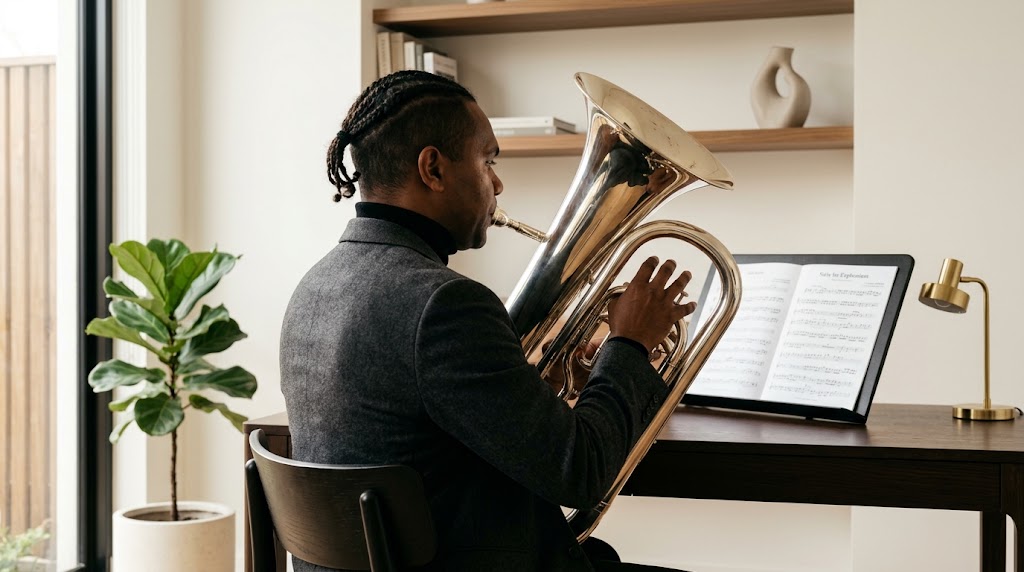
When entering the world of brass instruments, many prospective players initially gravitate toward better-known horns like the trumpet or trombone. However, tucked right in the middle of the brass section sits the euphonium, delivering one of the richest and warmest tones in all of music. Known for its soaring lyrical voice, it plays a vital role in brass bands, wind ensembles, and school music programs. If you are preparing to purchase your very first horn or upgrade from a rental, navigating the instrument market can feel overwhelming. Understanding key specifications helps students choose the right instrument and set up a solid path for long-term musical growth. To explore foundational brass techniques or receive personalized guidance in your local area, looking into brass instrument lessons is a great way to start.
What Is the Euphonium?
The euphonium is a medium-sized tenor-voiced brass instrument pitched in Bb (B-flat). Its name derives from the Greek word euphonos, which translates to sweet-sounding or clear-voiced. Unlike the trombone which uses a hand slide, or the baritone horn which features a narrower cylindrical bore, the euphonium utilizes a wide conical bore. This conical design means the tubing gradually expands from the mouthpiece receiver all the way to the bell, producing a dark, velvety, and resonant sound that fills out ensemble harmonies smoothly.
Because its mouthpiece size and breathing resistance are very accommodating, the euphonium is exceptionally friendly for beginners, teenagers, and adult starters alike. It is widely used in school concert bands, British-style brass bands, university ensembles, and community groups.
Key Features to Consider When Buying a Euphonium in 2026
When comparing models across various manufacturers, several technical specifications directly influence playability, pitch control, and overall cost.
The first factor is the valve configuration. Entry-level student instruments usually feature 3 valves. While a 3-valve horn is lighter and less expensive, adding a 4th valve provides access to lower octave pitches and significantly improves intonation on tricky note combinations. Advanced models use a 3+1 valve layout where the fourth valve is positioned on the side of the horn, operated by the left index finger.
The second factor is the compensating system. Standard non-compensating euphoniums are lighter and simpler to clean. However, professional and high-end intermediate euphoniums feature a compensating system, which automatically reroutes air through extra tuning loops when the fourth valve is pressed. This mechanical innovation solves traditional brass tuning flaws in the low register, allowing players to play perfectly in tune without constantly pulling tuning slides manually.
Research in musical acoustics confirms the performance benefits of compensating valve design. In an acoustic analysis published by the Journal of the Acoustical Society of America (Vol. 138, Issue 4, “Acoustic impedance and resonance alignment in low brass instruments”), researchers evaluated intonation deviations across low-brass configurations. The study revealed that compensating 4-valve systems reduce low-register pitch distortion by up to 28% compared to non-compensating setups, providing significantly greater tonal stability during complex passages.
2026 Euphonium Comparison
| Category | Target Player | Key Features | Pros & Cons | Price Range |
| 3-Valve Student Model | Absolute beginners, young children | 3 top-action valves, lightweight frame, 11-inch yellow brass bell | Easy to hold and blow; limited low range and intonation flexibility | $1,200 to $2,200 |
| 4-Valve Non-Compensating | Intermediate students, school band members | 4 valves (top-action or 3+1), medium-large bore, durable clear lacquer | Expands low range; slightly heavier, requires manual lip tuning in lower octave | $2,200 to $4,500 |
| 4-Valve Compensating | Advanced students, university majors, ensemble players | 3+1 compensating valve system, large bore, solid silver/gold brass options | Flawless low-register intonation and rich tone; heavier frame and higher investment | $4,500 to $9,500+ |
How Much Does a Euphonium Cost?
Understanding the practical financial side of accompaniment involves looking at both rehearsal fees and career opportunities.
For private instruction in major Australian metropolitan areas, brass lesson fees generally range between $60 and $120 per hour depending on the teacher’s qualifications and performance background. Routine maintenance supplies like valve oil, slide grease, and mouthpiece brushes usually cost around $30 to $50 annually.
When acquiring the horn itself, renting is a very practical route for beginners. Monthly instrument rentals typically range from $45 to $80 per month, allowing students to test their commitment before making a full purchase. For those ready to buy, reliable entry-level student models start around $1,200, while fully professional compensating euphoniums used by symphony players can reach $9,500 or higher.
Choosing the right euphonium comes down to matching your current physical needs and musical aspirations with the proper valve system and budget. A solid 3-valve or 4-valve student model offers everything needed to build healthy breathing habits, accurate sight reading, and strong ensemble skills.
Investing in a quality brass instrument opens up rewarding community performance opportunities and deep lifelong musical enjoyment. To explore creative musical avenues, learn fundamental brass and keyboard skills, or expand into arranging and sound craft, taking time to check out music production lessons will help you build a complete set of modern musical tools.
 September 30, 2026
Where Could I Find an Affordable Clarinet Teacher in Sydney?
TL;DR A limited monthly budget can still leave you with options for clarinet lessons in Sydney. Start with the price… September 26, 2026
Where to Actually Look Before You Buy an Instrument
The obvious first search usually isn't the right one. The instinct is almost always the same. A lesson gets booked,… September 23, 2026
What Should I Learn First on Piano? A Beginner’s Step-by-Step Guide
TL;DR Start by learning the keyboard pattern, a small group of notes, finger numbers and a steady beat. Practise a… September 23, 2026
How Much Does Logic Pro Cost for Beginners?
TL;DR Logic Pro is Apple's music production software for Mac. In Australia, Logic Pro for Mac costs $299.99 as a…