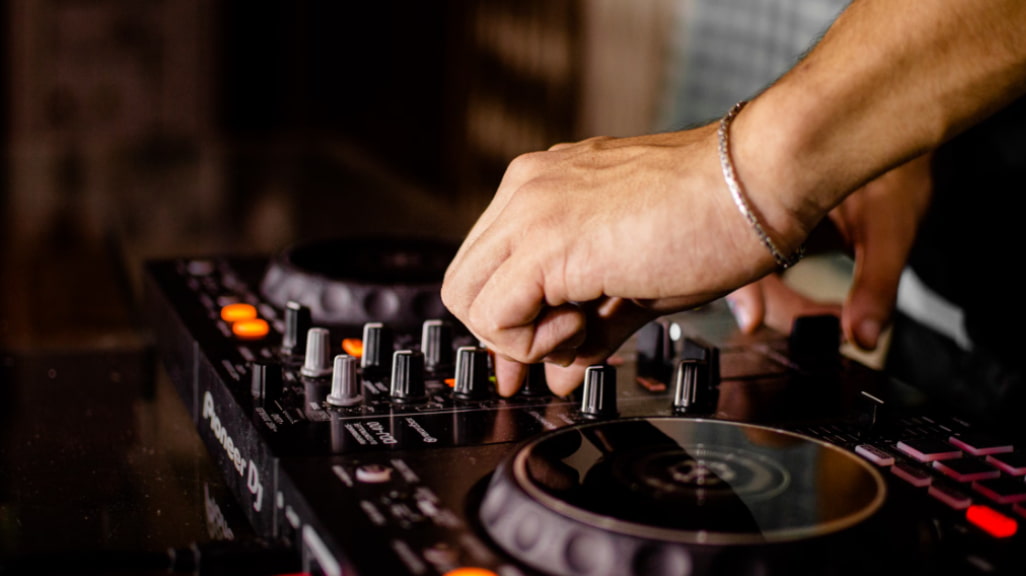
If you have ever stood in a crowd watching a DJ command the room and thought “I want to do that,” you are not alone. DJing is one of the most exciting creative skills you can learn, and the good news is that it is far more accessible than most beginners expect. You do not need years of music training, expensive equipment, or industry connections to get started. What you do need is the right information, a willingness to practise, and a clear idea of where to begin. Whether you plan to teach yourself or take a DJ lesson to speed things up, this guide covers everything a beginner needs to know before stepping behind the decks for the first time.
How To Become A DJ: Step By Step
Starting your DJ journey is more straightforward than most people think. Here is a quick overview of the key steps:
- Get the right equipment: a laptop, a basic DJ controller, headphones, and free software are all you need to begin.
- Learn the fundamentals: beat matching, EQ, track selection, and cue points are the core skills every beginner builds first.
- Practise consistently: 20 to 30 minutes every day builds ear and muscle memory faster than occasional long sessions.
- Take DJ lessons: working with an experienced teacher shortens your learning curve significantly and helps you avoid bad habits early.
- Perform early: playing for friends or recording a mix builds the confidence that solo practice cannot replicate.
Can You Become A DJ With No Experience?
Absolutely. Most DJs started without experience.
DJing does not require any formal music background. You do not need to read sheet music, play an instrument, or have studied music theory. What matters far more is your ear, your enthusiasm for music, and your willingness to put in consistent practice time.
Modern DJ technology has made the learning curve shorter than ever. Software like Serato DJ, Rekordbox, and Traktor are commonly used in DJ lessons and offer visual waveforms, sync tools, and beat grids that help complete beginners understand what they are hearing. A beginner with no experience can get a feel for basic mixing within their very first DJ lesson.
That said, having no experience does not mean there is nothing to learn. Here is what most beginners start from zero needing to develop:
- Ear training: learning to hear whether two tracks are in time and in key
- Beat matching: manually aligning the tempos of two tracks so they blend smoothly
- Track selection: understanding how to choose and sequence songs that work together
- Equipment familiarity: knowing your controller, software, and how the signal flows
- Performance confidence: the ability to stay calm and make decisions in real time
None of these require prior experience to learn. They require practice, patience, and ideally some guidance from someone who has been through it before.
Can I Teach Myself To Be A DJ?
Yes. Self-teaching is how many professional DJs got their start. With YouTube tutorials and DJ forums, there is no shortage of free resources available to beginners. If you are motivated and disciplined, you can make genuine progress on your own.
However, self-teaching has real limitations that are worth understanding before you commit to going it alone instead of booking a DJ lesson.
| Self-Teaching | Learning With A Teacher | |
|---|---|---|
| Cost | Lower upfront | Higher but faster progress |
| Structure | You create your own path | Clear, guided progression |
| Feedback | None. You judge yourself | Immediate, expert correction |
| Bad habits | Easy to develop unnoticed | Caught and fixed early |
| Motivation | Dependent on yourself | Accountability built in |
| Timeline | Long | Short |
The biggest risk of self-teaching is developing bad habits, incorrect beatmatching technique, poor EQ habits, or a reliance on the sync button without understanding what it is doing, that become harder to unlearn the longer they go uncorrected. A teacher catches these things in the first few sessions. Left unchecked, they can plateau your progress for months.
Besides, it is also worth noting that motivation tends to drop faster when you are learning alone. Without a clear structure or someone holding you accountable, many self-taught beginners lose momentum in the first few months before they ever reach the point where DJing starts to feel natural. A teacher not only speeds up the technical side but also keeps you engaged and on track during the periods when progress feels slow.
What Do I Need To Start Becoming A DJ?
Starting out does not require a professional setup. Here is what you actually need as a beginner:
- A DJ Controller This is the most important piece of equipment. A controller connects to your laptop and gives you physical jog wheels, faders, and knobs to mix with. Entry-level options like the Pioneer DDJ-200 or Numark Mixtrack Pro FX are affordable, widely used, and more than enough to learn the fundamentals. You do not need to spend thousands to get started.
- A Laptop and DJ Software Most controllers come bundled with a lite version of software such as Serato DJ Lite or Rekordbox. These are fully functional for beginners and free to use. As you develop your skills, you can upgrade to the full versions. Your existing laptop is almost certainly powerful enough to run DJ software without any issues.
- Headphones A pair of over-ear, closed-back headphones is essential for cueing tracks before they play. You do not need expensive studio headphones, a reliable mid-range pair works perfectly well for learning.
- Music You need tracks to mix. Streaming services like Beatport, Bandcamp, and SoundCloud allow you to download or stream music legally for DJ use. Building a well-organised music library from the start makes learning track selection much easier.
- A Practice Space You do not need a soundproofed room. A desk at home with your controller, laptop, and headphones is all you need to practise effectively as a beginner.
The good news is that most DJ lessons in Sydney provide all equipment needed. This means you can get started and figure out what gear suits you before spending anything on your own setup.
How Long Does It Take To Learn DJing?
This is the question every beginner asks. And the honest answer is: it depends on how you practise, not just how long.
The average beginner can expect to spend between 6 to 12 months to become proficient enough to perform live. However, the milestones along the way look something like this.
| Timeframe | What You Can Expect To Achieve |
|---|---|
| First 1 to 2 sessions | Get familiar with your equipment, load tracks, make your first basic blend |
| First month | Understand beat matching, basic EQ, and how to cue a track |
| 3 months | Build a consistent mixing style, develop track selection instincts |
| 6 months | Play a confident recorded mix, perform for friends or small events |
| 12 months | Ready for a real gig with regular practice and guidance |
A few factors that significantly speed up the process:
- Practising consistently: 20 to 30 minutes every day beats a three-hour session once a week. Frequency builds ear and muscle memory faster than intensity.
- Having a musical background: if you already play an instrument or have a strong sense of rhythm, beatmatching tends to click sooner.
- Taking a DJ lesson: According to research by Creech and Hallam (2011), as cited in Frontiers in Education (2022), structured lessons with direct feedback have been shown to significantly accelerate skill development compared to self-directed learning alone, particularly in the early stages when foundational habits are being formed.
- Performing early: even playing for a small group of friends builds the performance confidence that solo practice cannot replicate.
The key mindset shift for beginners is this: you are not waiting until you are ready to enjoy DJing. The enjoyment starts from your very first DJ lesson.
Private DJ Lessons In Sydney
Sydney has a strong and active DJ community, with teachers who specialise across a wide range of genres, from house and techno to hip-hop, R&B, and open format. Whether you are a complete beginner who has never touched a controller, or someone who has been self-teaching and wants to iron out bad habits, working with a local Sydney DJ teacher gives you a significant advantage.
In-person DJ lessons give you hands-on time with professional equipment and direct feedback in real time, which is particularly valuable in the early stages when technique is being established. Online DJ lessons offer flexibility for those with busy schedules, and many Sydney teachers offer both formats depending on what suits you best.
A good DJ teacher will:
- Assess your current level and set a clear learning path from day one
- Teach you beatmatching by ear, not just by sync button
- Give you real-time feedback on your mixing, track selection, and technique
- Help you build a set that actually sounds good, not just technically correct
- Hold you accountable so you practise between sessions and make consistent progress
When looking for a DJ teacher in Sydney, ask about their performance background, the genres they teach, and whether DJ lessons are tailored to your goals. A teacher who performs regularly brings real-world experience into every DJ lesson and that makes a difference.
 September 30, 2026
Where Could I Find an Affordable Clarinet Teacher in Sydney?
TL;DR A limited monthly budget can still leave you with options for clarinet lessons in Sydney. Start with the price… September 26, 2026
Where to Actually Look Before You Buy an Instrument
The obvious first search usually isn't the right one. The instinct is almost always the same. A lesson gets booked,… September 23, 2026
What Should I Learn First on Piano? A Beginner’s Step-by-Step Guide
TL;DR Start by learning the keyboard pattern, a small group of notes, finger numbers and a steady beat. Practise a… September 23, 2026
How Much Does Logic Pro Cost for Beginners?
TL;DR Logic Pro is Apple's music production software for Mac. In Australia, Logic Pro for Mac costs $299.99 as a…