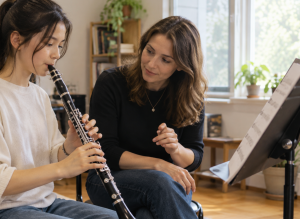
The obvious first search usually isn’t the right one.
The instinct is almost always the same. A lesson gets booked, an instrument is needed, and the search starts with a phrase like “violin for sale” or “piano for sale” typed into Google or a marketplace app. That instinct isn’t wrong exactly; it’s just aiming at the wrong target. Those general searches lead somewhere, but rarely somewhere good.
The default options, and why they fall short
Facebook Marketplace and Gumtree are usually the first stop, mostly because they’re the first thing that comes to mind for buying anything second-hand. The problem is that an instrument isn’t like a couch or a bike. A seller who doesn’t play might list a “good condition” violin with no idea that the bridge has warped, or a “working” clarinet without realising three pads are leaking. Nobody’s being dishonest; they just don’t know what to check, because they’re not a musician themselves.
Retail shops solve the trust problem but introduce a different one: cost. A shop taking an instrument on consignment typically adds 20 to 40 per cent on top of what the seller is actually asking, which either prices the buyer out or means the original owner walks away with far less than the instrument was worth.
And general classifieds sites bury instruments among furniture, cars, and everything else a household is trying to offload. Even a genuinely good listing gets lost in that noise, which makes browsing by instrument almost impossible.
There’s also the simple question of trust. Buying two hundred dollars of second-hand furniture from a stranger carries fairly low stakes if something goes wrong. Buying an eight hundred dollar violin from someone with zero context, no shared community, and no real way to verify they know what they’re talking about is a different proposition entirely. A lot of buyers end up either overpaying for the safety of a shop, or taking a genuine gamble on a stranger to save money, when neither should really be the only choice on the table.
What actually matters when buying one
A useful instrument listing needs a few things a general marketplace rarely delivers: a seller who understands what they’re selling, buyers who can ask a specific, informed question and get a specific, informed answer, and enough context to trust the person on the other end without ever meeting them first. None of that is really about the platform’s design; it’s about who’s actually using it.
That’s the real gap. Musicians selling to other musicians tend to describe things accurately, because they know what a buyer will actually want to know: whether a violin has been recently set up, whether a clarinet’s pads seal properly, whether a drum kit’s heads still have life in them. A dedicated musicians marketplace gets that context for free, just by being full of people who play.
Compare that to what usually happens on a general marketplace. A parent selling their kid’s outgrown violin might describe it as “like new,” meaning it looks unmarked, without realising the strings are five years old and well overdue for replacement, or that the sound post inside has shifted slightly and needs a luthier’s attention before it’s really playable again. None of that shows up in a photo. It only shows up when the person listing it actually understands what they’re describing in the first place.
A marketplace built specifically for this
I’ve come across a ‘Gumtree for musical instruments’ called ORCHESTRATED, a musicians marketplace built around that idea. Sellers list directly to other musicians, with zero commission either way, and listings cover both pre-loved gear and brand-new instruments, so it’s not a second-hand-only option if new is what someone actually wants.
The difference shows up in the small things. A listing tends to mention the size of a string instrument, not just its brand. A piano listing usually notes when it was last tuned. It’s the kind of detail a musician includes automatically and a general seller often wouldn’t think to.
Browsing by instrument
Instruments are organised by family rather than dumped into one long feed. Strings, viola, violin, cello, sit in their own category. Piano and keyboard players have a dedicated section too, covering everything from acoustic uprights to digital keyboards.
Woodwind players aren’t an afterthought either, there’s a full category for clarinets, flutes, and saxophones, and drummers have their own percussion listings. For anyone who’d rather just scroll everything at once, there’s also an option to see every current listing in one place.
It works both ways
The same logic applies on the way out, not just the way in. A family with an instrument a student has outgrown, or a player upgrading to something better, faces the same problem in reverse: a general marketplace full of bargain hunters who don’t know what a fair price looks like, or a shop consignment fee eating into whatever the instrument is actually worth. Listing directly to other musicians tends to get a fairer result on both sides of the transaction, mostly because everyone involved actually understands what’s being bought and sold, rather than guessing at it from a photo and a vague description.
Once something looks right
A good listing is still worth verifying in person where that’s possible, playing a few notes, pressing a few keys, checking a bow before committing. Photos and a well-written description narrow the search, but they can’t replace ten minutes with the actual instrument. Most sellers are happy to arrange that, since they’re musicians too and understand exactly why it matters.
Anyone unsure what they’re looking at, or wanting a second opinion before buying, can also get in touch with the Orchestrated team directly rather than guessing.
None of this replaces good teaching, obviously; an instrument is only ever the starting point. But starting from the right marketplace, rather than a general classifieds search that happens to include instruments, tends to save both money and a fair bit of frustration. Whether that’s the first violin for a six-year-old or a second piano for a family that’s decided to actually commit to lessons, it’s worth five extra minutes to search in the right place rather than the first place that comes to mind.
 September 30, 2026
Where Could I Find an Affordable Clarinet Teacher in Sydney?
TL;DR A limited monthly budget can still leave you with options for clarinet lessons in Sydney. Start with the price… September 26, 2026
Where to Actually Look Before You Buy an Instrument
The obvious first search usually isn't the right one. The instinct is almost always the same. A lesson gets booked,… September 23, 2026
What Should I Learn First on Piano? A Beginner’s Step-by-Step Guide
TL;DR Start by learning the keyboard pattern, a small group of notes, finger numbers and a steady beat. Practise a… September 23, 2026
How Much Does Logic Pro Cost for Beginners?
TL;DR Logic Pro is Apple's music production software for Mac. In Australia, Logic Pro for Mac costs $299.99 as a…