You do not need a degree from a music conservatory or a room filled with vintage synthesizers to start writing your own music. For many people, the idea of creating a song from scratch feels daunting because they assume it requires years of deep music theory training. The truth is much simpler. Music composition is really just the art of choosing sounds you like and putting them together in an order that feels good. Whether you want to write cinematic acoustic pieces, indie pop, or electronic tracks, getting started is far more approachable today than it has ever been. If you are looking into taking music composition lessons, understanding the basic landscape first will give you a massive head start. Research from Creative shows that over 35 percent of Australians actively engage in writing or making music, proving that creative expression through sound is a natural part of daily life for thousands of everyday people.
Do I need expensive equipment to begin?
One of the biggest hurdles that stops people from starting is the misconception that they need to drop thousands of dollars on studio gear. You do not need expensive studio monitors, vintage microphones, or high-end soundproofing to write your first track.
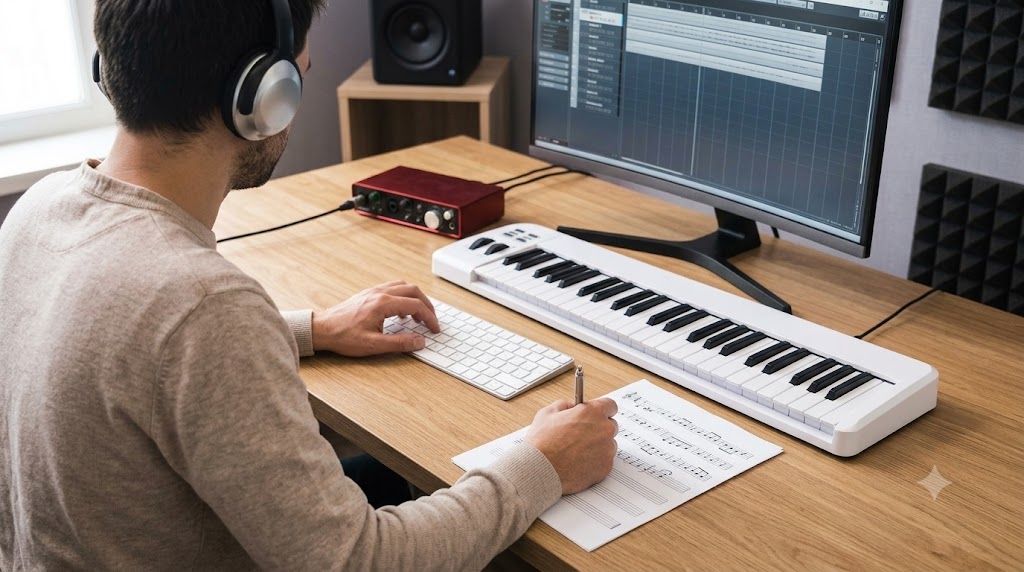
In reality, all you need to start is a basic computer or even a smartphone, a decent pair of everyday headphones, and a piece of software to capture your ideas. If you own an iPhone, iPad, or Mac, you already have GarageBand installed for free, which is one of the most powerful beginner composition tools available. If you prefer working off-screen, a cheap acoustic guitar or an entry-level keyboard along with a notepad and your phone voice recorder app is more than enough. The key in the beginning is to eliminate barriers between your ideas and recording them, rather than worrying about sound quality.
How do I choose the composition software for?
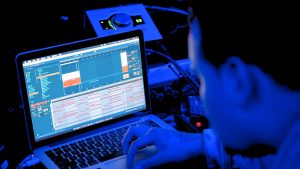
When you transition from humming melodies into recording and arranging tracks on a computer, you will use what is called a Digital Audio Workstation, or DAW. While there are dozens of options on the market, two specific platforms stand out as industry standards for beginners and professionals alike.
Logic Pro is an exceptional choice if you use a Mac and enjoy traditional songwriting, acoustic arranging, or scoring for film and video. It comes with thousands of built-in virtual instruments, high-quality drum kits, and realistic orchestral sounds. It costs $299 as a one-off purchase with no subscription fees, making it incredible value for anyone who wants a complete studio setup straight out of the box.
Ableton Live takes a slightly different approach and is immensely popular for electronic music, hip-hop, beat making, and live performance. It uses a clip-based layout that allows you to trigger loops and experiment with song structures on the fly without getting bogged down in linear timelines. Ableton Live ranges from around $150 for the Intro version up to $1,100 for the Suite edition, though beginner producers can accomplish a huge amount with the entry-level packages.
Neither software is inherently better than the other. The best approach is to try free trials of both and see which interface feels more intuitive to your personal workflow.
What are the first steps in composing my first track?
Starting with a blank project page can feel intimidating. The easiest way to overcome writer’s block is to break the composition process down into simple, manageable building blocks instead of trying to compose a full song all at once.
First, establish a foundation. This could be a basic four-chord progression played on a piano, or a simple drum loop that sets a comfortable tempo. Having a steady rhythmic or harmonic backbone gives your mind something concrete to react to.
Second, craft a simple melody. You can hum over your foundational loop, play around on a keyboard until you find a sequence of four or five notes that sounds catchy, or tap out a rhythm. Do not worry about making it complex. Some of the most memorable songs in history rely on very simple, repeating melodic lines.
Third, organize your ideas into a basic structure. Most modern music follows a straightforward framework, such as Verse, Chorus, Verse, Chorus, Outro. Try arranging your musical ideas into these sections to give the listener a sense of journey and resolution.
A great rule of thumb for beginners is to focus on finishing ten short, rough ideas rather than trying to craft a single masterpiece. Speed and repetition build confidence much faster than endless tweaking.
How long does it take to learn music composition?
Learning to write music is a continuous journey rather than a destination with a fixed finish line, but reaching a point where you feel capable and confident happens faster than most people expect.
Within your very first hour, you can easily build a simple four-bar loop with a drum beat and a bassline. To reach a level where you can independently write, arrange, and export a complete song that sounds cohesive, most beginners need roughly 100 to 200 hours of focused practice. Spread across a few months of consistent effort, this is an easily achievable milestone.
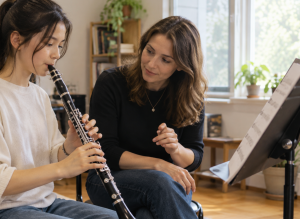
If you decide to take private guidance, lesson duration plays an important role in your progress. A standard 30-minute lesson works well for quick progress checks, troubleshooting technical software questions, or reviewing weekly homework. However, for deep dives into arranging, track breakdowns, and hands-on writing together with an instructor, a 45-minute or 60-minute session provides much better breathing room.
How much do composition lessons cost?
Investing in structured guidance can save you hundreds of hours of trial and error on YouTube. Pricing for private tuition across major Australian cities varies depending on the instructor background and setup, but rates generally follow a predictable industry standard.
For a standard 30-minute private session, you can expect to pay between $40 and $60. For a full 60-minute comprehensive lesson, rates typically range from $75 to $110.
Higher rates often reflect teachers with extensive industry experience, specialized knowledge in specific software like Logic Pro or Ableton Live, or professional studio facilities. Group workshops or online group courses can sometimes offer a slightly more budget-friendly alternative, though one-on-one attention is usually the fastest route to unblocking creative sticking points.
What can I learn in lessons?
Many people assume that composition lessons consist entirely of learning complex chord charts and strict classical theory rules. Modern lessons are far more practical and tailored to what you actually want to create.
In a practical setting, you will learn how to navigate your chosen DAW efficiently so that technical issues do not kill your creative momentum. You will learn the mechanics of melody and harmony, understanding why certain notes work well together and how to build tension and release in a track.
You will also learn instrument arrangement, which is the skill of layering sound so that instruments do not clash or crowd the same frequencies. Later on, you will cover basic sound design and mixing, learning how to use equalization, compression, and reverb so your finished composition sounds clear, balanced, and ready to share with friends or streaming platforms.
How to stay motivated as a beginner composer?
The initial excitement of starting a new piece of music can sometimes fade when you reach the middle stages of a track. Staying motivated requires shifting your mindset away from perfectionism and towards curiosity.
Listen to your favorite tracks critically. Try to identify what instruments are playing, when new elements enter the song, and how the volume changes between the verse and chorus. Recreating simple elements from songs you love is one of the most effective ways to learn real-world techniques.
Furthermore, set small, achievable goals. Instead of telling yourself you need to write a full song today, commit to creating one good drum groove or tweaking one synthesizer synth pad sound. Small daily steps build momentum, and momentum is what finishes tracks.
Beginning your journey into creating original music is one of the most rewarding creative outlets you can pursue. You do not need expensive gear, decades of theory, or complex software to turn an idea into a real track. By taking simple steps, picking software that suits your style, and seeking guidance when you need it, you can turn a passing musical idea into a complete piece of work. If you are ready to explore your creative potential and begin music composition today, taking that first small step is all it takes to get started.
 September 30, 2026
Where Could I Find an Affordable Clarinet Teacher in Sydney?
TL;DR A limited monthly budget can still leave you with options for clarinet lessons in Sydney. Start with the price… September 26, 2026
Where to Actually Look Before You Buy an Instrument
The obvious first search usually isn't the right one. The instinct is almost always the same. A lesson gets booked,… September 23, 2026
What Should I Learn First on Piano? A Beginner’s Step-by-Step Guide
TL;DR Start by learning the keyboard pattern, a small group of notes, finger numbers and a steady beat. Practise a… September 23, 2026
How Much Does Logic Pro Cost for Beginners?
TL;DR Logic Pro is Apple's music production software for Mac. In Australia, Logic Pro for Mac costs $299.99 as a…