No, you do not have to start on a classical guitar, but the specific choice you make right now will completely dictate whether you stick with the instrument or give up in frustration within your first month. If you are looking into booking your very first acoustic guitar lessons, selecting the correct instrument type before your first day of class is the most critical decision you will make.
While both instruments look remarkably similar from across a room, starting on the wrong style for your specific daily goals can make learning feel unnecessarily painful, physically awkward, or emotionally draining. Understanding the core differences in string materials, neck width, and tonal output will remove the guesswork and help you pick the perfect match for your musical journey.
Many total beginners delay starting altogether simply because they are terrified of buying the “wrong” thing and wasting hundreds of dollars. Let’s break down the real-world facts so you can walk into your first lesson with complete confidence.
What is the difference between classical and acoustic guitar?
The single biggest difference between these two instruments comes down entirely to the string material used on the fretboard. Classical guitars use thick, soft nylon strings, while standard acoustic guitars utilise hard, high-tension steel strings.
Beyond the strings themselves, the actual physical build, weight, and architecture of the instruments vary significantly to accommodate these different string types:
- The Neck Width: Classical guitars are intentionally built with a very wide, flat wooden neck that features extra physical space between each individual string. Standard steel-string acoustic guitars feature a much narrower, slightly curved neck profile that makes it significantly easier for smaller hands to wrap around, grip, and form complex chords.
- The Body Shape: Classical guitar bodies are typically smaller, thinner, and much lighter, making them highly comfortable and manageable for young kids to hold on their lap. Standard acoustic guitars have much larger, deeper wooden bodies (such as the popular dreadnought shape) built specifically to project a louder, punchier acoustic sound.
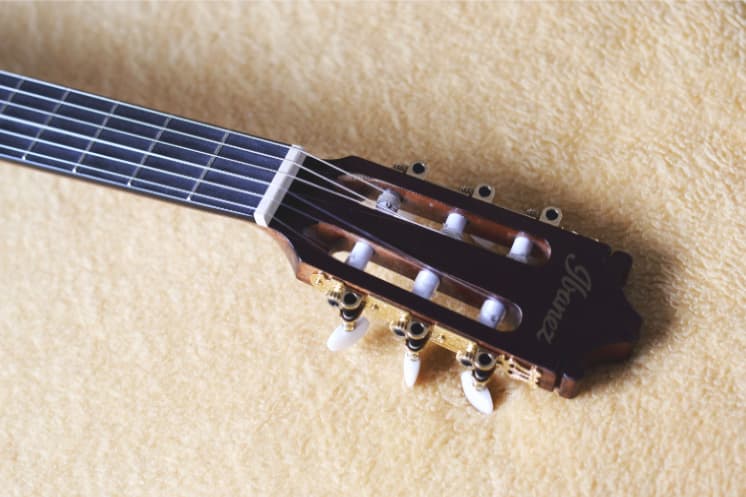
- The Tuning Pegs: Classical guitars feature plastic rollers inside slots in the headstock, whereas steel-string acoustics use solid metal tuning pegs that stick out from the sides. This changes how you change the strings, but doesn’t affect your day-to-day playing.
What does a classical guitar sound like?
Because nylon strings are inherently soft and operate under much lower tension, they produce a warm, mellow, round, and deeply sweet sound. It sounds absolutely beautiful for traditional Spanish flamenco music, intricate folk melodies, classical concert pieces, and delicate fingerpicking styles. However, nylon strings do not naturally project a lot of sharp volume, percussive click, or long acoustic sustain.
Steel strings, on the other hand, produce a bright, crisp, metallic, and loud ringing tone. This is the iconic, driving acoustic sound you hear on almost every modern pop song, indie rock anthem, country track, and folk album playing on the radio today. If your goal is to strum modern radio hits, accompany a singer, or play along with popular bands, a classical guitar will often sound a bit too quiet, muted, and muddy for your taste.
Which guitar is best for beginners?
If your absolute top priority when starting out is avoiding physical finger pain during your first two to three weeks, the classical guitar is physically much easier on the fingertips. Music teachers and parents often choose classical guitars for young children (ages 5–10) because the soft nylon strings require very little downward pressure to produce a clean note, ensuring they won’t get discouraged by physical discomfort while their hands develop basic strength.
However, physically easier does not automatically mean it is the right choice for every student. If an older teen or an adult beginner desperately wants to learn modern rock, pop, or blues music, handing them a classical guitar can actually cause them to quickly lose interest. If the instrument simply cannot produce the bright, percussive, and driving sounds they hear in their favorite songs, practice quickly starts to feel uninspiring, dry, and like an uphill battle.
The psychological barrier of feeling like your playing “doesn’t sound right” is far more dangerous to a beginner than a little bit of finger soreness. If you are emotionally invested in the songs you are trying to recreate, you will find the motivation to push through the initial physical hurdles.
Do you need a classical guitar to play classical music?
Yes, a nylon-string classical guitar is non-negotiable if your primary goal is to study traditional classical finger style technique, learn complex polyphonic arrangements, or sit for formal classical music exams.
The wide string spacing on a classical neck is specifically engineered for intricate finger-style playing, giving both your left-hand fingers and your right-hand plucking fingers maximum clearance to move cleanly without accidentally deadening adjacent strings. If you try to fingerpick complex classical patterns on a narrow steel-string acoustic neck, your fingers will likely feel way too crowded, and the high-tension metal strings will ring out with far too much harsh, overlapping volume.
Furthermore, traditional classical pieces rely heavily on the dynamic warmth and dark tonal color shifts that only nylon can provide. Playing Bach or Tarrega on a steel-string guitar will sound overly aggressive, bright, and completely stripped of its intended emotional character.
Can you put nylon strings on a steel string guitar?
No, you can never swap the string types under any circumstances. This is a massive trap that many well-meaning beginners and parents fall into when trying to find a quick hack around initial finger pain.
Steel-string guitars are internally braced with heavy, sturdy wood to withstand immense physical pulling tension from metal strings. If you put low-tension nylon strings on a steel-string body, they will sit completely loose against the fretboard, fail to vibrate properly, and rattle terribly against the metal frets.
Even worse, if you attempt to wind heavy steel strings onto a delicate, lightly braced classical guitar, the intense tension will literally warp the wooden neck, pull the bridge completely off the top of the body, and permanently destroy the instrument beyond repair. Always use the exact string material your specific guitar was engineered to handle.
Is it hard to learn guitar as an adult?
Many adults talk themselves out of taking lessons because they believe their fingers are too stiff or that they missed the childhood window for learning an instrument. This is a complete myth. While children may pick up physical movements slightly faster, adults possess a massive advantage in analytical thinking, patience, and structured time management.
The primary reason adult beginners fail isn’t a lack of natural talent or finger flexibility. It is almost always due to setting unrealistic, massive practice goals that don’t fit into a busy work-life routine. Trying to force yourself to practice for an hour straight on the weekends is highly ineffective and leads to burnout. Instead, building a highly consistent, stress-free routine is the true key to developing muscle memory.
How to choose a guitar for beginners
Ultimately, the best guitar to learn on is the one that matches the exact style of music you actually listen to and enjoy every single day. Do not buy a classical guitar just because someone told you it’s the traditional way to start, and do not buy a massive steel-string acoustic if it feels physically uncomfortable to hold against your body.
Before making your purchase, take a moment to look at your favourite playlists:
- If your queue is full of acoustic indie, modern pop, classic rock, or country music, buy a steel-string acoustic guitar and simply power through those first two weeks of mild finger adjustments until your natural calluses develop.
- If you prefer the gentle, mellow sounds of instrumental music, traditional folk, or are buying a first instrument for a younger child with small hands, a classical guitar is an incredibly welcoming, pain-free place to start.
Once you have your instrument selected and sitting in your living room, setting up a consistent routine with structured acoustic guitar lessons will give you the exact guidance, professional finger placement adjustments, and personal encouragement you need to start playing your favourite songs with real skill and confidence.
 September 30, 2026
Where Could I Find an Affordable Clarinet Teacher in Sydney?
TL;DR A limited monthly budget can still leave you with options for clarinet lessons in Sydney. Start with the price… September 26, 2026
Where to Actually Look Before You Buy an Instrument
The obvious first search usually isn't the right one. The instinct is almost always the same. A lesson gets booked,… September 23, 2026
What Should I Learn First on Piano? A Beginner’s Step-by-Step Guide
TL;DR Start by learning the keyboard pattern, a small group of notes, finger numbers and a steady beat. Practise a… September 23, 2026
How Much Does Logic Pro Cost for Beginners?
TL;DR Logic Pro is Apple's music production software for Mac. In Australia, Logic Pro for Mac costs $299.99 as a…