For many beginners, learning the violin starts with a surprise.
The instrument often sounds very different from what they imagined. Instead of producing the warm, expressive sound heard in concerts and recordings, the first few weeks can be filled with squeaks, scratches, uneven notes, and inconsistent tone.
This can be discouraging, especially for students who are working hard and practising regularly.
If you’re considering violin lessons in Sydney or have recently started learning, the good news is that a poor sound is usually not a sign of a lack of talent. In most cases, it simply means you’re learning one of the most technically demanding instruments and developing several new physical skills at the same time.
The vast majority of beginner violin problems are normal, expected, and fixable.
Why does the violin sound scratchy?
A scratchy violin sound is one of the most common frustrations for beginners.
Many students assume the problem comes from the instrument itself. In reality, scratchiness is usually caused by bow technique rather than the violin.
Producing a clear tone requires the bow to move smoothly across the string while maintaining the right balance of:
- bow pressure
- bow speed
- bow angle
- contact point on the string
If any of these elements are inconsistent, the sound can become rough or scratchy.
For example, many beginners press too hard with the bow because they believe more pressure will create a bigger sound. The opposite often happens. Excess pressure can choke the string and create a harsh tone.
Others use too little pressure, causing the bow to slide across the string without producing a full sound.
The challenge is that beginners are often trying to control both hands at once. One hand is managing the bow while the other is learning finger placement. It is completely normal for the sound quality to fluctuate during this stage.
Why is it so hard to get a good sound on violin?
Unlike instruments such as piano, the violin does not automatically produce a good note when the correct key is pressed.
Every note requires continuous control.
A violin player must constantly manage:
- bow direction
- bow speed
- bow pressure
- finger placement
- posture
- hand position
This means even a simple note requires multiple skills working together at the same time.
The violin is also extremely honest.
Small mistakes that might go unnoticed on other instruments become immediately obvious. A slightly crooked bow, a tense wrist, or a finger placed a few millimetres off position can noticeably affect the sound.
This is one reason many people believe the violin is difficult.
The instrument is not trying to be difficult. It simply provides immediate feedback on technique.
Unfortunately, that feedback is sometimes delivered with the subtlety of a car alarm.
Do all beginners sound bad on violin?
Almost all beginners sound worse than they expect during the early stages.
This is completely normal.
Professional violinists have spent thousands of hours developing the fine motor skills needed to control their sound. Beginners are seeing only the finished result without seeing the years of practice behind it.
Many students compare themselves to performers online and assume they are progressing slowly. The comparison is usually unrealistic. A more accurate comparison is between today’s practice session and last month’s practice session.
In fact, most beginner violin students improve in ways that are difficult for them to notice themselves.
For example:
- notes become more consistent
- posture becomes more relaxed
- bow control improves
- rhythm becomes steadier
- intonation becomes more accurate
These improvements often happen gradually rather than dramatically.
One reason students become discouraged is that progress becomes harder to hear on a day-to-day basis. Improvement is still happening, but it is often easier for a teacher or parent to notice than for the student.
How do I hold a violin and bow correctly?
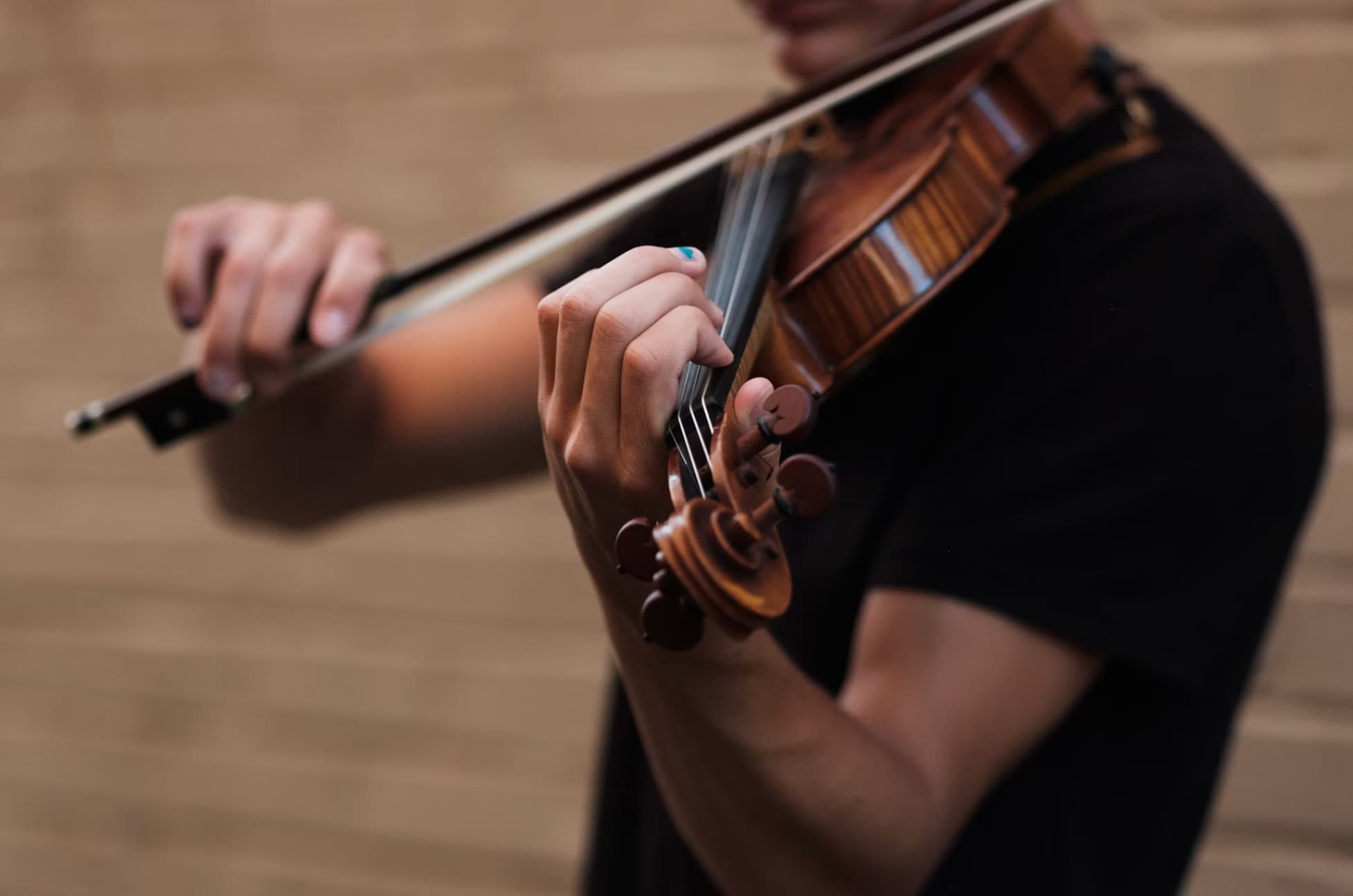
Posture and positioning play a major role in violin sound quality. Many beginners develop habits that make playing more difficult than it needs to be.
Common issues include:
- raising the shoulders
- gripping the neck too tightly
- collapsing the wrist
- holding the bow with excessive tension
- allowing the bow to drift away from the bridge
These habits create unnecessary tension and reduce control.
The problem is that tension often feels normal to beginners.
Students rarely think:
I am using too much tension.
Instead, they think:
Why does this feel so difficult?
The two questions are often connected.
A small posture issue can affect tone, accuracy, comfort, and endurance at the same time.
This is why violin teachers spend so much time correcting seemingly minor details. Small technical adjustments often produce surprisingly large improvements in sound.
Why does my violin sound worse than other beginners?
This is a question many students ask but rarely say out loud.
The short answer is that appearances can be misleading.
Every beginner arrives with a different background. Some students have previous musical experience; others have studied piano, singing, cello, or another instrument before starting violin.
Some practise consistently every week; others practise only occasionally.
Some students are naturally more comfortable with coordination-based activities; others need more time to develop those skills.
None of this determines long-term success.
In music education, early progress is often a poor predictor of future ability.
Students who learn quickly in the beginning do not always continue improving at the same rate. Likewise, students who struggle initially often develop into excellent musicians once their technique becomes more established.
The important thing is to focus on steady improvement rather than comparison.
The violin is not a race, nobody receives a trophy for having the best-sounding open string in Week Three.
Can I learn violin without a teacher?
Yes.
Modern students have access to an enormous amount of information online.
There are tutorials, courses, practice apps, sheet music websites, and educational videos covering almost every aspect of violin playing.
The challenge is not finding information, the challenge is receiving feedback.
A video can explain proper bow technique, it cannot tell you whether your bow is straight right now.
A tutorial can demonstrate good posture, it cannot see that your shoulder is slowly creeping upwards every time you play.
Many self-taught students develop habits that feel comfortable in the short term but create problems later.
This does not mean self-teaching is impossible.
It simply means progress often becomes faster when someone can identify problems before they become deeply ingrained habits.
How long does it take for a violin to sound good?
The answer depends on what “good” means.
For most beginners, noticeable improvements in tone can occur within the first few months of consistent practice. However, developing a polished violin sound usually takes much longer.
A realistic timeline might look something like this:
First few weeks
- learning posture
- producing basic notes
- controlling the bow
- developing coordination
First few months
- reducing scratchiness
- improving intonation
- creating a more consistent tone
- playing simple pieces
Six to twelve months
- greater bow control
- improved musical expression
- stronger rhythm
- increased confidence
One mistake many students make is expecting professional results too quickly.
Learning violin is less like memorising information and more like developing a physical skill, the body needs time to build coordination, precision, and control. Progress often feels slow while it is happening, but when students look back six months later, the difference is usually substantial.
What can a violin teacher help with?
Many people assume violin teachers simply teach songs. Good teachers do much more than that. They help students avoid technical mistakes that can slow progress and create frustration.
This often includes:
- correcting posture
- improving bow technique
- developing intonation
- reducing unnecessary tension
- building effective practice habits
- selecting appropriate repertoire
Perhaps most importantly, teachers help students recognise progress when they cannot see it themselves, a surprising number of beginners consider quitting because they believe they are not improving.
In reality, they are often improving steadily but struggling to notice the small changes that accumulate over time. Having an experienced violin teacher in Sydney can make these improvements easier to identify and build upon.
Most beginner violin problems are not signs of failure. They are signs that learning is taking place.
The students who eventually develop a beautiful violin sound are rarely the ones who avoid mistakes altogether. They are usually the ones who continue long enough to learn from them.
And in many cases, that journey becomes much easier when someone experienced is there to guide it.
 September 30, 2026
Where Could I Find an Affordable Clarinet Teacher in Sydney?
TL;DR A limited monthly budget can still leave you with options for clarinet lessons in Sydney. Start with the price… September 26, 2026
Where to Actually Look Before You Buy an Instrument
The obvious first search usually isn't the right one. The instinct is almost always the same. A lesson gets booked,… September 23, 2026
What Should I Learn First on Piano? A Beginner’s Step-by-Step Guide
TL;DR Start by learning the keyboard pattern, a small group of notes, finger numbers and a steady beat. Practise a… September 23, 2026
How Much Does Logic Pro Cost for Beginners?
TL;DR Logic Pro is Apple's music production software for Mac. In Australia, Logic Pro for Mac costs $299.99 as a…