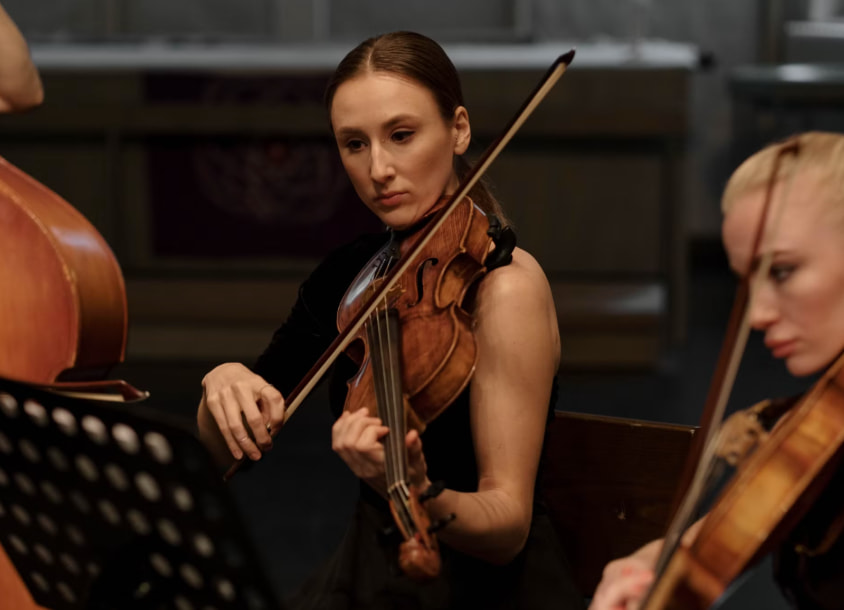
If you’ve ever looked at a violin and viola side-by-side and thought they were basically the same instrument, you’re not alone. To most beginners, they look almost identical. They both have four strings, they’re played with a bow, and they’re held under the chin. But once you start learning about them, the differences become much more obvious.
The violin and viola belong to the same string family, but they serve different musical roles, produce different sounds, and suit different types of players. If you’re considering learning a string instrument, understanding these differences can help you choose the right one before starting lessons.
For students considering violin lessons in Sydney, it’s worth understanding exactly how the violin compares to the viola and why one might be a better fit for your goals.
Is a Viola Just a Bigger Violin?
Not quite.
The easiest way to spot a viola is its size. A viola is noticeably larger than a violin, although the difference isn’t always obvious to someone unfamiliar with string instruments.
Most full-size violins measure around 35.5cm (14 inches) in body length, while violas typically range between 38cm and 43cm (15 to 17 inches).
The reason for the larger size isn’t just aesthetics. The bigger body allows the viola to produce lower frequencies and a richer, deeper tone than the violin.
However, that extra size also affects how the instrument feels to play. Viola players need slightly longer finger stretches, and the instrument can feel heavier during longer practice sessions.
For younger children or smaller players, this physical difference can influence which instrument is the better choice.
What Does a Viola Sound Like Compared to a Violin?
This is where the biggest difference exists.
The violin produces a bright, clear, singing tone. It’s often the instrument that carries the melody in orchestras, chamber ensembles, film scores, and solo performances.
The viola has a darker, warmer, and more mellow sound.
Many musicians describe the violin as sounding similar to a soprano voice, while the viola resembles an alto voice.
If you listen carefully in an orchestra, the violin often stands out immediately because of its brilliance and projection. The viola typically blends into the middle of the ensemble, providing harmony and depth.
Neither sound is better than the other.
The choice simply depends on what kind of tone you enjoy hearing and playing.
Are the Strings on a Violin and Viola Different?
Yes.
Although both instruments have four strings, the tuning is different.
A violin is tuned: GDAE
A viola is tuned: CGDA
The viola’s lowest string is the C string, which sits a fifth below the violin’s lowest note.This lower tuning contributes significantly to the viola’s darker sound. Because the viola strings are thicker and under different tension, they also feel slightly different under the fingers and bow.
For beginners, this isn’t necessarily easier or harder—just different.
Is Viola Harder to Play Than Violin?
Many people assume the viola is simply a harder version of the violin because it’s larger.
The reality is more nuanced.
The larger size means:
- Finger stretches are wider
- The instrument weighs slightly more
- Bow control requires some adjustment
- Intonation can be more challenging because notes are spaced further apart
However, violin players often face a different challenge: the violin’s higher pitch range makes mistakes more noticeable. A slightly out-of-tune note on a violin can stand out immediately, whereas on a viola, the warmer lower register can sometimes be more forgiving. Most teachers would agree that neither instrument is objectively harder overall. They simply present different technical challenges.
Is Violin Better for Beginners?
The answer depends entirely on the student.
If you love soaring melodies, solo performances, and the sound heard in most classical concertos, the violin is often the natural choice.
If you’re drawn to rich, warm tones and enjoy supporting the overall sound of an ensemble, the viola may be a better fit.
For younger children, violin is generally the more common starting point because smaller instrument sizes are widely available.
For teenagers and adults, either instrument can work equally well.
The most important factor is choosing the instrument that genuinely excites you.
Students are far more likely to practise consistently when they love the sound they’re creating.
Why Is Violin More Popular Than Viola?
Several factors contribute to the violin’s popularity.
Historically, composers have written more solo repertoire for violin than viola.
Many famous classical works feature violin soloists, including concertos by composers such as Antonio Vivaldi, Pyotr Ilyich Tchaikovsky, and Felix Mendelssohn.
The violin also appears frequently in classical music, folk music, Irish music, country music, pop recordings and film soundtracks. Because of this visibility, more people are exposed to the violin from a young age.
The viola tends to receive less attention despite playing an essential role in orchestras and ensembles.
Interestingly, strong viola players are often in high demand because fewer students choose the instrument.
Do Violin and Viola Use the Same Sheet Music?
Partially.
One of the biggest differences between violin and viola is the musical clef used. Violin music is generally written in treble clef. Viola music is primarily written in alto clef. Alto clef is relatively uncommon outside viola repertoire, which means viola players learn a different reading system than most other instrumentalists.
This isn’t necessarily difficult, but it does require additional learning. Advanced viola players often switch between alto clef and treble clef depending on the music being performed.
Can Violin Players Switch to Viola?
Yes. One of the biggest advantages of learning either instrument is how transferable the skills are between them. In fact, many professional musicians start on violin before moving to viola later in their musical journey.
That’s because the core foundations remain largely the same. Violinists already understand bow technique, posture, string crossings, vibrato, shifting positions, and most of the fundamental mechanics required to play a viola.
The main challenge isn’t learning an entirely new instrument—it’s adapting to a larger version of a familiar one. The viola’s bigger body means finger spacing is wider, stretches can feel slightly more demanding, and the instrument itself takes some time to get comfortable with.
This is why the transition is usually much smoother than switching to a completely different instrument such as piano, flute, or guitar. Most violinists find that after a short adjustment period, many of their existing skills carry across naturally.
For this reason, it’s not uncommon to find viola players in professional orchestras who originally trained as violinists before discovering they preferred the viola’s deeper, richer sound.
Is There Demand for Viola Players?
Surprisingly, yes. Because violin is more popular, there are usually far more violinists than violists in youth orchestras, community ensembles, and professional groups.
As a result, strong viola players are often highly sought after.
Many school orchestras and youth ensembles actively recruit viola students because the section is harder to fill. For students interested in ensemble performance opportunities, this can be a genuine advantage.
Should I Choose the Violin or Viola?
The best instrument is usually the one whose sound you genuinely love.
Choose violin if:
- You enjoy bright, expressive melodies
- You want the widest range of solo repertoire
- You’re interested in classical, folk, country, or pop violin
- You prefer a smaller instrument
Choose viola if:
- You prefer deeper, warmer tones
- You enjoy harmony and ensemble playing
- You want a unique musical role
- You like the rich middle voice of an orchestra
For many beginners, listening to recordings of both instruments is often the fastest way to make a decision. The sound that makes you want to pick up the instrument and practise is usually the right answer.
Ultimately, there’s no right or wrong choice between violin and viola. Both instruments offer unique strengths, from the violin’s bright, expressive melodies to the viola’s warm, rich harmonies. The best option comes down to the sound you enjoy most, your physical comfort, and the kind of musical role you want to play.
If you’re still unsure, trying both instruments is one of the best ways to experience the difference firsthand. Speaking with an experienced violin teacher, can also help you understand which instrument may suit your goals, musical interests, and playing style before you commit to lessons or an instrument purchase.
 September 30, 2026
Where Could I Find an Affordable Clarinet Teacher in Sydney?
TL;DR A limited monthly budget can still leave you with options for clarinet lessons in Sydney. Start with the price… September 26, 2026
Where to Actually Look Before You Buy an Instrument
The obvious first search usually isn't the right one. The instinct is almost always the same. A lesson gets booked,… September 23, 2026
What Should I Learn First on Piano? A Beginner’s Step-by-Step Guide
TL;DR Start by learning the keyboard pattern, a small group of notes, finger numbers and a steady beat. Practise a… September 23, 2026
How Much Does Logic Pro Cost for Beginners?
TL;DR Logic Pro is Apple's music production software for Mac. In Australia, Logic Pro for Mac costs $299.99 as a…