


Andrew
Bondi Junction
Electric guitar lessons help you play real songs with confidence — riffs, chords, lead, technique, and timing.
Kids starting electric guitar for the first time
Teens learning songs, solos, and improving fast
Beginners starting from scratch
Players joining bands and building stage confidence
Adults starting a new hobby
Returning players getting back into it
Find a teacher on the map below and enquire — we’ll match you to the right fit.
 View Teachers






Comfortable posture seated or standing

Picking accuracy and speed
Clean fretting and technique
Reading tabs and chord charts
Rhythm, timing and groove
Lead phrasing and expression
Scales, patterns and improvisation
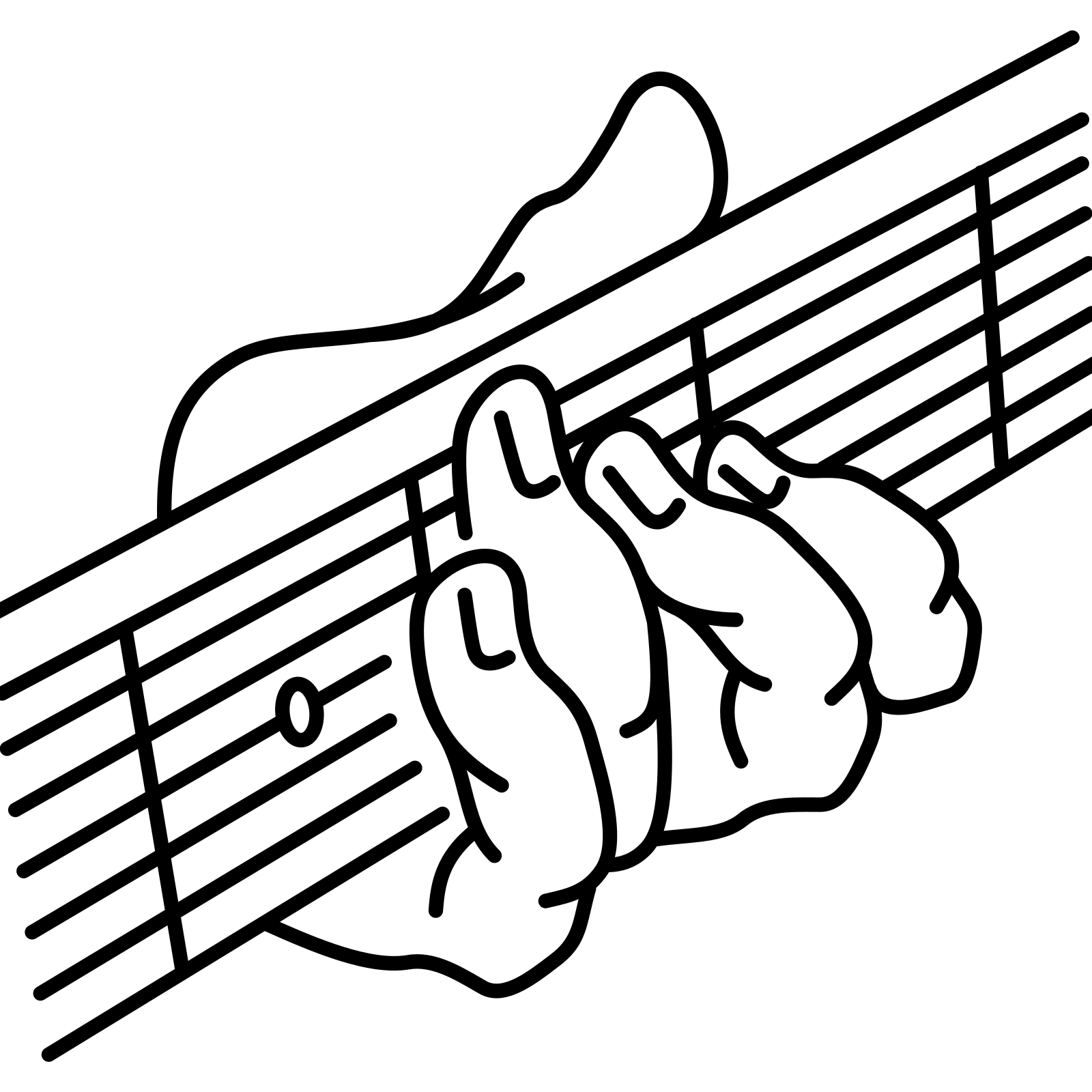
Chords, power chords and riffs
Electric guitar is often easier to start on because the strings are lighter and the action can be set lower, which means less finger pain and quicker progress on clean notes and chord changes. In electric guitar lessons, we’ll also help you set your guitar up properly so it feels comfortable and responds the way it should.
If your taste is modern — rock, blues, funk, metal, indie, pop — electric is built for it. A lot of those parts are about tone as much as notes, and with amp settings and effects you can shape your sound from clean and glassy to warm and thick to aggressive and distorted.
Electric is also more practical for quiet practice. You can play through headphones or at low volume and still get a full tone, which makes it easier to practise consistently without annoying the neighbours. If you’re unsure which type of guitar fits you, see our guitar lessons page.
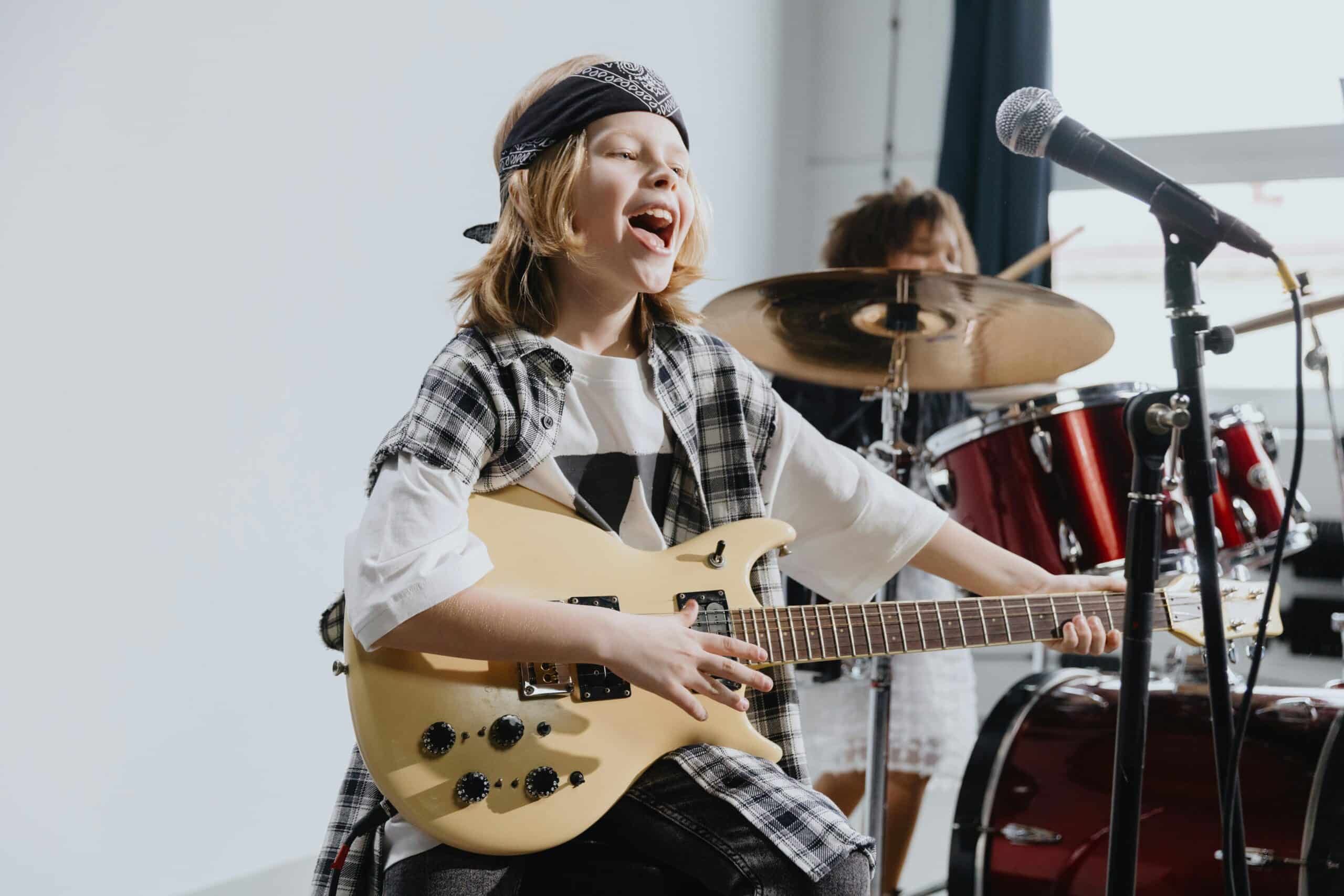
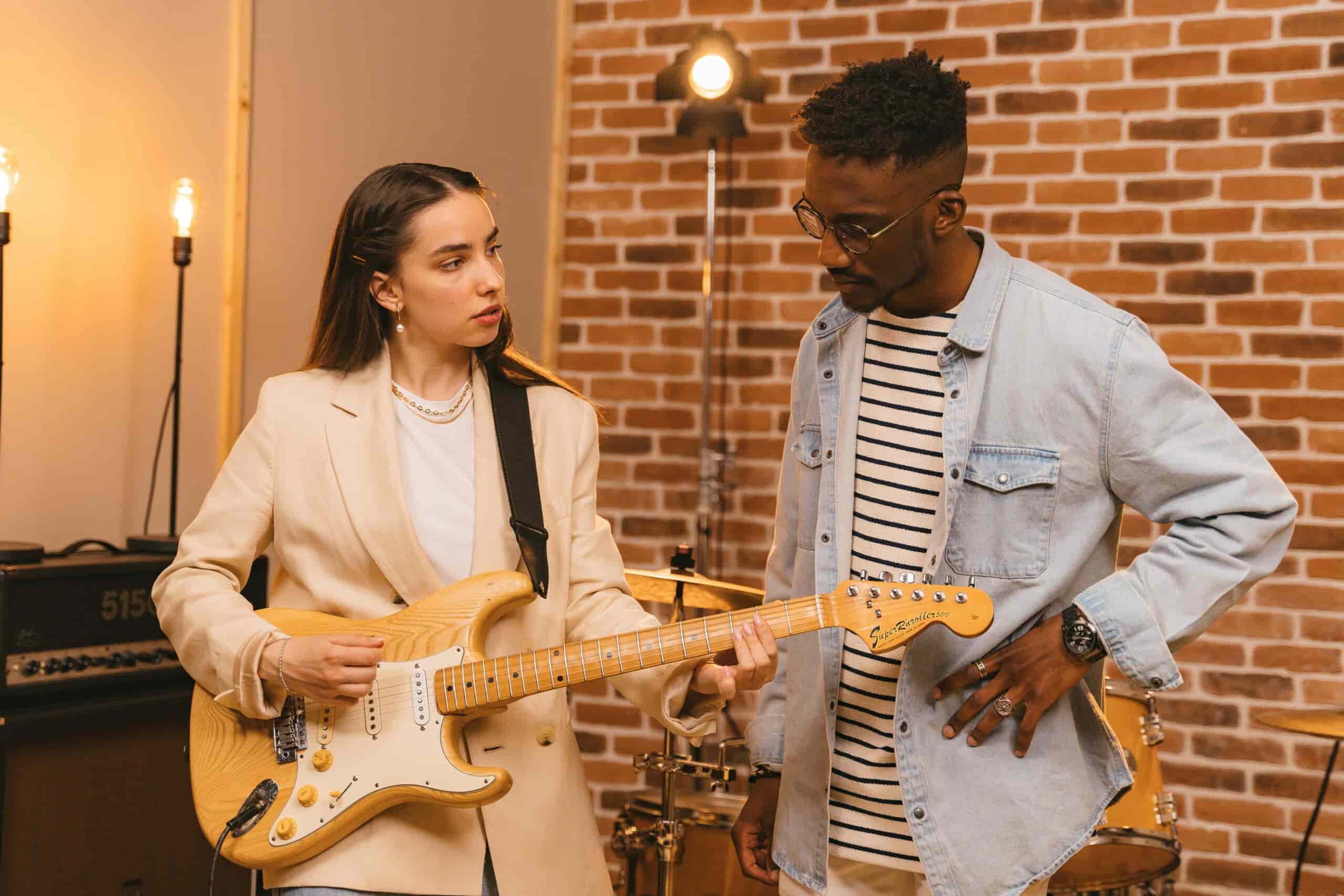
Most beginners hit a few early frustrations: extra string noise, inconsistent picking, bends that don’t land in tune, and an amp sound that’s too harsh or too muddy. That doesn’t mean you’re untalented — it usually means you haven’t been shown the small controls that make electric feel clean and effortless.
Over your first lessons, we tighten the basics fast. You’ll learn string muting so the guitar stays quiet between notes, relaxed alternate picking for smoother rhythm and lead playing, and how to bend in tune without squeezing. You’ll also get simple, usable amp settings for a clear tone, plus practice routines that keep progress steady without feeling overwhelming.
Electric guitar lessons built around your goals — from playing for enjoyment to preparing for exams and assessments.
Share your goal, current level, and timeline, and we’ll match you with the right electric guitar teacher for focused, structured progress.
Rock
Metal
Blues
Pop
Punk
Indie / Alternative
Funk
Jazz
Yes. You’ll need a guitar and a small amp to practise at home. We can help you choose reliable beginner gear.
Many beginners find electric guitar more comfortable thanks to lighter strings and a slimmer neck.
Rock, blues, pop, metal, indie, funk, jazz and more. The electric guitar is one of the most versatile instruments.
Basic riffs come early. Solos take more time, but progress is steady with good technique and practice.
This usually comes from hand position or muting technique. Your teacher will help you clean it up quickly.
Not to start. Basic theory becomes useful once you move into improvisation or more advanced playing.
Yes. Simple scale patterns and phrasing exercises make improvisation accessible early on.
Short, regular sessions build the fastest progress. Even ten minutes a day works well.
No. A clean tone and a simple overdrive setting are enough. Effects can be added later.
At minimum: electric guitar + a pick + a lead (instrument cable) + a tuner. That’s enough to start learning properly.
From there, the most useful extras are a strap (for standing posture), spare picks, and a case/gig bag so it doesn’t get knocked around.
If you’re practising at home, an amp or headphone solution helps a lot (not strictly required for week one, but you’ll want it soon).
Weekly is best for most beginners because it keeps you accountable and stops bad habits from setting in.
Most electric guitar lessons are priced per lesson length, usually 30, 45, or 60 minutes, and rates vary mainly based on the teacher’s experience, travel (if they come to you), and whether it’s private or small group.
As a general market expectation in Sydney: 30 minutes is the cheapest entry point, 45 minutes is the common “best value” option, and 60 minutes is ideal if you want more time for technique + songs + theory in one session.
My son is happy with his electric guitar lessons, his teacher motivates him to practice and it's nice hearing the sound in the house. Thank you Luka.
I found a great electric guitar teacher who's helping me learn to play with different tones.
To kick off, we’ll set up posture and pick technique, then get your amp/effects tone sounding good (without endless knob-twiddling). You’ll likely learn a couple of recognisable riffs, power chords, and a simple rhythm part so you can play along to real songs quickly.
Typical focus: tone setup, picking basics, power chords, first riffs