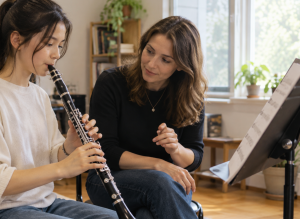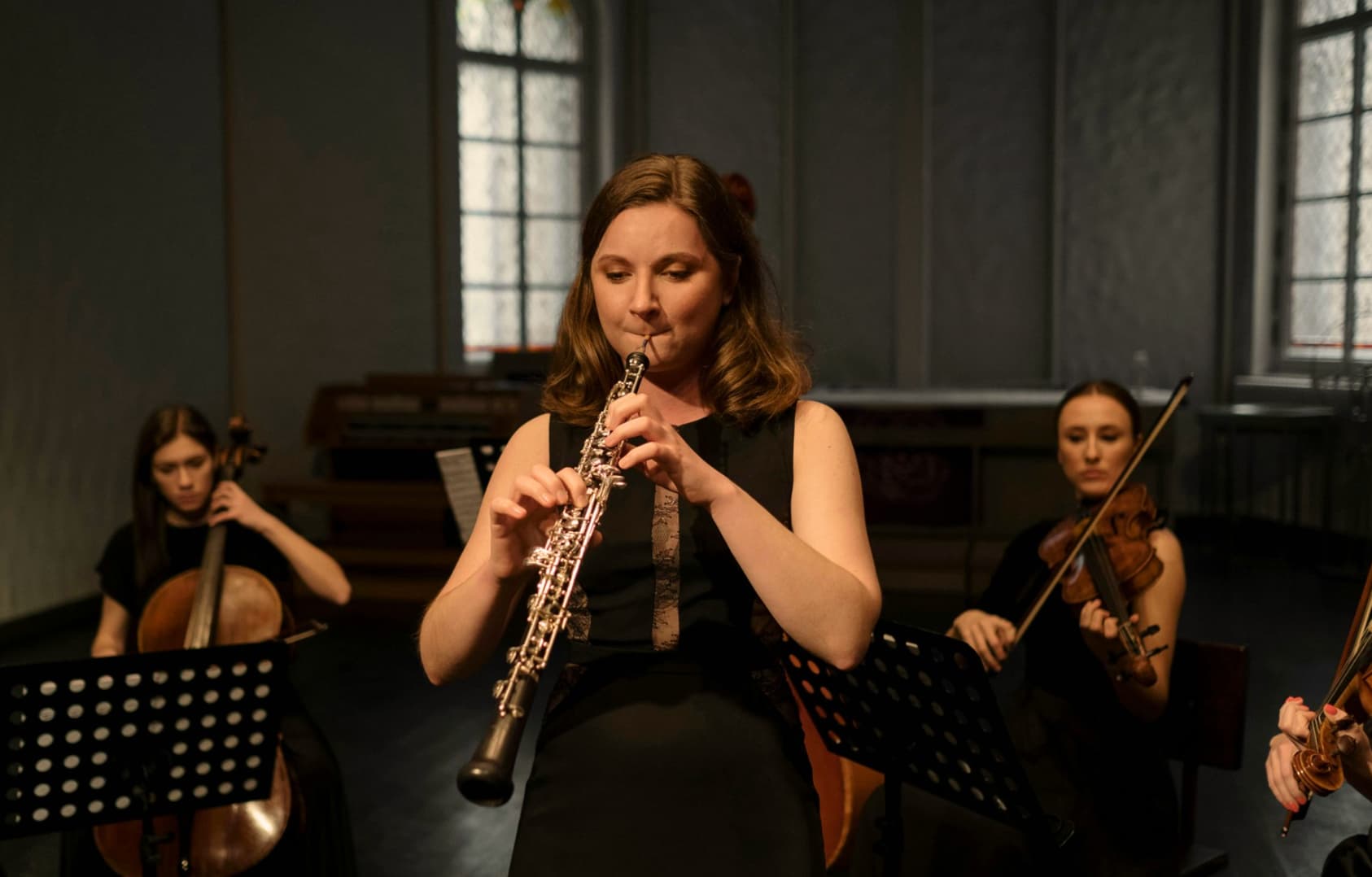
No, the oboe isn’t too hard for beginners with oboe lessons, but it does have a steeper early learning curve than many other instruments. With proper guidance and a good reed setup, most beginners can build control and start enjoying the instrument sooner than they expect.
Is the oboe actually one of the hardest instruments to learn?
Yes, the oboe is one of the more difficult woodwind instruments at the beginning because it exposes mistakes immediately.
Beginners often struggle to produce a stable sound, and even once they do, controlling pitch and tone can feel inconsistent. That’s what creates the “hard” reputation.
What changes over time is your ability to control the instrument. Once the fundamentals start working together, the difficulty drops off. The key is learning correct setup early so the instrument responds consistently.
Why does it take longer just to produce a sound on oboe?
It takes longer because the oboe uses a double reed that requires precise coordination between airflow and embouchure.
You’re controlling a very small vibration point, so even slight imbalances affect the result. That’s why notes can feel unreliable at first.
Common early issues include:
- notes not speaking when expected
- sound cutting out mid-note
- difficulty controlling soft playing
These problems settle once airflow becomes steady and the embouchure stops overreacting. The solution is coordination, not force.
Does taking oboe lessons make a significant difference?
Yes, lessons make a major difference because they remove guesswork.
Without guidance, beginners often build habits that feel logical but make the instrument harder. They tighten too much, overblow, or constantly adjust without understanding why.
With lessons, those issues are corrected early. You start making deliberate adjustments instead of reacting.
That’s when the instrument begins to feel stable instead of unpredictable.
What actually makes oboe harder than other woodwinds?
The oboe is harder because it compresses multiple advanced skills into the very beginning of learning instead of letting you build them gradually.
On many instruments, you can get away with partial control early on. You might not have perfect technique, but you can still produce something recognisable and improve over time.
The oboe doesn’t really allow that.
To produce a stable sound, several things need to work together at once:
- airflow has to be steady and pressurised
- embouchure has to control the reed without choking it
- the reed itself has to respond properly
- finger movement has to align with timing
If one of those is off, the result isn’t just slightly worse. It can fail completely. The note may not speak, the pitch may jump, or the tone may collapse.
That’s what makes the early phase feel difficult. It’s not that each individual skill is unusually complex. It’s that the margin for error is smaller and everything is introduced together.
What changes over time is not the instrument, but how these elements interact. As coordination improves, they stop feeling like separate problems and start working as a single system.
The way to make progress is to reduce the complexity rather than fight it. Instead of trying to control everything at once, you isolate one variable at a time. Stabilise airflow first, then adjust embouchure around it, then refine response.
That shift is what turns the oboe from frustrating into manageable.
What does proper oboe technique actually involve?
Proper oboe technique is about controlling a system rather than applying effort to a single action.
At a deeper level, you’re constantly balancing three interacting components: air pressure, embouchure, and reed response.
Air pressure is the foundation. The oboe requires steady, supported pressure rather than bursts of air. If that pressure drops, the sound collapses. If it becomes uneven, pitch and tone become unstable.
Embouchure acts as a regulator. It doesn’t create the sound, but it shapes how the reed vibrates. Too much pressure restricts vibration. Too little control allows the sound to spread and lose focus. The correct position is not fixed, it’s responsive.
The reed is the variable element. It reacts to moisture, temperature, and how it’s being played. Even small changes can affect how easily notes speak and how stable they feel.
What makes this difficult for beginners is that these components compensate for each other.
If airflow weakens, you might tighten your embouchure to compensate. That might stabilise the note temporarily, but it creates tension and reduces flexibility. If the reed feels resistant, you might increase pressure, which can destabilise pitch.
This creates a feedback loop where one small issue leads to another.
More experienced players don’t eliminate this interaction. They manage it more precisely. They identify which component is off and adjust that specifically instead of reacting with more effort.
That’s why the oboe starts to feel easier over time. Not because the instrument changes, but because your adjustments become more accurate and less reactive.
The practical takeaway is simple: when something feels off, don’t immediately do more. First identify what’s actually changing, then adjust that one element.
Why is the reed such a big factor in difficulty?
The reed is a big factor because the oboe uses a double reed, and that setup is extremely sensitive.
Each reed behaves slightly differently, and that directly affects how the instrument responds.
A reed that’s too resistant can make the oboe feel blocked. A worn reed can make notes unreliable. Even a decent reed can feel difficult if your technique is still developing.
This is where many beginners misread the situation. They assume every issue is their technique.
The solution is recognising that the reed is part of the system. Use reeds suited to your level, replace them regularly, and don’t push through one that clearly isn’t working.
How do you know if your reed is the problem or your technique?
You can usually tell by whether the problem changes when you switch reeds.
If the issue stays consistent, it’s more likely technique. If it changes noticeably, the reed is a major factor.
A simple way to check:
- switch to a reed you trust
- play familiar notes
- notice if response improves immediately
If it feels easier straight away, the reed was a big factor. If not, the issue is likely airflow or embouchure.
Most of the time, it’s a mix of both, which is why early guidance helps you separate them properly.
Can you learn oboe properly without a teacher?
You can learn some basics on your own, but most beginners won’t progress properly without a teacher for very long.
The issue is not learning notes. It’s identifying problems.
On oboe, issues overlap. A tone problem could come from the reed, airflow, or embouchure. Without feedback, it’s difficult to isolate the cause.
This leads to a stage where the instrument feels inconsistent and unpredictable.
Working with a teacher through oboe lessons removes that uncertainty and gives you a clear path forward, especially once you reach that point.
Is the oboe physically harder to play than other instruments?
Yes, but it’s harder in terms of control rather than effort.
The oboe restricts airflow, so players often feel like they have excess air. The challenge is maintaining steady pressure and precise control.
You’re working with:
- controlled air pressure
- subtle embouchure adjustments
- consistent support
Once you stop trying to force the sound, the physical side becomes much easier.
How long does it take to sound decent on oboe?
Most beginners can produce a stable sound within a few weeks, but a more controlled tone usually takes a few months.
Early tone often sounds thin or slightly unstable. That’s expected.
Progress tends to move through:
- consistent note production
- reduced tension
- improved control across the range
The key moment is when playing starts to feel easier rather than forced.
Why does the oboe sound bad at the beginning?
The oboe sounds rough at the beginning because tone depends on coordination that hasn’t developed yet.
Most early issues come from unstable embouchure and inconsistent airflow.
That combination creates a tight or uneven sound.
The important point is that this stage improves with proper adjustment. Small corrections have a significant impact on tone.
How much do oboe lessons and reeds cost in Sydney?
Oboe is usually more expensive to learn than many beginner instruments in Sydney because it’s a specialised instrument and reeds create an ongoing cost.
Private oboe lessons in Sydney often sit around $100 to $130 per hour, though some teachers charge a bit less and others charge more depending on experience, qualifications, and lesson format.
Reeds are an ongoing cost and directly affect playability.
Typical beginner costs include:
- lesson fees
- regular reed replacement
- instrument hire if needed
The key is not just cost, but avoiding wasted effort. Poor reeds or lack of guidance can make the instrument feel harder than it actually is.
Is the oboe harder than clarinet or flute for beginners?
Yes, the oboe is generally harder at the start.
Clarinet is more forgiving because of the single reed. Flute has its own challenges, but once sound production stabilises, it tends to feel more consistent.
The oboe requires more control earlier, which makes the initial phase more demanding.
Oboe vs clarinet vs flute for beginners
For most beginners, the difference comes down to how quickly the instrument becomes stable.
- Clarinet is usually the easiest starting point
- Flute sits in the middle
- Oboe has the most sensitive setup
That doesn’t make oboe the wrong choice. It just means expectations need to be set correctly.
Is the oboe worth learning despite the difficulty?
Yes, the oboe is worth learning if you’re drawn to its sound and willing to work through a more technical start.
It offers a distinctive tone and stands out in ensemble settings. There are also fewer players, which can create opportunities over time.
The early difficulty is temporary. Once control develops, the instrument becomes far more rewarding.
Who is the oboe best suited for?
The oboe suits beginners who are patient and comfortable refining technique.
It tends to work best for people who:
- are willing to build skills properly
- don’t need immediate results
- prefer structured learning
With the right approach, most beginners can handle the learning curve and enjoy the instrument long term.
If you’re thinking about starting oboe lessons
If you’ve read this far, you probably have a clear idea of whether the oboe is something you want to try.
At that point, the biggest difference early on is working with the right teacher. Being able to compare options and find someone who suits your level can make the learning process much smoother.
You can compare oboe teachers to see available teachers at different price points and find one that fits your goals.
 September 30, 2026
Where Could I Find an Affordable Clarinet Teacher in Sydney?
TL;DR A limited monthly budget can still leave you with options for clarinet lessons in Sydney. Start with the price… September 26, 2026
Where to Actually Look Before You Buy an Instrument
The obvious first search usually isn't the right one. The instinct is almost always the same. A lesson gets booked,… September 23, 2026
What Should I Learn First on Piano? A Beginner’s Step-by-Step Guide
TL;DR Start by learning the keyboard pattern, a small group of notes, finger numbers and a steady beat. Practise a… September 23, 2026
How Much Does Logic Pro Cost for Beginners?
TL;DR Logic Pro is Apple's music production software for Mac. In Australia, Logic Pro for Mac costs $299.99 as a…