Yes, you can start bassoon with no music experience, but it’s one of the more technical instruments early on, so starting with proper bassoon lessons makes a noticeable difference in how quickly you feel comfortable and in control.
If you’re serious about learning, beginning with structured bassoon lessons helps you avoid early frustration and build the right technique from the start.
Is bassoon too hard for complete beginners?
No, bassoon isn’t too hard for beginners, but it does feel harder at the beginning than most instruments. The difficulty comes from managing several new skills at once rather than any single impossible technique.
You’re learning how to control a double reed, coordinate more complex fingerings, and maintain steady airflow. That combination feels unstable early on, but it settles with repetition and guidance.
Bassoon, similar to oboe, is an instrument where early technique matters a lot more than on most instruments. If you’re curious how that plays out on a closely related instrument, you can see it clearly in why oboe is hard for beginners. The same idea applies here: it’s not impossible, but self-learning can be unnecessarily difficult.
Are bassoon lessons the best way to start as a beginner?
Yes, bassoon lessons are the most efficient way to start because they remove guesswork and shorten the difficult early phase.
Bassoon has a lot of small technical details that aren’t obvious without music experience. A teacher helps you choose the right reed, build embouchure without overcompensating, develop airflow that supports the sound instead of fighting it, and progress in the right order instead of jumping between things.
Without that structure, beginners often spend months fixing problems that could have been avoided in the first few lessons. Even a small amount of guided learning early on makes a noticeable difference in how quickly things start to feel natural.
What makes bassoon harder than other beginner instruments?
Bassoon feels harder early because more variables affect your sound at once.
- The reed directly controls how the instrument responds
- The instrument is physically large and less intuitive to hold
- Fingerings involve more coordination, especially in the thumbs
- Air needs to be controlled, not forced
None of these are dealbreakers. The challenge is encountering them all at once. The solution is slowing things down and improving one element at a time instead of trying to push through everything simultaneously.
Do you need a teacher to start bassoon?
You don’t strictly need a teacher, but bassoon is one of the instruments where having one makes a disproportionate difference early on.
Without guidance, it’s common to use reeds that don’t suit you, apply too much pressure instead of control, struggle with tone and not know why, or plateau early despite practising.
Bassoon, similar to oboe, is one of those instruments where self-learning becomes a real pain because small technical issues compound quickly. With a teacher, those issues get corrected early, which makes everything else easier.
Can you realistically self-learn bassoon without lessons?
Yes, you can self-learn bassoon, but most people progress slower and hit frustrating plateaus that aren’t obvious to fix.
Bassoon doesn’t give clear feedback when something is slightly off. You can be close to correct and still sound unstable, which makes it hard to diagnose problems on your own.
A few common patterns show up consistently:
- More squeaks and missed notes than other instruments early on
- Slower progress compared to saxophone or clarinet players
- Confusion around whether the issue is technique or setup
What fixes this isn’t more effort, it’s better direction. Even occasional bassoon lessons can dramatically improve how effective your practice is.
How long does it take to sound decent on bassoon?
Most beginners can produce a controlled and reasonably consistent sound within three to six months of regular practice and lessons.
Early progress looks like stability rather than musical polish. Notes respond more reliably, pitch improves, and you feel less like you’re guessing.
Progress can feel uneven at first, then suddenly more consistent. That shift usually comes once your control catches up with the instrument.
Is it easier to start on another woodwind before bassoon?
Yes, it’s generally easier to start bassoon if you already play another woodwind, but that doesn’t mean you should.
If you’ve played clarinet, saxophone, or flute, you already have breath control and coordination, which makes the early phase smoother.
But if bassoon is your goal, starting on another instrument just to bridge into it often wastes time. You end up learning something you don’t really want, then relearning technique again on bassoon.
If bassoon is what you actually want to play, the better move is to start on bassoon and get proper guidance early, ideally through bassoon lessons that are tailored to beginners.
What makes bassoon technically demanding (and how to handle it)
Bassoon is technically demanding because control comes from subtle adjustments rather than obvious ones.
The double reed is the biggest factor. Unlike single-reed instruments, there’s no mouthpiece stabilising the vibration. You’re controlling pitch, tone, and response almost entirely through embouchure and air.
A useful way to think about it is balancing something delicate rather than gripping something solid. Too much pressure destabilises it. Too little control and it doesn’t respond.
The instrument’s size adds another layer. Hand positions, especially around the thumb keys, feel unnatural at first. This isn’t about strength, it’s about efficiency and familiarity.
Intonation also requires active adjustment. You’re constantly making small corrections through air and embouchure. Over time, this becomes instinctive.
The way through this is control, not force:
- Slow practice
- Long tones
- A responsive reed
- Consistent feedback
Once those are in place, the instrument starts to feel far more cooperative.
What happens in bassoon lessons for beginners?
Beginner bassoon lessons build multiple skills at the same time, but in a controlled way.
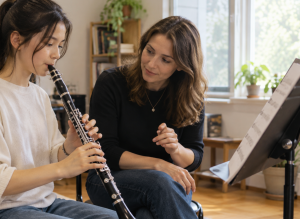
You’ll typically work on reed setup, assembly, embouchure, airflow, and basic finger patterns, then gradually move into simple music once your sound stabilises.
The first few weeks often feel like groundwork rather than performance. That’s normal. Once your sound becomes more stable, progress becomes much more satisfying.
Why beginners struggle with bassoon tone
Bassoon is technically demanding because it asks you to control several unstable variables at once. That’s what makes the early stage feel harder than clarinet, saxophone, or flute. It’s not that any one part is impossible. It’s that the instrument gives you less room for error while you’re still learning the basics.
The double reed is the biggest reason. Unlike single-reed instruments, there’s no mouthpiece doing part of the stabilising work for you. Your embouchure and air directly shape how the note responds, which means small changes can affect tone, pitch, and ease of speaking almost immediately.
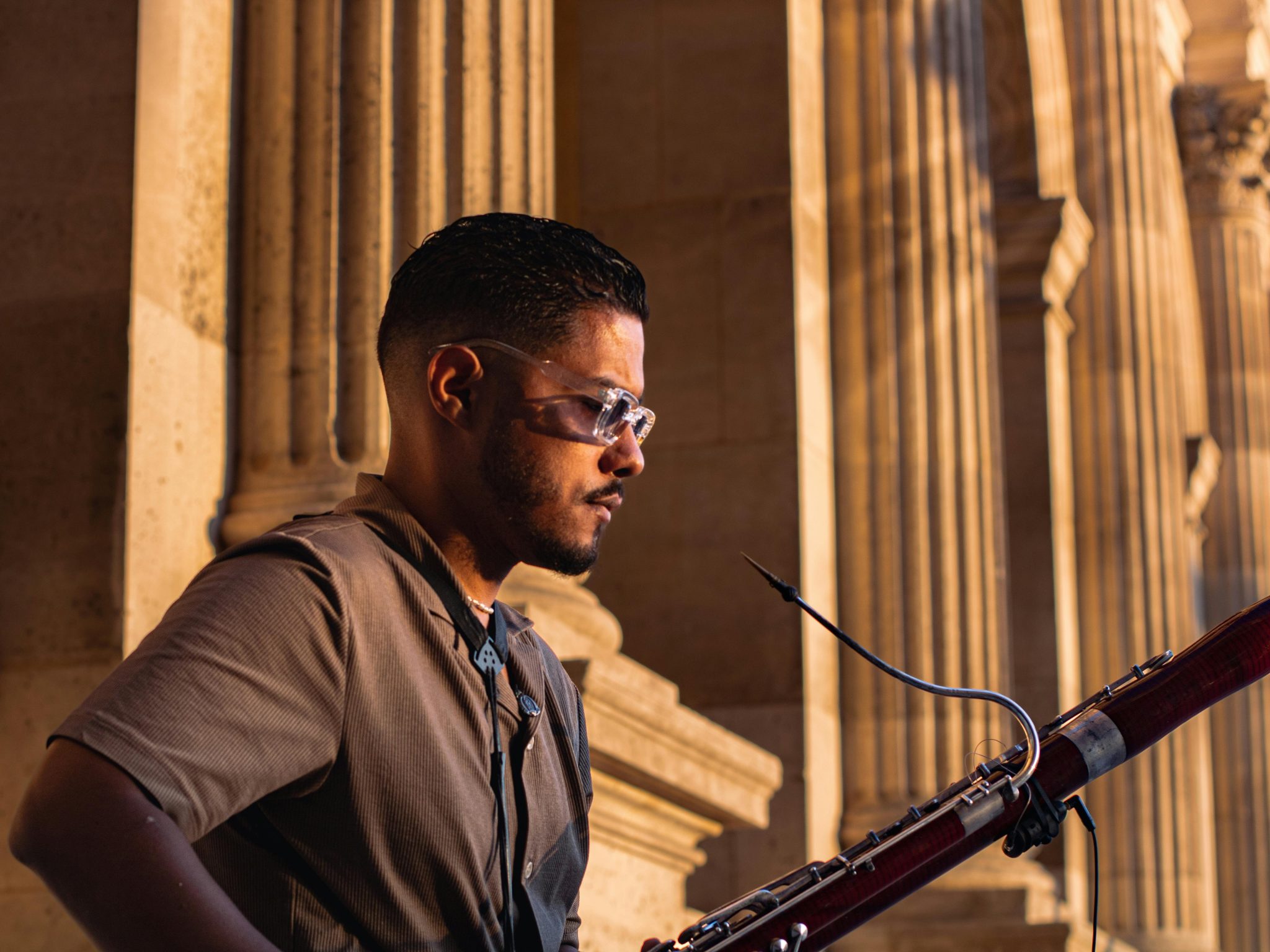
The physical design adds another layer. Bassoon is larger, the keywork is more spread out, and the thumbs do far more work than beginners expect. That makes the instrument feel less intuitive early on, even before you get into tone and tuning.
Intonation is also more active than many beginners realise. You’re not just pressing a fingering and trusting the instrument to do the rest. You’re constantly making small corrections through air support, embouchure, and listening. That becomes natural over time, but at the start it adds a lot of mental load.
What helps is knowing the answer is almost never to force the instrument harder. Most beginners improve faster when they simplify the task: stable long tones, slow finger coordination, a responsive reed, and clear feedback. That’s a big reason bassoon lessons help so much early on. A good teacher can tell whether the issue is your air, your embouchure, your reed, or the instrument itself.
What does a beginner bassoon setup look like?
A good setup removes unnecessary difficulty from the start.
You’ll typically need a reliable student bassoon, a responsive beginner reed, and basic support like a seat strap and maintenance tools.
If the setup is wrong, the instrument feels much harder than it should. Getting this right early makes learning smoother.
Do you need to read music to start bassoon?
No, you don’t need to read music before starting, but you’ll learn it alongside the instrument.
Bassoon is commonly used in ensembles where notation is standard, so it becomes part of the process early.
Is bassoon a good choice if you want to play in ensembles?
Yes, bassoon is a strong choice for ensemble playing because it’s consistently in demand.
There are fewer bassoonists compared to other instruments, which means opportunities often come earlier once you reach a basic level.
What does it actually cost to start bassoon?
Bassoon is one of the more expensive instruments to get into, but most beginners don’t need to buy one straight away.
Hiring an instrument and using suitable reeds is usually the best way to start without unnecessary cost or frustration.
How important is having the right bassoon teacher?
Having a teacher with bassoon-specific experience makes a significant difference, especially early on.
Bassoon has enough technical detail that general guidance can miss important nuances like reed choice, embouchure control, and airflow.
If you want to compare bassoon teachers, it’s worth prioritising someone who understands the instrument deeply rather than a generalist. That early guidance shapes how quickly and smoothly you improve.
A good teacher removes guesswork and keeps your progress moving in the right direction.
Can adults start bassoon with no music experience?
Yes, adults can start bassoon with no experience and often progress well because they approach learning more deliberately.
Consistency matters more than intensity. Short, regular practice tends to produce better results than occasional long sessions.
What separates beginners who stick with bassoon from those who quit
The difference usually comes down to early experience rather than talent.
Beginners who continue tend to get early feedback, use a good setup, and see small improvements early on.
Those who quit often feel stuck without knowing what to adjust.
Reducing friction early is what keeps progress moving and motivation intact.
So should you start bassoon as a beginner?
Yes, if bassoon is the instrument you actually want to play, there’s no real reason to wait or start somewhere else first.
The early phase may feel slower than other instruments, but with the right setup and guidance, it becomes manageable and far more enjoyable.
If you want to give yourself the best chance of progressing efficiently, starting with structured bassoon lessons will make the process clearer, smoother, and far less frustrating.
 September 30, 2026
Where Could I Find an Affordable Clarinet Teacher in Sydney?
TL;DR A limited monthly budget can still leave you with options for clarinet lessons in Sydney. Start with the price… September 26, 2026
Where to Actually Look Before You Buy an Instrument
The obvious first search usually isn't the right one. The instinct is almost always the same. A lesson gets booked,… September 23, 2026
What Should I Learn First on Piano? A Beginner’s Step-by-Step Guide
TL;DR Start by learning the keyboard pattern, a small group of notes, finger numbers and a steady beat. Practise a… September 23, 2026
How Much Does Logic Pro Cost for Beginners?
TL;DR Logic Pro is Apple's music production software for Mac. In Australia, Logic Pro for Mac costs $299.99 as a…