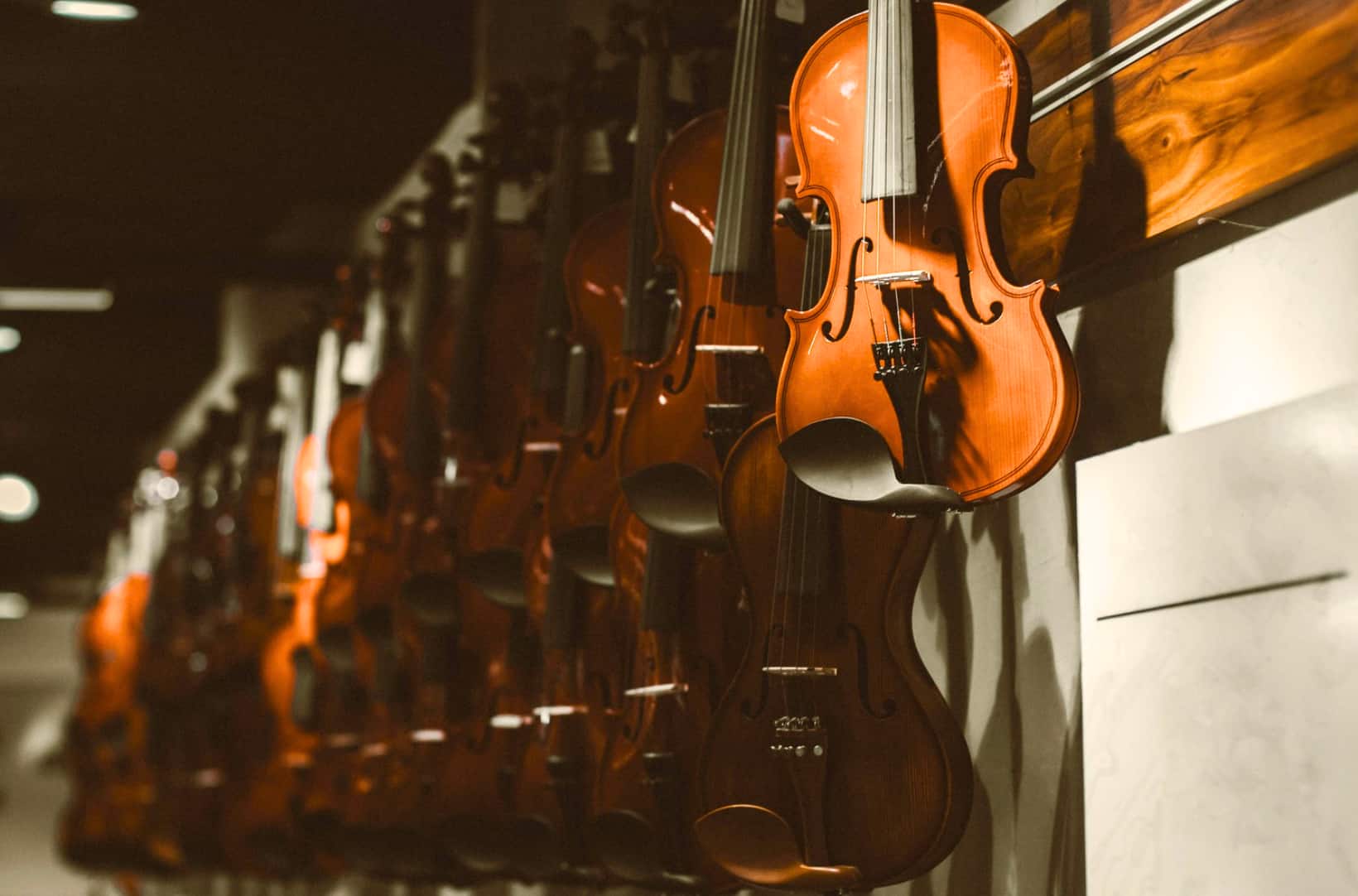
Finding a good beginner violin in Sydney is more confusing than it needs to be, mostly because the market is flooded with instruments that look like violins but don’t play like them. For most beginners starting violin lessons in Sydney, the difference between a playable instrument and a frustrating one comes down to a few specific things that has almost nothing to do with brand names or how the violin looks in photos. Here’s what actually matters.
What is a VSO and why should every beginner know about it?
VSO stands for violin-shaped object, and it’s the most important concept to understand before you spend any money on a cheap beginner violin.
A VSO is an instrument that looks like a violin but isn’t built to the tolerances that allow it to actually function as one. The strings sit too high above the fingerboard, making it physically painful to press down. The pegs slip constantly so the violin won’t stay in tune no matter how carefully you adjust it. The bow produces a harsh, scratchy sound regardless of technique because the bow hair quality or tension is inadequate. Playing on a VSO doesn’t just make learning harder, it makes it nearly impossible to tell whether your technique is improving or whether the instrument is simply fighting you.
One of the most demoralising experiences for a beginner is not knowing whether the problem is them or the instrument. On a quality beginner violin, when your playing improves you can actually hear it. The instrument responds differently as your technique develops. A VSO can only sound as good as it sounds on day one. It won’t grow with you, which means you can work hard and make genuine progress without being able to hear it at all.
VSOs are almost exclusively found in the under $150 to $200 range, particularly in no-name bundles on large online marketplaces. They’re marketed with appealing photos, complete starter kits, and suspiciously low prices. The test is simple: if a complete violin outfit including case, bow, rosin, and shoulder rest is under $150 Australian, it’s almost certainly a VSO. One more red flag worth knowing: if an outfit comes with a spare bridge, that’s a warning sign. Fitting a bridge correctly requires a luthier. A quality violin shouldn’t need a spare bridge unless it’s been dropped and damaged.
What beginner violin should you actually buy?
A properly set-up student violin from a reputable music or string instrument shop, bought as an outfit, is the right starting point for most beginners in Sydney.
Most beginner violins are sold as outfits, meaning they include the violin, a bow, a case, and rosin. That’s genuinely all you need to start. What separates a good beginner violin from a bad one isn’t the brand name on the scroll, it’s playability. A violin that’s easy to press down, stays in tune, and produces a stable tone will support your progress from day one. A poorly set-up violin does the opposite, even if it looks identical to a better instrument in the same price range.
Two models consistently recommended by teachers and available through Australian string shops are the Stentor Student II and the Gliga III. The Stentor Student II sits in the $350 to $450 range, uses solid spruce and maple tonewoods, ebony fittings, and comes as a complete outfit. It’s widely stocked, well made for the price, and recommended by teachers and music schools across Australia. The Gliga III sits in the $600 to $700 range, is handcrafted in Romania, and offers noticeably better tone and response for students who want something that will last longer before needing an upgrade. Both are available through specialist string instrument shops where they’ll be properly set up before you take them home.
How much should a beginner spend on a violin in Australia?
For a serious beginner, somewhere between $400 and $700 Australian dollars is how much you should spend. For a child trying violin for the first time where commitment is uncertain, renting is almost always the smarter option.
Here’s how the price ranges break down honestly:
- Under $200: VSO territory. The instrument will likely work against your development rather than support it. Not recommended for anyone intending to actually learn.
- $200 to $400: Entry-level student violins. Playable but showing their limitations within one to two years of regular practice. Fine as a starting point if budget is genuinely tight, but expect to upgrade.
- $400 to $700: The sweet spot for most beginners. Instruments in this range from reputable brands are properly set up, use solid tonewoods, and will last several years of lessons before technique outgrows them.
- $700 to $1,500: Meaningfully better sound and response. The tone becomes noticeably more complex, think the difference between a store-bought rose and one grown in a garden. Worth considering for committed adult beginners or anyone who already plays another instrument and knows they’ll stick with it.
Above $1,500 at the beginner stage won’t be meaningfully appreciated until technique is well developed. That money is better spent on lessons.
Should a beginner rent or buy a violin?
For children, renting is almost always the right call. For adults who are committed to learning, buying can make more sense from the start.
Children grow, which means the violin size they need changes. A child who starts on a half-size violin will need a three-quarter size within a couple of years and a full size not long after that. Buying at each stage costs significantly more in total than renting, and rental programs from reputable violin shops typically include maintenance, insurance, and the option to upgrade sizes without additional cost. Many also offer rent-to-own arrangements where payments build toward ownership if the child continues.
For adults, the size doesn’t change and the commitment question is more clearly answerable before you start. Renting is still worth considering for the first three to six months if you’re genuinely unsure, but buying a decent beginner violin in the $400 to $700 range is usually better long-term value for anyone who plans to take regular lessons. In Sydney, many students start on a rental for the first few months and then transition to buying once they’ve had a few lessons and understand what they’re actually looking for in an instrument.
What makes a violin good for a beginner to learn on?
The two things that matter most are setup and tonewoods, and neither of them show up clearly in online product photos.
Setup refers to the adjustments made to the instrument before it reaches the player. A properly set up violin has the strings at the right height above the fingerboard, a correctly fitted and positioned bridge, and pegs that turn smoothly and hold their position. String height, also called action, is the single most important factor in how a beginner experiences the instrument. If the strings are too high, everything feels harder than it should. Pressing down becomes genuinely tiring, and the extra effort required to produce notes makes it much harder to focus on technique. A violin that hasn’t been set up, or has been set up poorly, is harder to play and produces a worse sound regardless of what it’s made from.
This is why buying a beginner violin from a specialist violin or string instrument shop matters more than the price tag suggests. Every student violin needs to be set up by a trained luthier before it’s genuinely playable. Most manufacturers don’t do this at the factory, which means the instrument that arrives from an online marketplace hasn’t been adjusted for playability at all. A shop that specialises in stringed instruments will set up the violin before you leave, and a good one will offer ongoing servicing, typically recommended every six months, to keep the instrument performing properly as it adjusts to Sydney’s humidity and temperature changes.
Tonewoods are the second factor. Quality beginner violins use a solid carved spruce top and solid maple back and sides. These woods are used on violins for acoustic reasons that have been refined over centuries, spruce for its strength-to-weight ratio and resonance, maple for its density and reflective qualities. Cheaper instruments substitute laminate wood or inferior species, which produces a thinner, harsher sound that doesn’t improve with playing. The fingerboard, nut, and pegs should all be ebony or boxwood. Budget violins sometimes use white wood painted black to look like ebony, which wears poorly and affects tuning stability.
Does the bow matter as much as the violin?
Yes, and most beginner violin buying guides barely mention it.
The bow is what produces sound on a violin. A poor quality bow with uneven hair tension, a warped stick, or inadequate rosin application makes the instrument sound worse than it actually is and makes technique development significantly harder. The scratchy, unpleasant sound most people associate with beginner violin is often caused as much by an inadequate bow as by poor technique.
Most violins in the $400 to $700 range come with a bow that is adequate for the first year or two of learning. Bows that come with VSOs in the under $150 range are almost universally inadequate. If you’re buying second-hand and the bow is damaged or warped, factor in the cost of a replacement, which starts at around $80 to $100 Australian for a decent beginner option, before committing to the purchase.
What bow should a beginner get?
If your violin comes as a properly set-up outfit from a reputable shop, the bow included will be adequate to start on. Most outfits in the $400 to $700 range include a brazilwood bow that handles the first year or two of learning without being a limiting factor. You don’t need to buy a bow separately when you purchase a quality outfit.
If you do need to buy a bow separately, whether as an upgrade, a replacement for a damaged one, or because you bought a second-hand violin without one, there are two materials worth knowing about at the beginner level.
Brazilwood is the standard for student bows. It’s a dense tropical hardwood that’s affordable, reasonably flexible, and produces a decent sound. A quality brazilwood bow in the $80 to $120 Australian range is a meaningful step up from the bows that come with VSOs.
Carbon fibre bows are worth considering particularly for children or anyone in a variable climate. They don’t warp with humidity changes the way wood does, they’re more durable, and at the same price point as a quality brazilwood bow they’re often the more practical choice. A decent carbon fibre beginner bow runs from around $100 to $150 Australian.
For most beginners the priority is making sure the bow hair is in good condition, properly rosined, and not warped. A teacher can assess whether your bow is working with or against you, which is another reason to start lessons before spending money on upgrades.
What are factory strings and why do they matter?
Most beginner violins, even decent ones, are sold with factory strings, meaning cheaply made strings installed at the manufacturing workshop. Factory strings produce a thin, harsh sound that will put many beginners off playing regardless of how good the instrument itself is.
A quality set of student strings from a reputable manufacturer costs around $50 to $100 Australian and makes a meaningful difference to tone warmth and playability. This is worth factoring into your total budget rather than treating as an optional extra. Many specialist violin shops in Sydney replace factory strings before sale as part of the setup process. It’s worth asking specifically whether this has been done before you accept the instrument.
What are geared pegs and should a beginner consider them?
Traditional wooden violin pegs work by friction, and they expand and contract with changes in humidity and temperature. In Sydney’s variable climate, this can make tuning frustrating or genuinely difficult at certain times of year, with pegs either slipping constantly or seizing up and refusing to move at all. For a beginner who is already managing bow hold, intonation, posture, and reading music, adding difficult tuning to the list is an unnecessary burden.
Geared pegs look identical to traditional pegs from the outside but work like guitar tuning pegs internally, turning smoothly with consistent resistance regardless of humidity. They make tuning faster, more precise, and reliable in all conditions. They’re not standard on most beginner outfits but can be installed by a luthier for an additional cost, typically around $150 to $200 Australian including installation. They’re worth considering particularly for children, self-directed learners, or anyone who lives somewhere with significant seasonal humidity changes. A violin teacher in Sydney can advise whether they’re worth prioritising for your specific situation.
What violin size does a beginner need?
Adults and teenagers need a full size, written as 4/4. Children need a fractional size based on arm length, not age. Petite adults, generally those around 155cm or shorter, may find a 7/8 size more comfortable than a full 4/4 and it’s worth trying both if you’re in that range.
The correct way to measure for a child’s violin is to have them extend their left arm fully and measure from the neck to the centre of the palm. This measurement maps to standard fractional sizes. Age is sometimes used as a rough guide but it’s unreliable because children vary significantly in arm length at the same age. A violin that’s too large creates poor posture and technique habits that need correcting. A violin that’s too small limits reach and creates different problems. One thing worth knowing: children cannot grow into a larger violin. Buying a size up to save money on future upgrades doesn’t work and creates physical strain and technique problems in the meantime.
A teacher can confirm the correct size at your first lesson, which is another reason to start lessons before committing to a purchase.
Is buying a beginner violin online safe?
It depends entirely on where you buy and what you’re buying, and the risks are specific enough to be worth understanding.
The main risk with buying a beginner violin online is receiving an instrument that hasn’t been properly set up. Even a good quality violin can play poorly if the bridge is incorrectly positioned, the strings are too high, or the nut hasn’t been properly cut. A violin shop in Sydney will set up the instrument before you leave. An online order from a general marketplace or overseas warehouse won’t.
There’s also the assembly risk that most people don’t anticipate. Cheap violins from large online marketplaces often arrive in pieces requiring the buyer to fit the bridge, install the strings, and adjust the pegs, none of which a beginner has any idea how to do correctly. Even if nothing is broken, an incorrectly assembled violin is unplayable.
For second-hand purchases specifically, structural damage is worth knowing how to check for. A crack in the pegbox, for example, means one or more strings can never hold sufficient tension and the violin effectively can’t be tuned. This kind of damage isn’t always visible in seller photos and a beginner wouldn’t know to look for it. If you’re buying second-hand, having a luthier assess the instrument before committing is worth the small cost of their time. It’s also worth checking whether the seller offers any warranty or guarantee on second-hand instruments, as this provides some protection if structural issues emerge after purchase.
For a first beginner violin in Sydney, buying from a specialist shop where you can hold the instrument, hear it played, and have it properly set up before you leave is worth more than saving money online.
What accessories does a beginner violin need from day one?
A shoulder rest is essential. The violin is held between the chin and the collarbone, and without a shoulder rest most people find the position uncomfortable and difficult to maintain. Different shoulder rest models suit different body proportions and a teacher can help identify which style works. Rosin for the bow is non-negotiable. Without it the bow won’t grip the strings and produces no sound. A clip-on tuner makes the early months significantly less frustrating since developing the ear to tune by pitch alone takes time. A basic case is usually included with most violin outfits in the reasonable price range, but check that it has adequate padding and a secure bow holder.
Extra strings are worth having on hand. Strings break at inconvenient times and having a spare set costs very little compared to the disruption of a cancelled lesson.
Should you buy a beginner violin before or after starting lessons?
A teacher can assess your arm length for correct sizing, tell you whether a specific instrument has been properly set up, identify whether a bow is adequate, and recommend specific options that match your budget and goals. They also know the local Sydney violin market well enough to steer you toward reputable shops and away from common traps. Many students who buy before their first lesson end up with something that doesn’t suit them or that creates unnecessary friction in the early months. However, if you find a trustworthy expert at a music shop, they can guide you well too.
 September 30, 2026
Where Could I Find an Affordable Clarinet Teacher in Sydney?
TL;DR A limited monthly budget can still leave you with options for clarinet lessons in Sydney. Start with the price… September 26, 2026
Where to Actually Look Before You Buy an Instrument
The obvious first search usually isn't the right one. The instinct is almost always the same. A lesson gets booked,… September 23, 2026
What Should I Learn First on Piano? A Beginner’s Step-by-Step Guide
TL;DR Start by learning the keyboard pattern, a small group of notes, finger numbers and a steady beat. Practise a… September 23, 2026
How Much Does Logic Pro Cost for Beginners?
TL;DR Logic Pro is Apple's music production software for Mac. In Australia, Logic Pro for Mac costs $299.99 as a…