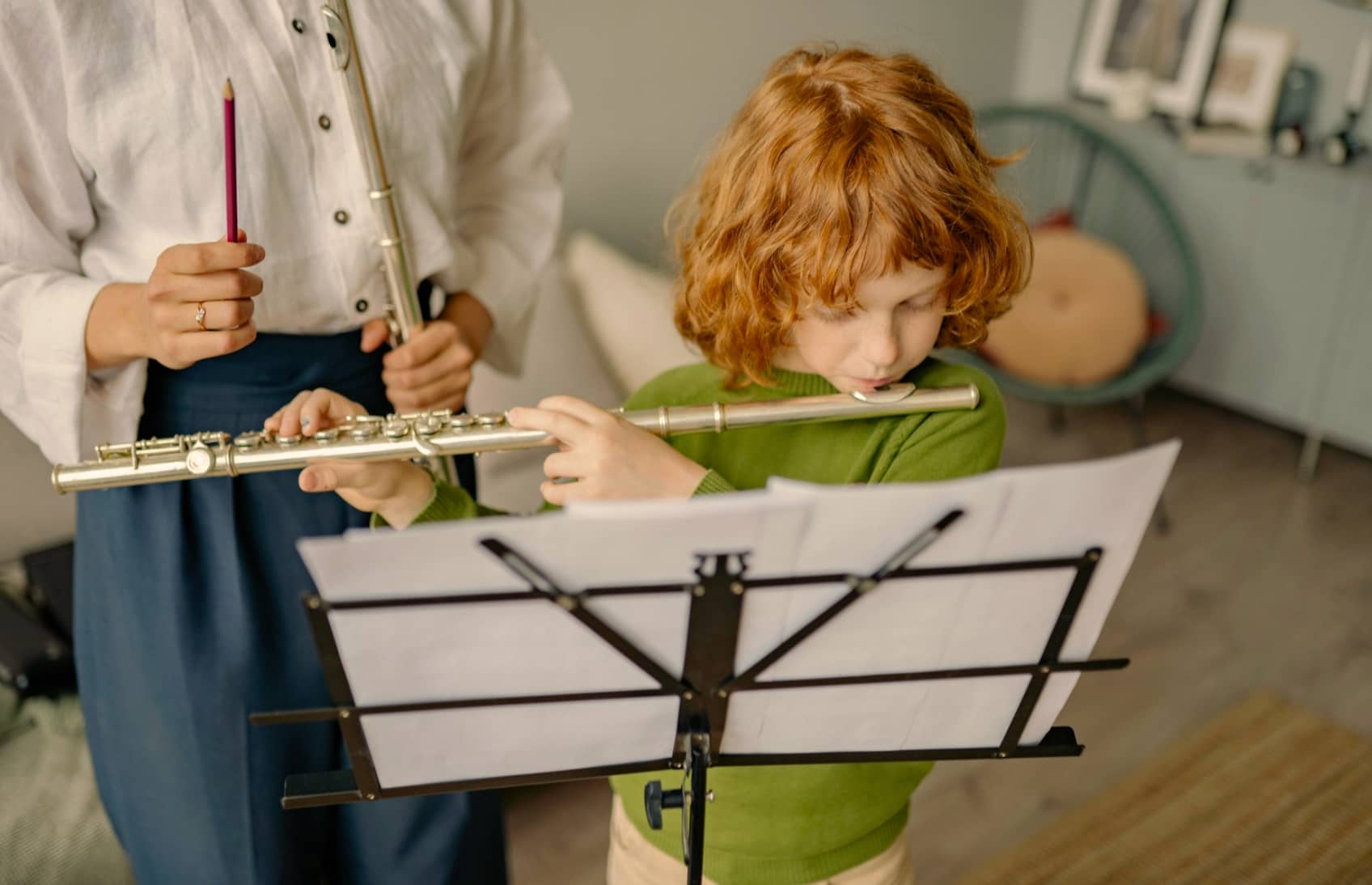
Flute lessons in Sydney typically cost between $80 and $110 per hour in 2026 with a qualified private teacher, with most experienced teachers sitting around $90 to $100 per hour for a standard one-hour lesson. Conservatorium-level teachers preparing students for high AMEB grades, scholarship auditions, or HSC Music tend to charge above $120. Hobbyist tutors found on classified platforms run cheaper at around $45 to $70, though the quality and teaching experience varies widely. If you want to skip straight to finding a teacher, compare flute teachers in Sydney according to their rates, location and more.
How expensive are flute lessons compared to other woodwind and brass instruments?
Flute lessons are commonly a bit cheaper than other woodwind and brass instruments in Sydney, typically by a small margin per hour. The reason comes down to supply and learning curve. Flute has the largest pool of qualified teachers in Sydney out of any wind instrument, and it’s comparatively faster to get a beginner producing a usable sound, which means more teachers offer it as their primary instrument and the market settles at a slightly lower price point.
This doesn’t mean flute lessons are lower value. It means flute is easier to staff, which keeps competitive pressure on price. Less common wind instruments like oboe and bassoon often command higher rates simply because there are fewer teachers available in Sydney.
Why are flute lessons priced the way they are?
Flute lesson pricing reflects three things: the teacher’s playing and teaching experience, their formal qualifications, and the cost of running a private teaching practice in Sydney. A teacher charging $110 an hour isn’t necessarily marking up the same lesson an $80 teacher gives. They’re typically a conservatorium graduate, an active orchestral or session player, or someone with a long track record of getting students through high AMEB grades and HSC Music.
The other thing that pushes price is the unglamorous side of teaching. Sydney teachers cover studio rent or travel costs, lesson planning, AMEB syllabus tracking, sheet music libraries, and admin time that students never see. That’s worth knowing when you’re comparing a low rate from a tutoring platform against a properly set up flute teacher.
Are flute lessons in Sydney CBD more expensive than the suburbs?
Yes, flute lessons in Sydney CBD and inner suburbs typically cost more per hour than equivalent lessons in outer Sydney. A teacher in Surry Hills, Newtown, or Bondi Junction will usually sit at the upper end of the Sydney range, while a teacher of comparable experience in Parramatta, Hurstville, or Penrith tends to charge closer to the middle.
The price gap is driven by studio rent, demand density, and the fact that inner-city teachers often have higher performance credentials because the CBD is where the Sydney Conservatorium, the Sydney Symphony, and the busiest freelance scene all sit. Outer Sydney teachers aren’t lower quality as a rule, they just face different market pressures. Many parents in the Hills District, Sutherland Shire, or the Northern Beaches find that a teacher 10 minutes from home at the mid-range rate is genuinely better value than driving 45 minutes for a higher-priced lesson in the CBD.
If location flexibility matters, online flute lessons have closed a lot of the gap. Most Sydney flute teachers offer online lessons at around $5 to $15 less than their in-person rate, which can make a top inner-city teacher accessible to a student in Campbelltown without the commute.
How long should a flute lesson be?
A 60-minute private flute lesson is the recommended standard for most students in Sydney, with shorter formats reserved for specific situations. Most Sydney teachers price these pro rata from their hourly rate.
Typical Sydney pricing breakdown:
- 60-minute lesson: $80 to $110. The recommended default for school-aged students, adults, and anyone working through AMEB grades. A full hour gives the teacher time to cover warm-ups, technical work, repertoire, and theory without rushing, which is where real progress is made week to week.
- 45-minute lesson: $60 to $90. Suitable for students who genuinely can’t sustain focus for a full hour, or for families needing to manage cost where progress speed is a secondary concern. Workable, but you’ll typically cover one less thing per lesson than you would in a 60.
- 30-minute lesson: $40 to $60. Only really suitable for young beginners under 7 whose attention span won’t stretch further. Past that age and stage, 30 minutes becomes too short to do meaningful work on tone, repertoire, and exam preparation in the same lesson.
The most common mistake is families defaulting to 30 minutes to save money, then wondering why progress feels slow after a year. The shorter format limits how much ground the teacher can cover, especially once the student is past the absolute beginner stage. Moving up to 60 minutes as soon as the student can handle it is usually the single biggest lever for progress, more than changing teacher or adding a second weekly lesson.
How often should you have flute lessons?
Weekly lessons are the standard for flute students in Sydney and produce the most consistent progress. Fortnightly lessons work for adult hobbyists or returning players with steady self-directed practice, but they’re noticeably slower for kids and beginners. Twice-weekly lessons are sometimes used for HSC Music students or pre-audition preparation, though they’re uncommon for general students.
The reason weekly tends to be the right cadence on flute specifically is that embouchure and breath support skills decay quickly without regular feedback. Unlike piano, where a self-directed student can practise correctly between lessons because the keys give them the right note, flute requires the teacher to hear tone production and lip placement in real time. Two weeks without that feedback often means a student has practised one small technical flaw repeatedly, and the next lesson partly resets that flaw rather than building forward.
What does annual spend on flute lessons actually look like?
A typical Sydney family spends between $3,200 and $4,400 a year on flute lessons, assuming weekly one-hour lessons during school terms with no lessons over the Christmas holidays. The maths is straightforward:
- 40 lessons per year at $80 = $3,200
- 40 lessons per year at $95 = $3,800
- 40 lessons per year at $110 = $4,400
Most families also factor in incidentals like AMEB exam fees, sheet music, and the occasional masterclass or workshop. Realistic all-in annual cost for a committed student usually sits a few hundred dollars above the lesson fees alone.
This is a meaningful spend, which is why teacher fit matters more than people give it credit for. Changing teachers after 18 months because the first one wasn’t the right fit doesn’t just cost the future lessons, it costs the time and progress already invested.
Why does teacher experience matter so much on flute?
Flute is one of the instruments where teacher experience compounds the fastest, because tone production on flute is uniquely invisible. On piano, a wrong note is obvious. On flute, a tonally poor C sounds like a C, but it’s a thin, airy, unfocused C that won’t get you through grade 5 AMEB. Beginners can’t reliably hear the difference between a good and average flute tone, and parents almost never can. The teacher is the only person in the room who knows whether the student is building the right habits.
This is why experienced teachers cost more, and why the price gap is genuinely earned rather than just market positioning. An inexperienced teacher might spend a year teaching a student to play the notes on the page, while a more experienced teacher spends that same year teaching the student to play the notes with proper embouchure, air support, and tonal core. Both students passed grade 2. Only one of them can actually get to grade 6 without a major technical rebuild.
The other place experience shows up is in catching physical issues early. Tension in the shoulders and jaw, incorrect hand position, locked knees, mouth corners pulled too tight, head tilted to compensate for poor posture, these are all things that limit progress later. An experienced teacher diagnoses them in the early lessons. A less experienced teacher often doesn’t notice until the student plateaus around grade 4 and the problem has been baked in for two years. This is the single biggest reason that experienced flute teachers in suburbs like Chatswood, Strathfield, and Mosman command higher rates and keep their books full. The work they do in the first year is genuinely different from the work a budget tutor does, even though the lessons look similar from the outside.
Are group flute lessons worth considering?
Group flute lessons are worth considering for kids aged 6 to 10 in their first six months of playing, but they’re not a long-term substitute for private tuition. Group rates in Sydney typically sit around $50 per student per session for small groups, which makes the per-student cost roughly half of a private lesson.
The catch is that flute embouchure is so individual that group teaching struggles past the beginner stage. In a group of four students, the teacher genuinely can’t watch each player’s lip placement for more than 15 minutes total in a 60-minute lesson, and that’s usually not enough to correct issues before they become habits. Group lessons work best as a supplement to private lessons, like a school ensemble plus a weekly private lesson, or as a low-cost trial format for parents not yet sure their child will stick with the instrument.
If budget is the main driver, a fortnightly private lesson is usually a better choice than a weekly group lesson. The individualised attention matters more on flute than the lesson frequency does, at least in the first 18 months.
What hidden costs come with flute lessons?
The lesson fee is the biggest line item, but a few smaller costs catch families out:
- Sheet music and method books. Around $50 per year for lower grades where everything is in the same AMEB book, climbing to $100 to $200 per year at higher grades as students need additional repertoire and technical work books.
- AMEB exam fees. Around $150 to $250 per exam depending on the grade, plus an accompanist fee on the day if your teacher doesn’t accompany.
- Flute servicing. Annual servicing in Sydney commonly starts in the low hundreds for a basic service, with full pad replacements costing more.
- Music camps and workshops. Optional but common, with one-off costs per holiday workshop.
- Performance attire for exams or recitals. Usually a small one-off cost.
Are online flute lessons cheaper?
Online flute lessons in Sydney typically cost around $5 to $15 less per hour than in-person lessons with the same teacher. The discount reflects the teacher’s reduced overheads, not a difference in lesson quality for experienced teachers who’ve adapted to the format.
Online works well for intermediate and advanced students who already have established tone production and just need feedback on repertoire, interpretation, and technical detail. It’s less suited to absolute beginners, where hands-on demonstration of head joint angles, hand position, and posture is genuinely easier in person. A common middle ground is starting in-person for the first three to six months, then mixing in online lessons once foundational technique is solid, which works particularly well for families in outer suburbs like Penrith, Campbelltown, or the Central Coast where in-person options are thinner.
So what should you actually budget for flute lessons in Sydney?
For most Sydney beginners in 2026, plan for around $80 to $110 per hour with a qualified private teacher, weekly during school terms, which works out to roughly $3,200 to $4,400 per year in lesson fees alone. Add a few hundred dollars more for sheet music, exam fees, and servicing. If you’re starting a young child and unsure whether they’ll continue, a 30-minute weekly lesson at the lower end of the range is a sensible entry point for the first six months.
The best move before booking is to compare a few teachers in your area, ideally with a paid trial lesson. Price matters but isn’t the deciding factor. Teacher fit, suburb proximity, and exam experience for your goals all matter more, and you can browse current Sydney flute teachers.
 September 30, 2026
Where Could I Find an Affordable Clarinet Teacher in Sydney?
TL;DR A limited monthly budget can still leave you with options for clarinet lessons in Sydney. Start with the price… September 26, 2026
Where to Actually Look Before You Buy an Instrument
The obvious first search usually isn't the right one. The instinct is almost always the same. A lesson gets booked,… September 23, 2026
What Should I Learn First on Piano? A Beginner’s Step-by-Step Guide
TL;DR Start by learning the keyboard pattern, a small group of notes, finger numbers and a steady beat. Practise a… September 23, 2026
How Much Does Logic Pro Cost for Beginners?
TL;DR Logic Pro is Apple's music production software for Mac. In Australia, Logic Pro for Mac costs $299.99 as a…