The best beginner flute to buy in 2026 is the Yamaha YFL-222 at around $849, which most Sydney flute teachers consider the safest first purchase. Other reliable options include the Pearl Quantz 505E (from around $929), the Trevor James 10X (around $1,240) for tone-focused players, and the Jupiter JFL-700E, which is widely available on rent-to-own plans from around $40-70 per month. The biggest mistake new buyers make is grabbing a no-name flute under $300, since cheap flutes often have leaking pads, sticky keys, and inconsistent intonation that make progress significantly harder. The best thing you can do is ask a flute teacher during your flute lessons in Sydney to help you avoid the wrong instrument and build proper habits from the first week.
What’s the best beginner flute at each budget level?
The right flute depends on your budget and how serious the player is about continuing past the first year. Here’s a realistic breakdown of what to buy at each tier, based on what Sydney flute teachers actually recommend.
Under $700 (cautious starter or short-term commitment):
- Hire option: $30 to $60 per month from Sydney music retailers, often with rent-to-own credit. The smartest move at this budget
- Second-hand Yamaha YFL-221 or YFL-222: $400 to $600 from a serviced retailer. The earlier 221 model is functionally similar to the current 222
- Demo or floor models: Often discounted 10 to 15 percent off new prices for cosmetic scratches that don’t affect sound
$800 to $1,000 (the sweet spot for most beginners):
- Yamaha YFL-222: Around $849. The benchmark student flute, consistent quality, holds resale value well, recognised by every flute teacher in Sydney
- Pearl Quantz 505E: From $929. Pinless mechanism, French-pointed arms, split-E mechanism standard
$1,200 to $1,500 (committed beginner or future intermediate):
- Trevor James 10X: Around $1,240. Sterling silver lip plate and riser at this price is unusual, well-suited to tone-focused players
- Yamaha YFL-262: Around $1,500 to $1,700. Silver head joint with plated body, lasts well into intermediate years
For most beginners, the Yamaha YFL-222 at $849 is the safest buy. It hits the right balance of quality, durability, and resale value if the player decides flute isn’t for them after a year. Pearl and Trevor James make excellent flutes, but the price gap is hard to justify until the player has developed enough tone control to access the difference.
What features should a beginner flute have?
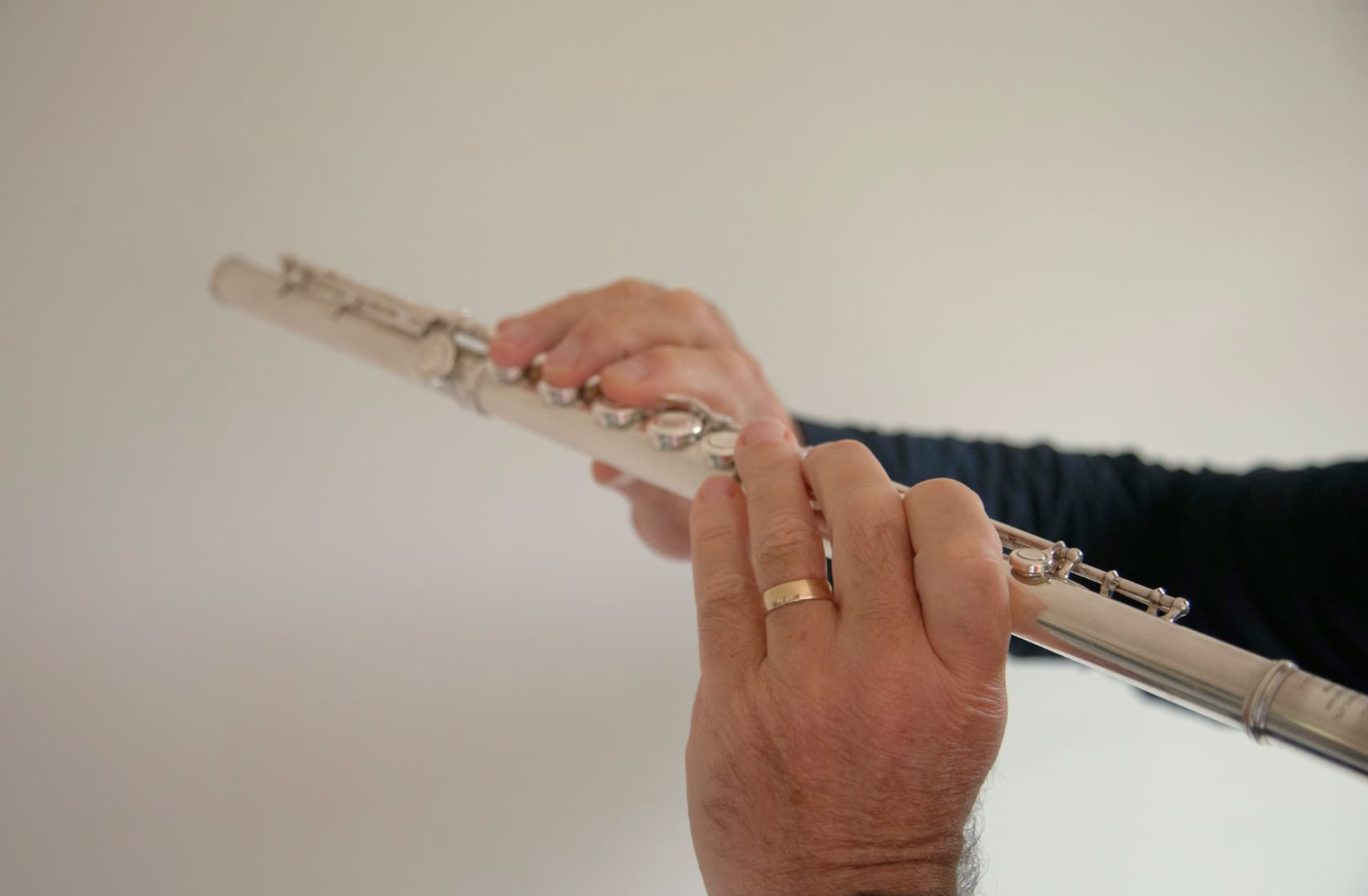
A beginner flute should have closed holes, an offset G key, a C foot joint, and silver-plated nickel construction. Each of these features makes the instrument easier to play during the learning curve, and skipping them creates problems that compound over months of practice.
The non-negotiables for a starter flute:
- Closed-hole keys (plateau keys): Open holes require precise finger placement, which beginners haven’t developed yet. Closed holes let you focus on tone and breathing first
- Offset G: The G key sits in a slightly forward position, matching the natural shape of your left hand. Inline G feels uncomfortable for most beginners and slows technique
- C foot joint: Lighter and shorter than a B foot, which is better for younger players and small hands. B foot extends the range but adds weight you don’t need yet
- Split E mechanism: Stabilises the high E note, which is notoriously unstable on flutes without it. Now standard on most reputable student flutes
- Silver-plated nickel body: Solid silver flutes sound better but cost three to four times more, and beginners can’t hear the difference yet anyway. Avoid plain nickel-plated flutes since they get slippery when the player’s hands get sweaty and produce a slightly harsher tone
These features are the standard for student flutes globally, so you’ll see them on almost any reputable beginner model.
Should I try to get a unique or unusual flute as a beginner?
No, beginners should stick with a standard student flute and save the unique configurations for later when their playing actually justifies them. A stock-standard silver-plated, closed-hole, offset-G, C-foot flute is what every flute teacher in Sydney is set up to teach on, and any deviation from that adds friction to the learning process without giving you any benefit you can actually use.
The temptation to buy something unusual usually comes from research rabbit holes online. You see wooden flutes used in baroque music, gold-plated headjoints, inline G models, or vintage flutes with distinctive tones, and it feels like character or personality. The problem is that none of those features help a beginner. A wooden flute requires different breath support and produces a softer tone that’s harder to project. An inline G is uncomfortable for most adult hands and significantly harder for kids. A vintage flute might have non-standard fingerings or pads that need replacing before you can even play it properly. Beginners need predictability so they can isolate what’s their technique versus what’s the instrument, and unusual flutes remove that predictability.
There’s also a practical issue around teaching. If your teacher demonstrates a fingering or technique on a standard Yamaha and your flute responds differently because of unusual specs, you’ll spend half your lessons troubleshooting the instrument rather than developing as a player. Once you’ve got two or three years of solid technique, you can absolutely explore wooden flutes, alternative metals, custom headjoints, and whatever else interests you. At that point you’ll know what you’re hearing and what you want to change. Starting unique just makes the first year harder for no real gain.
Will a beginner flute really last a lifetime?
No beginner flute lasts a lifetime, regardless of brand or price, and any retailer telling you otherwise is being optimistic. The reason is the pads. Flute pads dry out and become brittle after roughly seven to ten years even with proper care, leading to a soft, fuzzy sound and difficulty with the low register because the tone holes stop sealing properly. A full re-pad costs $400 to $700 in Sydney, which often approaches the cost of replacing a beginner flute outright.
This isn’t a flaw in the design, just the reality of how a flute works. The body might last decades, but the soft components (pads, corks, felts) wear out with use. A more useful framing is that a beginner flute should last as long as you need it to, which is usually two to four years before you outgrow it anyway. A well-adjusted student flute is generally good for repertoire up to around AMEB Grade 3, and beyond that it starts holding the player back. Spending more upfront on the assumption that a $1,500 flute will last forever doesn’t make financial sense, since the player will likely upgrade to an intermediate flute before the original instrument’s pads even need replacing.
Should you buy new or second-hand?
Buying second-hand is a strong option if a technician inspects the flute first, but a poorly chosen used flute can be worse than no flute at all. New student flutes come with manufacturer warranties (Yamaha and Jupiter both offer 5-year warranties on new student flutes) and adjusted pads out of the box, while second-hand flutes often need a $100 to $200 service before they’re properly playable.
The risk with used flutes is that pad leaks and key alignment issues are invisible without testing the instrument under playing pressure. A flute that looks pristine in photos can have hardened pads or bent keys from being dropped. Pads older than ten years are usually past their useful life regardless of how rarely the flute was played, since they dry out from age alone. If you’re buying second-hand, take it to a flute technician for a play-test before paying, or buy from a Sydney music retailer that includes a service in the price. Marketplace listings under $200 are almost always either fake silver-plated flutes or instruments that need more repair than they’re worth.
Are open-hole flutes better for beginners?
Open-hole flutes are not better for beginners and usually make the first six months harder. Open holes (also called French model) require precise finger placement to seal each tone hole, and any gap creates a stuffy or unresponsive sound. Beginners are still developing finger awareness, so this just adds another problem to solve before they can focus on tone.
Open-hole flutes have advantages later, including the ability to play extended techniques like quarter tones and pitch bends. There’s an ongoing debate among flute acousticians about whether open holes genuinely improve resonance or projection, with some experts arguing the difference is negligible. Either way, none of this matters in the first year. Most teachers recommend starting closed-hole and switching to open-hole only when the student is ready for an intermediate flute, usually around the two to three year mark. If you’ve already bought an open-hole flute, plastic, cork or metal plugs are available to temporarily close the holes while the player builds finger control. Plugs are inexpensive and a perfectly normal way to make an open-hole flute beginner-friendly.
Is silver-plated or solid silver better for a beginner?
Silver-plated nickel is the right choice for a beginner because solid silver doesn’t translate into better playing until your tone production is already advanced. A beginner playing a $4,000 solid silver flute will sound roughly identical to a beginner playing an $850 silver-plated one, because tone comes from embouchure and breath control before it comes from materials.
In fact, there’s research from acousticians suggesting that the metal a flute is made from matters far less than most players assume, and that two flutes built identically except for the metal will sound nearly indistinguishable in blind tests. Whether you fully accept that or not, the practical takeaway is the same: spending big on materials early is a poor use of money. Buying solid silver too early is a bit like putting racing tyres on a learner driver’s car. The capability is there, but the driver can’t access it yet, and the upgrade cost would be better spent on lessons. Most flautists upgrade to solid silver head joints first (around $600 to $1,200) before committing to a full solid silver flute.
Which flute brands are actually trustworthy?
The most consistently recommended beginner flute brands in Australia are Yamaha, Pearl, Jupiter, and Trevor James, with Yamaha generally considered the safest default for first-time buyers. These brands have decades of school band presence in Australia, established repair networks across Sydney, and consistent quality control across units of the same model.
What you’re paying for in a trusted brand is consistency. Two flutes from the same student model will play almost identically, which matters because beginners can’t compensate for instrument variability the way experienced players can. Cheap unbranded flutes vary wildly between units, so one might play fine while the next has a stuck key or weak low register. Avoid brands you can’t find at established Sydney music retailers in areas like Camperdown, Turramurra, or Crows Nest, since shops won’t stock instruments their repair technicians can’t service. If a flute is being sold online for $150 with a brand name you’ve never heard of, it’s almost certainly not worth buying at any price.
Does the case actually matter?
The case matters more than most beginners realise, especially for kids who’ll be transporting the flute to school every week. A proper hard case with sturdy latches is essential, since flutes do get dropped and the difference between a quality case and a flimsy one can mean the difference between a small dent and a full repair bill.
The two main case styles you’ll encounter are hard cases with metal latches and softer “French cases” that close with magnets or velcro. French cases are lighter and look elegant, but they’re more likely to pop open if dropped, which is genuinely catastrophic for the keywork. For a school-aged beginner carrying the flute in a backpack, a sturdy latched case is the only sensible choice. Most reputable student flutes come with a hard case as standard, so this only becomes a decision when buying second-hand or when looking at very cheap models that cut corners on the case.
How much should you actually spend on a first flute?
A solid beginner flute in Australia costs between $850 and $1,400 new in 2026, with the sweet spot for most learners sitting around the $850 mark. Below $700 you start running into either second-hand instruments needing service or no-name brands with quality issues, and above $1,400 you’re paying for features beginners can’t yet take advantage of.
Spending more doesn’t accelerate learning in the first year. A $2,500 intermediate flute won’t help a beginner sound better, but it will hold its value if you’re confident the player will continue. The bigger risk is spending too little. A $200 flute often has misaligned keys, leaking pads, and a head joint that produces inconsistent tone, all of which feel like the player’s fault when they’re actually the instrument’s fault. The work-boots logic applies here. Cheap boots that fall apart every year cost more over a decade than one good pair that lasts ten years, and cheap flutes work the same way. If budget is genuinely tight, hiring from a Sydney music retailer at $30 to $60 a month is a smarter starting point than buying something cheap.
What ongoing costs should you budget for?
A student flute typically costs $80 to $200 a year to maintain in Sydney, which is something most first-time buyers don’t factor into their budget. This covers an annual service (cleaning, key adjustment, minor pad work) and is genuinely the difference between a flute that keeps playing well and one that gradually deteriorates without anyone noticing why.
The realistic ongoing costs look like this:
- Annual service: $80 to $200 per year for a standard student flute tune-up
- Pad replacement: Every 7 to 10 years, full re-pad runs $400 to $700
- Cork and felt replacements: Occasional, usually bundled into a service
- Cleaning supplies: Around $20 to $40 per year for swabs, polishing cloths, and joint grease
Skipping annual service is the single most common reason beginners think they’re “getting worse” when actually their flute is just falling out of adjustment. Pads compress, springs lose tension, and small leaks develop, all of which dull the tone and make response sluggish. A single service appointment can transform a flute that was starting to feel sticky or unresponsive.
Why does my child’s school flute sound different to mine?
School flutes often sound different because they’ve been played by dozens of students over years and rarely receive the maintenance a privately owned flute does. School instruments accumulate small issues like compressed pads, slightly bent keys, and worn-out cork joints, all of which dull the tone and make response sluggish. This isn’t a reflection of the brand or model, just the reality of shared instrument wear.
If your child is renting from a school or borrowing from a band program, it’s worth asking when the flute was last serviced. A standard service costs $100 to $180 in Sydney and can transform how a flute responds. For families committing to flute past the first year, buying a private instrument almost always produces a noticeable jump in sound quality compared to a shared school flute, simply because the pads and keys are in proper working order.
Is hiring a flute a smarter way to start?
Hiring is a smart first move if you’re not yet sure flute will stick, since the upfront cost is low and most Sydney rental programs let you switch instruments or upgrade later. Sydney music retailers typically offer flute hire from $30 per month for a Jupiter JFL-700E up to $60 per month for higher-tier student models, often with rent-to-own options that credit part of your payments toward purchase.
The trade-off with hiring is that long-term it’s more expensive than owning. Two years of hire at $50 a month equals $1,200, which would have bought a Yamaha YFL-222 outright with budget left over. The decision usually comes down to commitment confidence. If the player is enthusiastic and likely to continue past six months, buying makes sense early. If you’re testing the waters with a child who hasn’t shown sustained interest in music yet, hiring lets you exit cleanly without a large sunk cost.
What size flute does a young beginner need?
Most children can start on a standard adult flute from around age 9 or 10, but younger or smaller children benefit from a curved head joint flute that shortens the reach. Standard flutes require the player to extend their left arm comfortably to the keys, and a small child often can’t reach without straining their shoulder, which leads to bad posture and quick fatigue.
A curved head joint flute brings the body of the instrument closer to the player, making it physically manageable for kids as young as 6 or 7. The newer Wave flute designs from Jupiter and Altus take this further by using a curved loop that improves posture even more than traditional curved headjoints. Most curved-head models come with both a curved and straight head joint so the child can transition once they grow into the standard length. Sydney music retailers stocking student flutes usually carry at least one curved head model, and it’s worth asking specifically for this option if your child is on the smaller side.
How long does a beginner flute last before upgrading?
A well-maintained beginner flute typically serves a player for two to four years before they outgrow it, depending on how seriously they’re progressing. Most students hit the upgrade decision around the time they reach intermediate repertoire, AMEB Grade 4 or 5, or start playing in higher-level ensembles where their tone needs to project more.
The signs you’ve outgrown a beginner flute are usually clear once they appear:
- Tone feels capped: You can’t make the flute sound the way you want, even when your technique is solid
- High register feels resistant: Notes above high D require excessive air pressure
- Repertoire demands open holes or a B foot: Some intermediate pieces use techniques only available on more advanced flutes
Upgrading too early wastes money, since a $2,000 to $4,000 intermediate flute won’t reward you until you’ve developed enough control to access its features. Upgrading too late holds you back, since a worn-out beginner flute can become the bottleneck on tone development. The right window is usually somewhere between two and four years of regular playing.
So what’s the actual best beginner flute to buy?
For most beginners in Sydney in 2026, the Yamaha YFL-222 at around $849 is the best buy. It has every right beginner feature, consistent quality control, strong resale value, and any Sydney flute teacher will recognise it immediately. If you want a slightly different tone profile, the Pearl Quantz 505E (from $929) and Trevor James 10X (around $1,240) are both excellent at their respective price points. If budget is the priority, hiring a Jupiter JFL-700E from around $30 per month is a smart way to start without committing.
If you’re in Sydney and weighing options, the most useful next step is testing a few flutes in person at an established music retailer in areas like Camperdown, Turramurra, or the CBD, then booking a trial flute lesson to make sure your setup matches your goals. Contacting a flute teacher in Sydney will help you save you both money and months of unnecessary frustration.
 September 30, 2026
Where Could I Find an Affordable Clarinet Teacher in Sydney?
TL;DR A limited monthly budget can still leave you with options for clarinet lessons in Sydney. Start with the price… September 26, 2026
Where to Actually Look Before You Buy an Instrument
The obvious first search usually isn't the right one. The instinct is almost always the same. A lesson gets booked,… September 23, 2026
What Should I Learn First on Piano? A Beginner’s Step-by-Step Guide
TL;DR Start by learning the keyboard pattern, a small group of notes, finger numbers and a steady beat. Practise a… September 23, 2026
How Much Does Logic Pro Cost for Beginners?
TL;DR Logic Pro is Apple's music production software for Mac. In Australia, Logic Pro for Mac costs $299.99 as a…