You don’t need any equipment to start singing lessons. Your voice is the instrument, the teacher’s studio supplies everything else, and most beginners in Sydney book their first session with nothing but a water bottle and a bit of curiosity. If you’ve been putting it off because you reckon you need a mic, a keyboard, or some kind of home setup first, you can let that idea go and book singing lessons today.
Do you really need zero equipment for your first singing lesson?
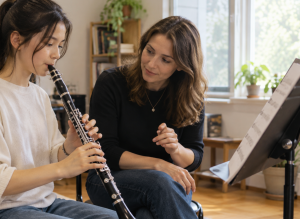
Yes, zero. A teacher’s studio likely already has a piano, warm-ups, a mirror, and any backing tracks you’ll use. You bring yourself, comfortable clothes that don’t squeeze your ribs, and a water bottle at room temperature. Cold water tightens the throat, which is the one tiny detail most first-timers get wrong.
If you want to record snippets of the lesson, your phone is plenty. Most teachers will hit record on their own device and send the audio to you afterwards anyway, so you don’t need to think about it.
Feel free to bring any sheet music or material that you want to learn to help your teacher guide you on your journey.
What do you actually bring to your first singing lesson?
The list is shorter than people expect:
- A room-temperature water bottle (skip the icy cold one)
- Loose clothing that lets your ribs and diaphragm expand
- Closed-toe shoes if your studio is in the CBD or Inner West with hardwood floors, since flat grounding helps posture more than thongs
- Your phone, only if you want a personal recording for home practice
- A song or two you’re curious about, even if you can’t sing them yet
No music stand, no sheet music, no microphone. The teacher hands you any lyric sheets you need on the day.
Should you buy a microphone before starting singing lessons?
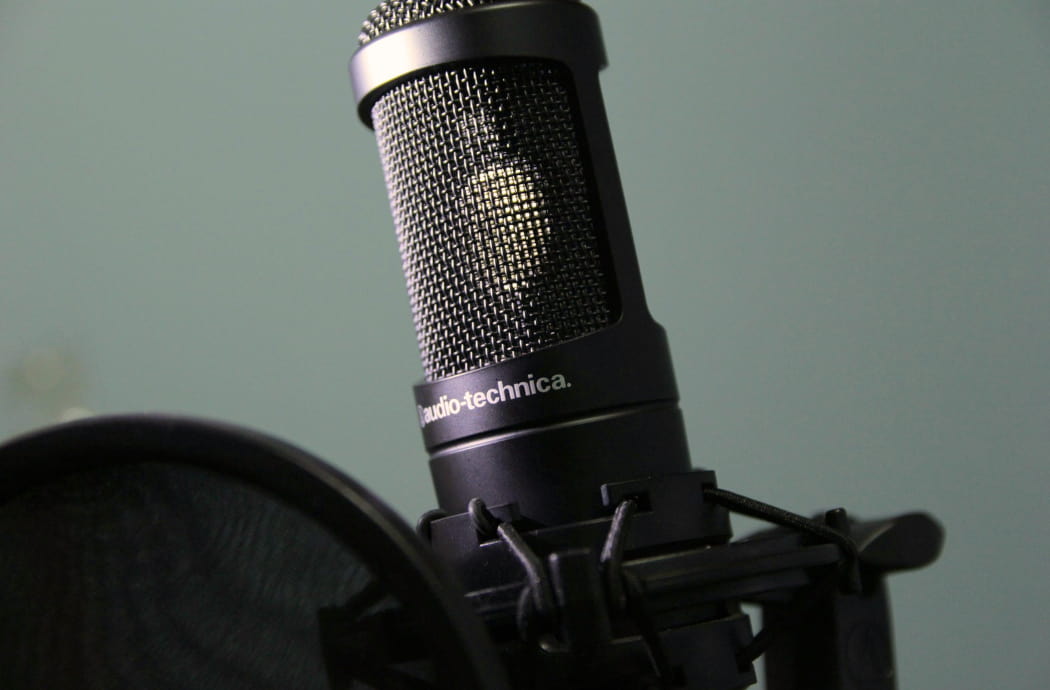
No, and buying one early can actually slow your progress. Microphones reward and punish very different vocal habits than unplugged singing does. If you train through a mic before your technique is built, you start leaning on it to fill in for breath support and projection you haven’t developed yet, and that becomes a hard habit to unwind later.
The studio will have one when you’re ready for it. Most Sydney singing teachers introduce mic technique somewhere between months three and six, once your foundation can hold up acoustically. At that point, a USB mic in the $100 to $150 range is plenty for home practice.
Do you need a piano or keyboard at home for singing lessons?
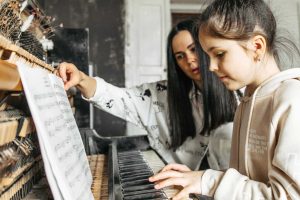
It helps a little, but it isn’t required to start. Pitch matching, scales, and ear training all happen through the teacher’s piano during the lesson, and free apps on your phone can replicate reference notes for daily practice between sessions.
If you’d like one anyway, a 61-key keyboard under $300 is the sweet spot for vocal practice. Anything smaller chops off the range you’ll use for warm-ups, and anything fancier is more piano than your voice currently has use for.
Are recording apps necessary for beginner singing lessons?
Recording yourself is one of the most useful habits a beginner can build, but the app you use barely matters. Voice Memos on iPhone or the default voice recorder on Android handles it for the first six months. The point isn’t audio fidelity, it’s hearing the gap between what you think you sound like and what you actually sound like.
This is where most unsupervised home practice quietly falls apart. A singer will run a phrase fifteen times in a row and not notice they’ve been flat on the same note every time, because the brain is genuinely bad at hearing the voice it’s currently producing. Your ear picks up your own voice through bone conduction as well as through the air, which makes you sound fuller, warmer, and lower inside your own head than you do to anyone else in the room. It’s the same reason your voice on a recording sounds like a stranger.
A 30-second recording bypasses all of that. You play it back, hear the actual pitch, and now you can target the correction. This is also the easiest way to make singing lessons feel like they’re paying off, because you can hear month-on-month progress instead of guessing whether you’re improving.
Apps like Vocal Pitch Monitor or SingTrue add a visual pitch readout if you want one, and they’re useful for the “I think I might be tone deaf” beginner who genuinely can’t tell yet whether they’re sharp or flat. Once your ear catches up, the visual stops being necessary.
What about sheet music and learning materials?
Your teacher will likely provide what you need, but bring whatever material you’ve been currently working on or want to learn. For the first few months you’ll mostly work with:
- Lyric sheets for songs you’re learning
- Simple chord charts if you want to reference song structure
- Warm-up audio files emailed after the lesson
- The occasional vowel or resonance chart for technique work
You don’t need to buy a vocal method book. Off-the-shelf books aren’t built for your voice type, your genre, or the specific stuff your voice is doing right now, so they end up generic. A custom plan from your teacher does the same job in a way that’s actually relevant to you.
Do online singing lessons need different equipment than in-person?
Slightly, but nothing expensive. For online singing lessons you’ll want headphones, a stable spot for your laptop or phone at roughly chest height, and a room that isn’t echoey. A bedroom with a bed, curtains, and a rug is acoustically perfect. A bathroom or kitchen is not, because hard surfaces bounce sound and your teacher ends up hearing a blurry, delayed version of your voice.
A common mistake is using AirPods or other Bluetooth headphones, which compress the audio and add lag. Your teacher hears a slightly different voice than the one coming out of you, which makes pitch and tone feedback unreliable. Wired headphones solve it for free.
In-person singing lessons across Sydney don’t need any of this, since the studio is already set up. Check out whether singing lessons even improve your voice.
When does buying singing equipment actually make sense?
Equipment becomes worth the money once it’s solving a problem your voice has already grown into, not before. Buying gear early is a bit like buying surfboards before you can swim, the wax doesn’t help you float.
A realistic timeline for most Sydney singing students looks roughly like this. In months one to three you’re building breath, posture, range, and pitch with nothing but your voice and the teacher’s piano. Around months three to six you might add a basic USB mic and a 61-key keyboard if you’re practicing daily and want to record yourself in better quality. Months six to twelve, if you’ve started open mics in Newtown or recording rough demos at home, a small audio interface and a condenser mic in the $200 to $400 range starts pulling its weight. Past twelve months, you’re treating it like a craft and the equipment conversation splits into different paths depending on whether you’re heading toward live performance, studio recording, or content creation, since they all need different setups.
The trap people fall into is buying for the level they want to be at instead of the level they’re currently practicing at. A $1,500 condenser mic doesn’t make a beginner sound professional, it just records a beginner in higher fidelity. Build the voice first, then the gear earns its keep when you actually need it. The other quiet benefit of waiting is that by the time you do buy something, you know what you’re buying, because your ear and your needs have caught up with the spec sheet. Speak to a singing teacher in Sydney to see what they recommend for you after some lessons.
 September 30, 2026
Where Could I Find an Affordable Clarinet Teacher in Sydney?
TL;DR A limited monthly budget can still leave you with options for clarinet lessons in Sydney. Start with the price… September 26, 2026
Where to Actually Look Before You Buy an Instrument
The obvious first search usually isn't the right one. The instinct is almost always the same. A lesson gets booked,… September 23, 2026
What Should I Learn First on Piano? A Beginner’s Step-by-Step Guide
TL;DR Start by learning the keyboard pattern, a small group of notes, finger numbers and a steady beat. Practise a… September 23, 2026
How Much Does Logic Pro Cost for Beginners?
TL;DR Logic Pro is Apple's music production software for Mac. In Australia, Logic Pro for Mac costs $299.99 as a…