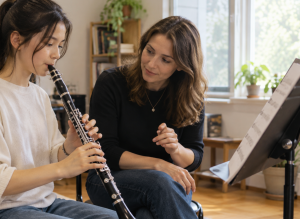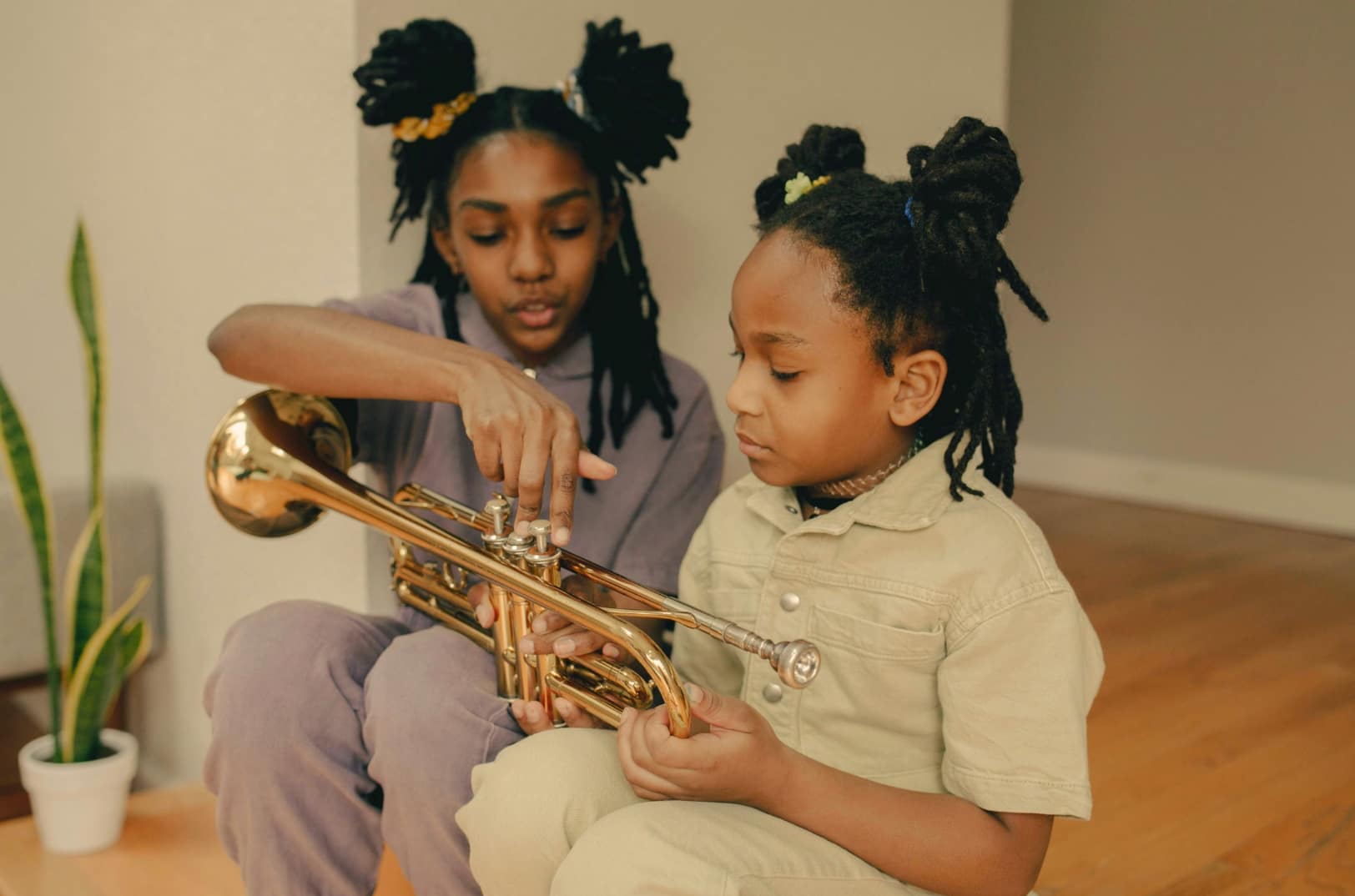
For most students, private trumpet lessons lead to faster and more consistent progress, while group lessons are better for motivation, cost, and learning to play with others.
Are private trumpet lessons better than group trumpet lessons?
Yes, private trumpet lessons are usually better if your goal is to improve quickly and avoid technical issues early.
Trumpet isn’t forgiving. Small mistakes in embouchure or airflow don’t just sound off, they compound. In a private setting, those get picked up immediately. In a group, they often don’t.
That difference alone changes how fast you improve.
Should you choose private or group trumpet lessons based on your goal?
Yes, your goal should decide the format.
If your goal is faster progress and strong technique, private lessons are usually the better choice. If your goal is enjoyment, affordability, and playing with others, group lessons can work well.
The real difference isn’t private vs group. It’s whether your mistakes are being corrected in real time or allowed to continue.
Most students don’t struggle because they chose the wrong format. They struggle because the format doesn’t match what they actually want.
What’s the real difference between private and group trumpet lessons?
The difference comes down to how feedback and attention are delivered.
- private lessons adapt to your pace and problems
- group lessons follow a shared pace
- private lessons focus on correcting your playing
- group lessons balance multiple students at once
Both formats teach music. Only one consistently focuses on fixing how you personally play.
Why private trumpet lessons accelerate progress
Private trumpet lessons accelerate progress because they compress the feedback loop.
Most players don’t plateau because they lack effort. They plateau because they don’t know what they’re doing wrong. Trumpet is one of those instruments where what you hear while playing isn’t always what’s actually coming out.
Most players don’t plateau because they lack discipline. They plateau because they’ve been practising the same mistake for months without realising it.
That gap is where progress slows.
In a private lesson, that gap disappears. The teacher hears exactly what’s happening and corrects it immediately. You’re not guessing whether something sounds right. You’re being told what to adjust and how to adjust it.
Over time, this changes everything.
Practice without feedback builds repetition.
Practice with feedback builds improvement.
This is why many players who start lessons later realise how much time they spent reinforcing inefficient habits. It’s not about working harder. It’s about working on the right things.
When group trumpet lessons actually work well
Group trumpet lessons work well when motivation and consistency are the priority, especially if the group is small.
This is the important distinction. A group of 2 or 3 students can actually work quite well. Yes, the teacher’s attention is still split, but not so much that individual feedback disappears. You also get the benefit of learning from someone else’s mistakes. Sometimes another student gets corrected for something you’re doing too, and you can apply that fix straight away without being the one under pressure.
That kind of setup can be useful because it gives you:
- some individual attention
- some peer learning
- a more social and less intense environment
Once the group gets larger than that, the value usually drops. When there are more than 3 students, it becomes much harder for the teacher to track exactly what each person is doing. The lesson can start feeling crowded, and you often end up focusing only on yourself while still not getting enough direct correction.
That’s where group lessons become less efficient. The social upside is still there, but the technical value starts to thin out.
Why switching environments exposes gaps in your playing
Switching from group to private lessons often reveals weaknesses that weren’t obvious before.
This happens because group environments can hide small issues. When attention is shared, certain technical problems don’t get corrected immediately. They stay subtle until the playing demands increase.
Once you move into a more focused setting, those gaps become obvious.
This is a common pattern:
- steady progress in a group
- then a sudden feeling of going backwards in private lessons
But it’s not regression. It’s exposure.
The instrument hasn’t changed. The level of scrutiny has.
This is where a lot of players either improve quickly or get stuck. The ones who improve treat that moment as useful feedback rather than a setback.
The fix is to slow things down, isolate the issue, and rebuild correctly. With proper guidance, that adjustment phase usually passes faster than people expect.
What are the trade-offs between private and group trumpet lessons?
Each format gives you something and takes something away.
- private lessons give precision but cost more
- group lessons give experience but less individual correction
- private lessons build technique faster
- group lessons build ensemble awareness earlier
The important thing to understand is that cheaper per lesson doesn’t always mean better value. Group lessons can look more affordable upfront, but if progress is slower and mistakes take longer to correct, it can take significantly more time to reach the same level.
In that sense, group lessons can be cheaper per session, but more expensive per result.
This is also why group size matters so much. A small group can still give you a decent balance of correction and interaction. A larger group often keeps the social element but loses too much technical value.
That’s why group trumpet lessons tend to suit students who want a casual, social, lower-pressure introduction. If the goal is strong technical development, private lessons are usually the more efficient path.
Can you combine private and group trumpet lessons?
Yes, and this is often the most effective long-term approach.
Private lessons develop:
- tone
- technique
- control
Group playing develops:
- timing
- listening
- confidence with others
Starting with private lessons and adding group playing later tends to produce the most balanced results.
Do kids and adults benefit from different trumpet lesson formats?
Yes, kids and adults often benefit from different formats, but not for the same reasons.
For kids, group lessons can be genuinely useful early on because they add social interaction, shared energy, and a more playful learning environment. That matters. A child who enjoys the lesson and looks forward to seeing other kids is often more likely to stay engaged and keep turning up. Group learning can make trumpet feel less like instruction and more like an activity they’re part of.
Adults usually lean more towards private lessons because they tend to have clearer goals, less patience for slow progress, and a stronger preference for direct feedback.
But the bigger point is that the main technical progress still tends to happen in private lessons, whether the student is a child or an adult. Kids may benefit emotionally and socially from group settings, but embouchure, airflow, tone, and control are still developed more effectively when someone is listening closely and correcting them in real time.
So if the priority is fun, confidence, and keeping a child engaged, group lessons can make sense. If the priority is stronger playing and faster development on the instrument, private lessons are usually the better foundation at any age.
Does online vs in-person change which format is better?
Yes, it does affect how effective each format is.
Private lessons translate well both online and in person because the feedback is still focused and individual.
Group lessons are more dependent on being in person. Playing together in real time, hearing balance, and adjusting to others works much better without audio delay or technical limitations.
If ensemble playing is the main goal, in-person group lessons are usually the better option.
Does practice matter more than lesson format?
Yes, but lesson format determines how effective your practice is.
You can practise regularly and still plateau if you’re reinforcing inefficient habits. This is where guidance matters.
Private lessons improve the quality of your practice.
Group lessons often improve the consistency of your practice.
Both matter, but they solve different problems.
What’s the better choice for most students?
For most students, private trumpet lessons are the better starting point.
They build a stronger foundation, reduce the risk of bad habits, and make practice more effective. Group lessons are still valuable, but they tend to work better once basic technique is already in place.
If you’re unsure, compare trumpet teachers first and see what they recommend.
That way you get both precision and experience without slowing down your early progress.
Group lessons can show you how to play with others, but private lessons usually decide how well you actually play.
 September 30, 2026
Where Could I Find an Affordable Clarinet Teacher in Sydney?
TL;DR A limited monthly budget can still leave you with options for clarinet lessons in Sydney. Start with the price… September 26, 2026
Where to Actually Look Before You Buy an Instrument
The obvious first search usually isn't the right one. The instinct is almost always the same. A lesson gets booked,… September 23, 2026
What Should I Learn First on Piano? A Beginner’s Step-by-Step Guide
TL;DR Start by learning the keyboard pattern, a small group of notes, finger numbers and a steady beat. Practise a… September 23, 2026
How Much Does Logic Pro Cost for Beginners?
TL;DR Logic Pro is Apple's music production software for Mac. In Australia, Logic Pro for Mac costs $299.99 as a…