The right cello teacher in Sydney is one who matches your goals, level, and learning style. The best cello lessons come from teachers who can clearly diagnose issues, adapt their approach, and guide your progress efficiently from the start.
How to choose the right cello teacher quickly
If you want a fast way to decide, match your choice to your situation.
- beginner → prioritise location, price, and a clear communicator
- adult beginner → prioritise flexibility and understanding
- intermediate → prioritise structured progression
- serious → prioritise teaching quality, even if it costs more or is further away
If you’re just starting, don’t overthink it. Any decent teacher is enough to get going. It’s actually useful to try a few early on so you understand what works for you.
Once you build a relationship with a teacher, you’re much less likely to switch, so the early stage is your best chance to refine your choice.
If you want flexibility to upgrade later, working through structured cello lessons makes it easier to find and move toward the right fit over time.
What actually makes a good cello teacher?
A good cello teacher is someone who can identify problems quickly, explain them clearly, and adapt their teaching to suit you.
This matters more than anything else. A rigid teacher or poor communicator will slow your progress, even if they’re highly skilled.
You want someone who:
- adjusts explanations when needed
- gives specific, actionable feedback
- understands how to teach, not just how to play
At the same time, experience and credentials still matter. The best teachers combine both.
Should you prioritise qualifications or teaching style?
Teaching style matters more, but the best outcome is a balance.
A qualified teacher with poor communication will frustrate you. A friendly teacher without technical depth will limit your progress.
If you had to choose, prioritise clear, adaptive teaching over rigid expertise.
What should you look for in cello lessons in Sydney?
You should look for structure, clarity, and responsiveness.
Good cello lessons usually include:
- a clear focus each session
- specific corrections instead of vague advice
- exercises that directly improve your playing
- consistent attention to tone and technique
If lessons feel like you’re just playing without understanding what to fix, progress slows.
What should you look for in a trial cello lesson?
A trial lesson shows how the teacher actually teaches.
Look for:
- whether they ask about your goals first
- how they respond when something isn’t working
- whether they adjust their explanation
- how specific their feedback is
A strong teacher adapts in real time. That’s one of the clearest signs of quality.
How do you know if a cello teacher is right for your level?
The right teacher makes things feel manageable, not overwhelming or stagnant.
Beginners should feel like they’re building control. Intermediate players should feel progression. Advanced players should feel refinement.
If lessons feel confusing or repetitive, it’s usually a mismatch.
How much should you pay for cello lessons in Sydney?
Most cello lessons in Sydney fall between $70 and $120 per hour.
- $50–$70/hour → newer teachers
- $70–$100/hour → strong, consistent teachers
- $100–$130+/hour → highly experienced teachers
If you’re unsure, aim for the $70–$100 range with a teacher who communicates clearly and adapts to you. That’s usually the best balance of value and quality.
How often should you take cello lessons?
Most people should take cello lessons once a week.
Weekly lessons create a consistent cycle of learning, practising, and correcting.
- beginners benefit from weekly lessons
- intermediate players may move to fortnightly
- advanced players vary depending on goals
Consistency matters more than intensity. Regular lessons prevent small mistakes from becoming habits.
Online vs in-person cello lessons in Sydney — which is better?
In-person lessons are better for beginners, while online lessons can work for more independent learners.
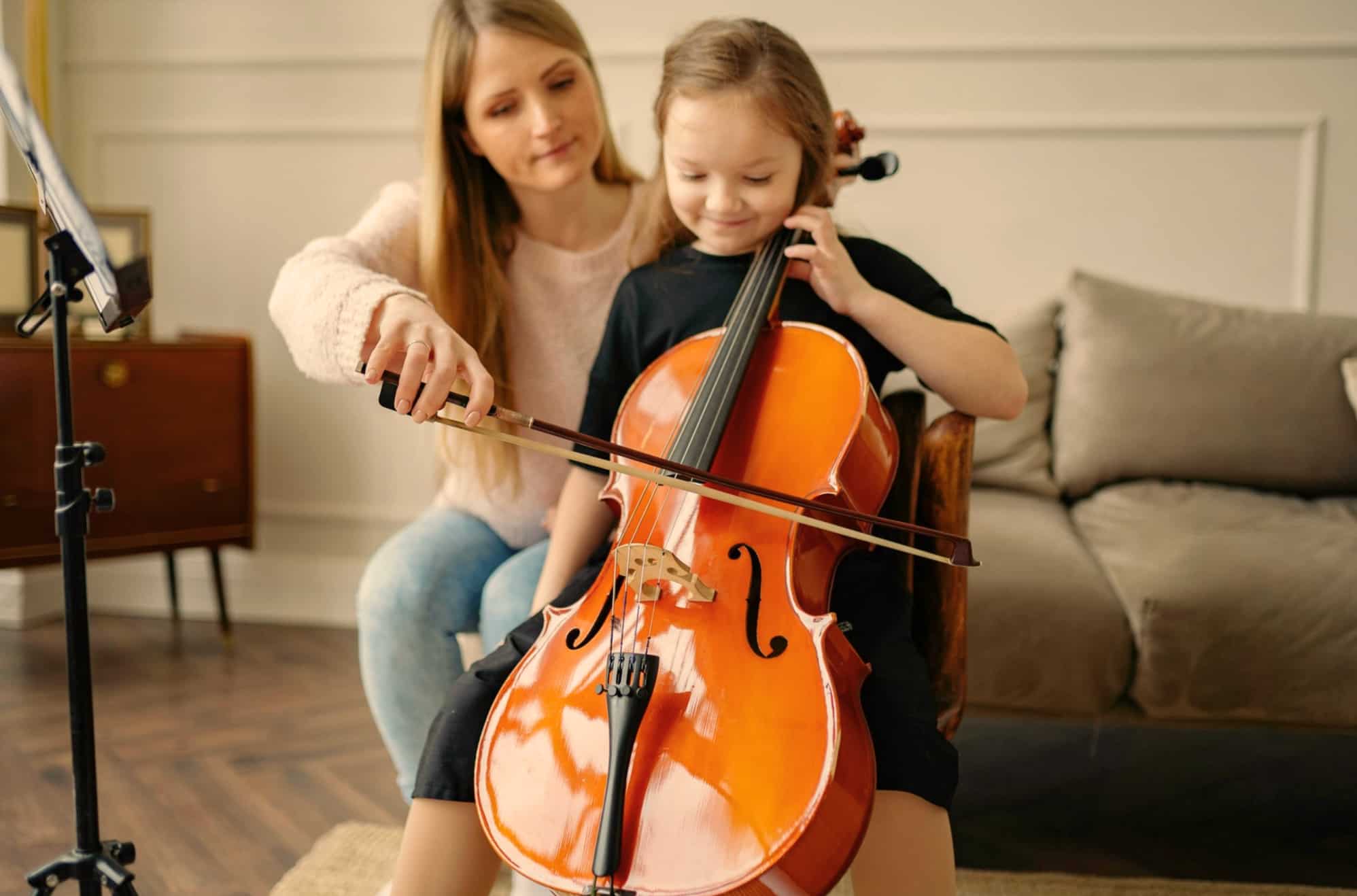
Cello is physical. Posture, bow angle, and hand positioning all affect sound, and these are easier to correct in person.
Online lessons offer flexibility and can still be effective if you already understand the basics.
A simple way to think about it is this: in-person lessons correct your form immediately, while online lessons rely more on your ability to apply feedback yourself.
Group vs private cello lessons — which is better?
Private cello lessons are better for most students because they provide personalised feedback and faster progress, while group lessons can help with motivation and cost.
Private lessons focus entirely on your playing. Every correction and adjustment is tailored to you, which is essential for developing proper technique.
Group lessons:
- move at a shared pace
- offer less individual correction
- are more affordable
- can be more engaging socially
Private lessons build technique efficiently. Group lessons support consistency and enjoyment.
For most people, starting with private lessons and adding group sessions later is the best balance.
Are cello lessons worth it?
Yes, cello lessons are worth it because they reduce frustration and make your practice effective.
Cello is not intuitive at the start. Tone, posture, and intonation depend on small adjustments that are hard to figure out alone.
Lessons:
- identify problems quickly
- improve technique efficiently
- structure your practice
- make progress more predictable
They don’t replace practice, they make it work.
Example of choosing the wrong vs right teacher
Two teachers can produce very different results.
Teacher A:
- gives general feedback
- doesn’t adjust explanations
- lets mistakes continue
Teacher B:
- identifies the exact issue
- adjusts your technique
- improves your sound immediately
The difference is clarity and adaptability, not talent.
What makes cello teaching styles different (deeper insight)
Cello teaching isn’t one fixed system. Different teachers use different technical approaches.
Some teach a more flexible bowing style, others a firmer structure. Both can work, but inconsistency between methods can slow progress.
It’s like learning two different techniques at once. Each works individually, but mixing them creates confusion.
A good teacher has a clear method and can explain it.
Why beginners either stick with cello or quit (deeper insight)
Most beginners don’t quit because cello is too hard. They quit because progress feels unclear.
Early improvement is slow. Without clear feedback, it becomes frustrating.
A good teacher:
- makes progress visible
- corrects issues early
- gives clear direction
That clarity is what keeps people going.
What are the biggest red flags when choosing a cello teacher?
Watch for subtle issues.
- constant praise with no correction
- vague feedback
- unrealistic promises
- inconsistent scheduling
A good teacher is specific, realistic, and consistent.
Is it worth trying a few different cello teachers before committing?
Yes, especially early on.
Trying different teachers helps you understand what works for you before settling into a long-term relationship.
Once you commit, you’re less likely to switch, so it’s worth testing first.
Why the right cello teacher makes such a big difference
The difference isn’t just faster progress, it’s smoother progress.
Learning cello is like building a foundation. If it’s off early, everything becomes harder later.
A good teacher reduces that friction.
What’s the best way to get started with cello lessons in Sydney?
Compare cello teachers, find which one is closest at a good rate that suits you. After a first lesson or two, you can try more and see which one you like the most.
 September 30, 2026
Where Could I Find an Affordable Clarinet Teacher in Sydney?
TL;DR A limited monthly budget can still leave you with options for clarinet lessons in Sydney. Start with the price… September 26, 2026
Where to Actually Look Before You Buy an Instrument
The obvious first search usually isn't the right one. The instinct is almost always the same. A lesson gets booked,… September 23, 2026
What Should I Learn First on Piano? A Beginner’s Step-by-Step Guide
TL;DR Start by learning the keyboard pattern, a small group of notes, finger numbers and a steady beat. Practise a… September 23, 2026
How Much Does Logic Pro Cost for Beginners?
TL;DR Logic Pro is Apple's music production software for Mac. In Australia, Logic Pro for Mac costs $299.99 as a…