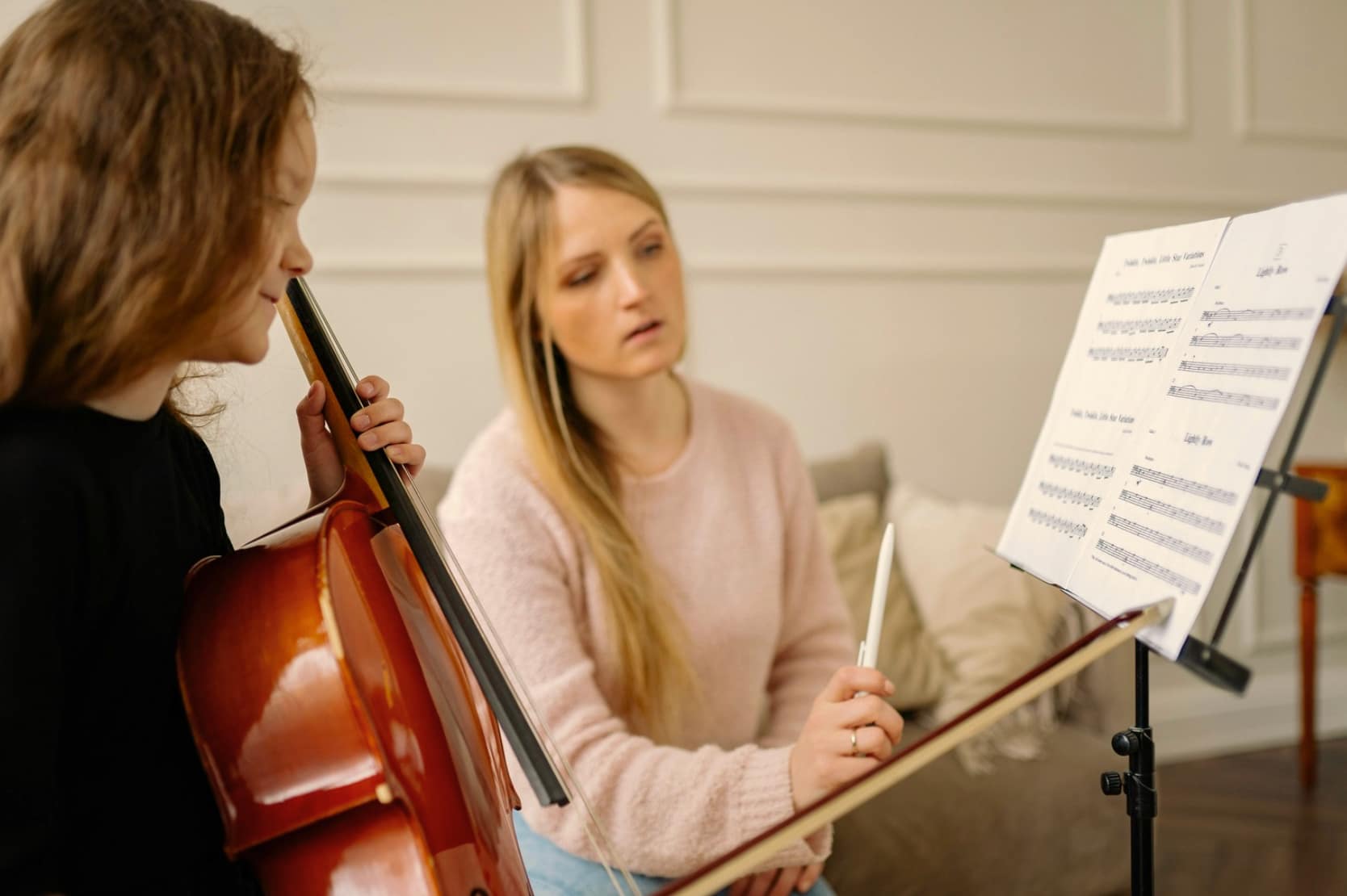
Yes, cello is one of the harder instruments to learn in the early stages, mainly because of intonation (no frets to guide your fingers), bow control (producing a clean tone takes months of work), and the coordination needed to do both at once. The 20th century virtuoso Gregor Piatigorsky famously described the cello as a “single-note instrument” because playing a single note beautifully takes years of work, and beginners often underestimate just how much craft goes into the basics. The good news is that cello rewards patient daily practice more than raw talent. Most students taking cello lessons in Sydney sound recognisably musical within four to six months of weekly cello lessons, and typically reach AMEB grade 1 within one to two years of consistent practice. The difficulty curve flattens noticeably after the first six months, once the fundamentals start running on autopilot.
Why is cello considered hard to learn at first?
Cello is hard at first because two completely separate skills are being built at the same time, and neither one is useful without the other. Your right hand learns to draw the bow in a straight line with the right pressure, angle, and speed, while your left hand learns finger placement, hand frame, and shifting between positions. A clean bow stroke on a wrong note still sounds wrong. A perfectly placed finger pulled with a scratchy bow still sounds rough.
The first three months are mostly your hands learning to cooperate, which is why beginners often describe the early stage as feeling like they’re not making any progress even when they technically are. This plateau typically lifts around the four to six month mark for most students, when the basic mechanics start running on autopilot and your brain frees up to actually focus on making music.
What’s the hardest part of learning cello for beginners?
Bow control is the single hardest part of learning cello for most beginners, more than left hand technique or reading bass clef. Producing a clean, sustained tone requires the bow to travel in a perfectly straight line parallel to the bridge, with consistent pressure and speed across the full length of the stroke. Get any of those three variables wrong and the sound goes thin, scratchy, or wobbly.
The reason this is so difficult is that bow control involves muscles you’ve never used in coordinated ways before. Your shoulder, elbow, wrist, and fingers all have to work together to keep the bow tracking straight, while your arm changes weight subtly as it moves from frog to tip. Most beginners hold tension in the wrong places (the shoulder mostly), which makes the tone forced or makes the bow skip across the strings.
A few specific bow problems most cello beginners face:
- Crooked bowing that drifts toward the fingerboard or the bridge instead of staying parallel
- Tension in the shoulder and wrist that makes the tone forced and scratchy, especially when the sound is already poor (your body’s reaction is to tense up, which makes it worse)
- Uneven sound from frog to tip because the natural weight of the bow changes as it travels
- String crossings that produce a clunky transition rather than a smooth shift
A patient teacher in your first six months is genuinely the difference between building good bow habits and spending the next two years trying to undo bad ones.
How hard is cello compared to violin, guitar, and piano?
Cello is harder than guitar or piano but slightly easier than violin in the early stages, with each instrument hard for completely different reasons. Compared to guitar or piano, cello is harder upfront because there’s no visual fret system or labelled key showing you where the notes are. Compared to violin, cello is easier physically because the instrument sits between your knees with the endpin grounded on the floor, so you’re not fighting gravity to hold it up with your chin and shoulder.
Where cello catches up to violin in difficulty is finger spacing. Cello notes are physically further apart than violin notes, so your left hand has to stretch more, especially in the lower positions where a whole step can be a noticeable reach.
Piano deserves a specific mention because it’s the most common comparison Sydney beginners ask about. Piano is easier in the first year (press the key, get the right note) but arguably harder at advanced levels because of the mental coordination between both hands playing independent musical lines. Cello flips this: the first year is genuinely hard because you’re producing every aspect of the sound yourself, but the upper-intermediate level rewards consistent practice more directly than piano does.
Can adults learn cello, or is it too late?
Adults can absolutely learn cello effectively, and many cello teachers across Sydney’s Inner West, Lower North Shore, and Eastern Suburbs run substantial adult beginner books. There’s no real age ceiling on what’s achievable as a hobbyist, and adults often have a clear advantage in the parts of cello that require musical maturity, focus, and self-correction.
What adults face that kids don’t is a body that’s less adaptable to new physical movement patterns. The left hand stretches and bow arm coordination both ask for muscle use you’ve probably never done before, and most adults carry tension from desk work, gym routines, or previous instruments that interferes with the relaxed posture cello needs. Strengthening and controlling the weaker fingers (especially the pinky on the C and G strings, which is genuinely a struggle for everyone) takes longer for adults than for kids.
What adults have going for them is faster theoretical learning, stronger ability to self-correct, and more consistent practice habits because they’re choosing to be there. The honest framing is that cello is one of the more rewarding instruments to pick up later in life. The instrument sits comfortably without putting pressure on your neck or shoulders the way violin does, and you can be playing recognisable pieces within a year of starting consistent practice.
Why does cello tone take so long to develop?
Cello tone development is slow because it depends on dozens of small variables working together, and each one takes weeks to internalise as muscle memory. Tone on cello isn’t just about playing the right note, it’s about how the bow contacts the string, where on the string the bow sits, how much weight the arm transfers into the contact point, and how the cellist’s body releases tension to let the instrument resonate freely.
The reason this is genuinely harder than tone production on most other instruments is that cello tone has no autopilot. On piano, the hammer hits the string the same way every time once you press the key. On guitar, the pluck produces a similar sound regardless of small finger variations. On cello, every single millisecond of the bow stroke is shaping the tone in real time, and small inconsistencies in bow weight, speed, or angle are immediately audible.
Bow development for most cellists follows a circular path rather than a straight line. You start by trying to pull a decent sound without scratchiness. Then you focus on keeping the bow straight across all four strings. Then you work on producing an even sound from frog to tip without diminishing at the tip. Then you start varying contact point (closer to the bridge for brightness, closer to the fingerboard for warmth) to add expression, and suddenly the core sound starts disappearing again. So you return to building core sound, and the cycle continues at a deeper level. Each loop around the same set of concepts means something new because you’re hearing finer detail than you could before. This is why an experienced cello teacher matters so much. They can hear a beginner’s tone and diagnose the exact issue (too much pressure, bow moving too slowly, contact point too close to the fingerboard) and prescribe a specific exercise to fix it. A less experienced teacher often just tells the student to “use more bow” or “press harder,” which doesn’t address the actual cause and lets bad habits set in. Sydney has a strong cello teaching community with many active orchestral and chamber players teaching privately, particularly across the Inner West, Lower North Shore, and Eastern Suburbs.
How long does it take to sound good on cello?
Most students start sounding recognisably musical within four to six months of weekly cello lessons and consistent daily practice, with “good” defined as playing simple melodies with reasonable intonation, a clean tone, and confident bowing. AMEB grade 1 typically takes one to two years from scratch for most students, with higher grades taking progressively longer. Many cello teachers suggest students need around two to three years to feel genuinely comfortable with the basics and play simple pieces with confidence, and three to four years to reach a solid intermediate level.
These timelines assume around 20 to 30 minutes of focused daily practice for kids and 30 to 45 minutes for adults. Cutting practice to two or three sessions a week roughly doubles the timeline. Cello skills are particularly delicate compared to piano or guitar because so much depends on physical muscle memory in the bow arm and left hand, and even a few days off can noticeably affect the feel of the next practice session.
Progress also isn’t linear. Most cello students experience sudden jumps after weeks where nothing felt like it was changing, usually triggered by their ears developing rather than their hands. Once you can hear the difference between a well-tuned note and a slightly sharp one, your fingers can finally start fixing what they couldn’t before.
What age should kids start cello lessons?
The best age to start cello lessons for kids is between 6 and 10 years old, when they can hold a bow steadily for a full lesson and follow structured instructions. Starting in this window lets a child build technique while their hands and posture are still developing, which produces more natural fundamentals than starting in the teenage years.
For very young kids around 4 to 5 years, a quarter-size or one-eighth-size cello is workable but the focus should be on enjoyment and exposure rather than serious technique. Most cello teachers prefer to start formal lessons closer to 6 or 7. Cellos come in fractional sizes (1/8, 1/4, 1/2, 3/4, and full size), and the right size matters more than parents often realise. A kid on a cello that’s too big will struggle with hand stretches that simply aren’t physically possible for their frame, and that struggle often gets misread as lack of talent.
Do you need long fingers or strong hands to play cello?
You don’t need long fingers or particularly strong hands to play cello, though even-length fingers and reasonable hand size do make the early stages easier. Cello finger spacing is wider than violin, so adults with smaller hands sometimes find the lower positions a stretch in the first few months, but this evens out as the hand adapts and as the student moves into higher positions where the spacing tightens.
What matters more than strength or finger length is relaxation. The most common mistake new cellists make is squeezing the neck with the left hand thumb, which locks up the whole arm and makes shifting between positions awkward. The most efficient learners are usually the ones who can stay relaxed while repeating basic movements accurately, not the ones with the strongest grip.
For adults specifically, the pinky finger (4th finger) on the C and G strings takes the most work to develop. It’s the weakest finger for most people, and the lower strings require the most pressure to push down cleanly. Most teachers start adult beginners with specific strengthening exercises for this reason.
How much practice does cello actually need?
Cello needs around 20 to 30 minutes of focused daily practice for kids and 30 to 45 minutes for adults to make steady weekly progress, which is more than many beginners expect. Cello practice is more physically demanding than piano or guitar practice because of the bow arm endurance and left hand stretches involved, so it’s better to split practice into shorter focused sessions than one long session.
A common Sydney student practice split looks like this:
- 5 minutes of bow exercises and open strings to warm up
- 10 to 15 minutes of scales, arpeggios, and shifting exercises
- 10 to 20 minutes of repertoire work on current pieces
- 5 minutes of sight reading or theory if time allows
Skipping the warm-up and technical work to go straight to repertoire is the most common practice mistake. It feels more enjoyable but produces noticeably slower progress because the underlying technique never improves. The students who progress fastest treat the boring technical work as the foundation and the repertoire as the reward, which is something any good cello teacher will reinforce week after week.
Daily practice matters more on cello than on most instruments because the physical skills are unusually delicate. Take a few days off and you’ll notice the bow feeling less responsive and your left hand intonation drifting. Even seasoned cellists with decades of playing report that missing a week makes their playing feel rough for the first few days back.
So is cello worth learning, or should you pick something easier?
Yes, cello is genuinely worth learning even though it’s harder than most instruments in the first year, especially for anyone drawn to the warmth and emotional range of the sound. The instrument has one of the largest tonal ranges in the orchestra, covers solo, chamber, and orchestral repertoire, and offers a slower but more rewarding learning curve than guitar or piano for players who enjoy patient progress.
The honest framing is this. Cello is hard enough that you’ll feel real satisfaction when you make progress, but not so hard that you’ll plateau permanently with consistent practice and a good teacher. Most Sydney beginners are playing simple recognisable pieces within four to six months and working toward early grade material within a year or two. The students who quit usually do so because they expected cello to feel like learning a new piece of software (linear, predictable, fast) rather than a long-term physical and musical practice. The ones who treat it as an enjoyable practice rather than a project to complete tend to progress steadily for years.
Compare cello teachers in Sydney cross the Inner West, city and more and try multiple before deciding on the one you want long-term.
 September 30, 2026
Where Could I Find an Affordable Clarinet Teacher in Sydney?
TL;DR A limited monthly budget can still leave you with options for clarinet lessons in Sydney. Start with the price… September 26, 2026
Where to Actually Look Before You Buy an Instrument
The obvious first search usually isn't the right one. The instinct is almost always the same. A lesson gets booked,… September 23, 2026
What Should I Learn First on Piano? A Beginner’s Step-by-Step Guide
TL;DR Start by learning the keyboard pattern, a small group of notes, finger numbers and a steady beat. Practise a… September 23, 2026
How Much Does Logic Pro Cost for Beginners?
TL;DR Logic Pro is Apple's music production software for Mac. In Australia, Logic Pro for Mac costs $299.99 as a…