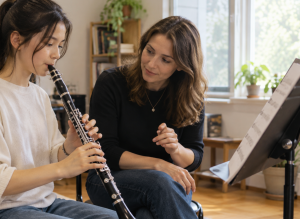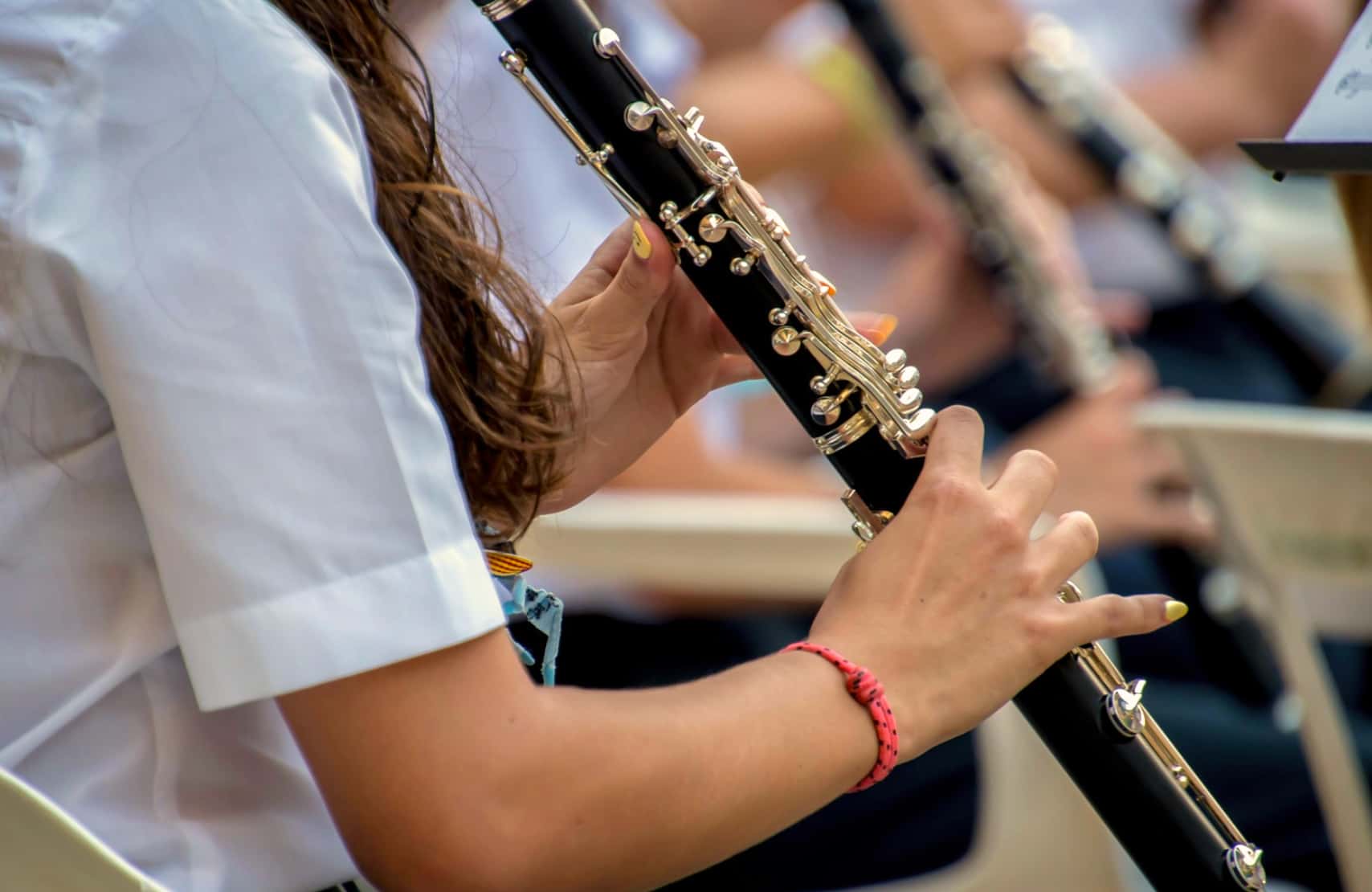
Clarinet is moderately easy to start but challenging to master. Most beginners produce a recognisable note within the first lesson, play simple tunes within a month, and feel capable after six months of consistent practice. The biggest hurdles are embouchure (how your mouth shapes the mouthpiece) and crossing the break, which is the awkward jump between the lower and upper registers. Structured guidance from quality clarinet lessons in Sydney shortens this curve significantly because the early technical habits are hard to self-correct once they’re set.
What makes clarinet tricky in the first few weeks?
The reed and embouchure combination is what catches most beginners off guard. Unlike a piano where pressing a key always produces a note, the clarinet only responds when your lip pressure, jaw position, and air support all line up. In the first week or two, you’ll likely get squeaks, airy sounds, or notes that simply refuse to come out.
A few specific things that take adjustment:
- Reed sensitivity: Reeds vary even within the same box, and a chipped or warped one will sabotage practice
- Lower lip cushioning: Your bottom teeth shouldn’t touch the reed directly, which feels unnatural at first
- Steady air pressure: Clarinet needs faster, more focused air than people expect
None of this is unusually hard, but it does mean the first fortnight feels less rewarding than something like guitar, where strumming a chord is immediate. By week three or four, the embouchure starts to feel automatic and the squeaks fade.
Additionally, you have to cover holes precisely on your clarinet rather than just pressing down buttons like on the saxophone, which sort of makes it like the saxophone’s more difficult cousin. But it has a way larger range and a completely different sound profile that appeals to many people way more than the saxophone’s.
How long until you sound decent on clarinet?
If your teacher focuses on your tone, you can start sounding decent relatively quickly even within the first few months. Most beginners sound genuinely pleasant by the three to four month mark with around 20 to 30 minutes of practice five days a week. “Decent” here means clean tone in the lower register, basic scales, and simple melodies played without obvious squeaks. To reach a level where you’d comfortably play in a school ensemble or community band, expect six to twelve months.
This timeline assumes regular feedback. Self-taught beginners often plateau around month two because small embouchure issues compound, and tone stops improving even with more practice. That’s the point where clarinet lessons make the biggest difference, since a teacher can spot in thirty seconds what a YouTube video can’t diagnose at all.
Is clarinet harder than flute or saxophone?
Clarinet is generally considered harder than both flute and saxophone. Flute has no reed to manage, but producing any sound at all is notoriously difficult and many beginners struggle for weeks before getting a clean note. Clarinet gives you a note quickly, but refining tone takes longer.
Compared to saxophone, clarinet has a tighter embouchure, covering holes instead of pressing buttons, and the dreaded register break. Saxophone is more forgiving early on, which is why some students start on sax and switch later. That said, clarinettists usually transition to sax easily, while the reverse is harder. If you’re choosing between the two and you want long-term versatility, clarinet builds stronger fundamentals.
What does a typical first clarinet lesson look like?
The first lesson is mostly assembly, embouchure setup, and producing your first sustained note, with simple tunes usually saved for lesson two. A good teacher won’t rush you into reading music on day one because the physical foundation matters more than notation early on.
A standard 30-minute first lesson usually covers:
- Assembly and care: How to grease corks, align the reed, and pack the case properly
- Embouchure basics: Lower lip placement, jaw position, and how much mouthpiece to take in
- First notes: Usually open G and the surrounding notes in the chalumeau register
- A simple exercise to practise: Often long tones rather than a song, since tone production is the priority
By the end of lesson one, most beginners can produce a clean note and hold it for a few seconds. That’s the realistic benchmark, not playing a recognisable melody. Teachers who push beginners straight into songs often skip the embouchure work, and that shows up as tone problems six months later.
What is the break on clarinet and why does everyone mention it?
The break is the transition between the chalumeau register (the lower notes) and the clarion register (the upper notes), and it’s where most beginners hit their first real wall around the three to six month mark. Crossing the break smoothly requires you to add the register key while simultaneously closing several finger holes that were previously open, all without disturbing your embouchure or air.
Think of it like changing gears in a manual car. The first time, you’ll stall, grind, or jolt forward. After enough repetition, it becomes practically automatic. Most students need two to four weeks of focused practice to cross the break cleanly, and a teacher can isolate the exact movement that’s slipping. Without guidance, students often develop workarounds, like over-blowing or biting the reed, that cause problems for years afterwards.
How much daily care does a clarinet actually need?
Clarinet maintenance takes about five minutes a day plus a deeper clean every couple of weeks, and skipping it is one of the quiet reasons beginners struggle without realising why. The instrument is built from wood (or composite) and pads that respond to moisture, and condensation from your breath sits inside the bore every time you play.
A realistic daily routine looks like this:
- Before playing: Wet the reed briefly. A quick rinse under the tap works for a new reed, and saliva is enough once it’s broken in. Long soaks waterlog the reed and shorten its life
- After playing: Swab the bore from bell to barrel, wipe the mouthpiece, store the reed flat in a reed case
- Weekly: Check pads for stickiness, clean the mouthpiece properly with lukewarm water
This is what older players sometimes call the “fussing” side of clarinet, and it’s worth knowing about before you commit. The upside is that once it becomes habit, it’s no more thought than locking your front door. The downside is that beginners who skip it find their tone deteriorating after a month or two and assume they’re getting worse, when actually their reed has died and their pads are leaking.
Can adults learn clarinet from scratch, even later in life?
Yes, and adults learning in their 40s, 50s, and beyond pick up clarinet successfully all the time. There’s no biological cutoff for learning a wind instrument, and adult beginners often progress faster than children in the first six months because they understand instructions, practise with intent, and don’t need convincing to repeat tricky passages. The trade-off is that adults sometimes carry more tension in the jaw and shoulders, which works against clarinet tone production.
Adults learning in Sydney tend to do well with weekly lessons. The most common adult timeline looks like this:
- Months 1 to 2: Sound production, basic notes, simple tunes
- Months 3 to 6: Scales, the break, intermediate pieces
- Months 6 to 12: Comfortable playing across the full range with reasonable tone
For older adult beginners, the main practical considerations are reading glasses for sheet music, hand flexibility (which a few minutes of warm-up exercises easily handles), and finding a teacher who’s worked with adults before rather than only children. Adult learners who stick with it past the first three months almost always continue, because that’s when the instrument starts feeling expressive rather than mechanical.
Can you pick up clarinet again as an adult after years off?
Yes, and returning players usually progress two to three times faster than true beginners because muscle memory and music reading come back quickly. The embouchure rebuilds within two to four weeks of consistent practice, and most returning players are back to their previous level within two to three months if they played for at least a few years originally.
The main thing that catches returning players off guard is reed strength. Adults who played clarinet in school often remember using strength 3 or 3.5 reeds, but after years away, the lip muscles need to rebuild before that’s comfortable again. Starting back on a 2.5 and working up prevents the frustration of feeling like you’ve lost more ability than you actually have. Returning players in Sydney often slot well into community concert bands once they’re a few months back into it, and groups across the Inner West, North Shore, and Sutherland Shire are usually welcoming to re-entering players.
Is clarinet a good first instrument for kids?
Clarinet works well for kids from around age 9 or 10, once their hands are big enough to cover the holes and their adult front teeth have come through. Younger than that and the instrument tends to be physically uncomfortable, which kills motivation quickly. For children under 9 who are keen on woodwind, recorder or fife is a better starting point and transfers cleanly to clarinet later.
Kids generally pick up the embouchure faster than adults but need more structure around practice. The school band system in NSW supports clarinet strongly, so children who start in Year 4 or 5 often have built-in motivation through ensemble playing. Private clarinet lessons alongside school band accelerate progress noticeably because school programs rarely have time for one-on-one technique work.
What’s the cheapest realistic way to start clarinet in Sydney?
The minimum viable setup is around $400 to $600 upfront, plus ongoing lesson and reed costs. Going cheaper than this almost always backfires because budget instruments leak air, which makes learning genuinely harder rather than just slower.
Here’s a realistic breakdown:
- Instrument hire: Around $40 to $70 a month from Sydney music retailers, often with a rent-to-own option that credits payments toward purchase
- Second-hand student clarinet: $300 to $500 for a decent used model, but get it inspected by a tech first since pad replacements can cost $150 plus
- Reeds: A box of ten lasts a beginner two to three months, around $35 to $45
- Accessories: Reed case, swab, cork grease, and music stand together come to roughly $60
- Lessons: Weekly private lessons in Sydney typically range from $40 to $80 per half hour depending on teacher experience and location
The cheapest path that actually works is hiring an instrument for the first three months while you confirm clarinet is a long-term fit, then buying second-hand once you’re sure. Avoid the temptation of $150 instruments from online marketplaces, since the cost of fixing them usually exceeds buying a proper student model outright.
Why does my clarinet squeak so much?
Squeaks almost always come from one of four sources: reed problems, embouchure pressure, finger leaks, or tongue position. The fix depends on which one is causing it, and identifying the right cause is where most self-taught beginners go in circles. A squeak isn’t a sign you’re bad at clarinet, it’s a diagnostic signal pointing at a specific technical issue.
The most common culprit in the first two months is biting, where the bottom jaw clamps up and pinches the reed. The fix is counterintuitive because it feels like you need more pressure to get a sound, but actually you need less pressure and more air. Reed issues are next most common, particularly chipped tips or reeds that have dried unevenly. Finger leaks (where a fingertip doesn’t fully cover a tone hole) cause squeaks specifically when crossing notes, while tongue position affects squeaks in the upper register. A teacher can usually diagnose the cause in one lesson, while solo troubleshooting can take weeks of frustration.
Why does the clarinet sound different to other instruments playing the same note?
The standard clarinet is a Bb instrument, which means when you play a written C, it actually sounds as a Bb to everyone else. This catches beginners by surprise the first time they try to play along with a piano, guitar, or singer, because the notes on the page won’t line up with the notes their friends are reading.
This isn’t a defect, it’s a quirk of how transposing instruments work, and you don’t need to understand the theory deeply to start playing. For solo practice, school band, or any clarinet-only situation, transposition is invisible because everyone’s reading the same Bb-transposed parts. It only becomes relevant if you’re jamming with C instruments (piano, guitar, violin) or playing from a piano songbook, in which case you’ll either need transposed sheet music or you’ll learn to transpose on the fly. Most beginners don’t need to worry about this for the first year, and by the time it matters, you’ll have enough playing experience to handle it without much fuss.
How much practice does clarinet actually need?
Twenty to thirty minutes a day, five days a week (ideally every day), is the sweet spot for steady beginner progress. Less than fifteen minutes daily and the embouchure muscles don’t develop fast enough to feel improvement, which leads to discouragement. More than forty-five minutes in early months and the lip fatigues, causing you to practise with poor form, which is worse than not practising at all.
Quality matters more than total time. Fifteen focused minutes working on a specific scale or passage beats an hour of unfocused noodling. Beginners often default to playing through pieces they already know because it feels productive, but real progress comes from drilling the parts that don’t work yet. This is one of the harder habits to build alone, and it’s something teachers actively shape during weekly lessons by setting targeted practice goals.
Does where you learn clarinet in Sydney matter?
It matters for consistency more than anything else. The biggest predictor of clarinet progress is showing up to lessons every week without skipping, and that’s heavily influenced by how convenient your lesson location is. Students who travel forty-five minutes each way often quit within six months, regardless of teacher quality.
Sydney’s clarinet teaching scene is concentrated around the Inner West, Lower North Shore, and Eastern Suburbs, with strong options also in the Hills District and St George area. In-home lessons remove the travel question entirely and tend to have higher long-term retention rates, particularly for younger students whose parents are juggling school pickups and after-school activities. Studio lessons can offer better instrument storage and recording setups for more advanced students, but for beginners, the difference is minimal.
What separates beginners who quit from those who keep going?
The biggest predictor isn’t talent or starting age, it’s whether the beginner gets past the squeaky stage with their motivation intact. Almost everyone who quits clarinet does so in the first three months, and almost always because the early sound quality discourages them before their embouchure develops. The students who push through that window almost always continue for years.
Three things consistently separate finishers from quitters:
- A teacher who normalises but works on the squeaky phase: Beginners who think squeaks mean they’re failing tend to quit, while those who understand it as a known stage push through with proper airflow and embouchure
- Short-term wins: Playing a recognisable song within the first month, even something simple like a folk tune, gives the brain proof that progress is real
- A practice rhythm rather than a practice schedule: Tying practice to an existing daily habit (after dinner, before homework) sticks better than calendar reminders
The instrument rewards persistence disproportionately. The gap between three months and six months on clarinet is significant, and the gap between six and twelve months is even larger, because by then the technical fundamentals are stable and you’re free to actually make music.
So is clarinet worth learning?
For most people, yes, if you genuinely like it. Clarinet is one of the most expressive and versatile woodwinds, with repertoire ranging from classical and jazz to klezmer and contemporary pop. It’s portable, plays well in ensembles, and the skills transfer cleanly to saxophone and other woodwinds later if you want to expand. The early difficulty is real but short-lived, and the long-term reward is significant.
The honest answer is that clarinet is hard enough to be satisfying and easy enough to be accessible. With the right teacher, a decent instrument, and consistent practice, most beginners are playing music they’re proud of within six months. If you’re in Sydney and weighing it up, the smartest first step is booking a trial lesson with a clarinet teacher in Sydney rather than deliberating further, since thirty minutes with a clarinet in your hands tells you more than any blog post can.
 September 30, 2026
Where Could I Find an Affordable Clarinet Teacher in Sydney?
TL;DR A limited monthly budget can still leave you with options for clarinet lessons in Sydney. Start with the price… September 26, 2026
Where to Actually Look Before You Buy an Instrument
The obvious first search usually isn't the right one. The instinct is almost always the same. A lesson gets booked,… September 23, 2026
What Should I Learn First on Piano? A Beginner’s Step-by-Step Guide
TL;DR Start by learning the keyboard pattern, a small group of notes, finger numbers and a steady beat. Practise a… September 23, 2026
How Much Does Logic Pro Cost for Beginners?
TL;DR Logic Pro is Apple's music production software for Mac. In Australia, Logic Pro for Mac costs $299.99 as a…