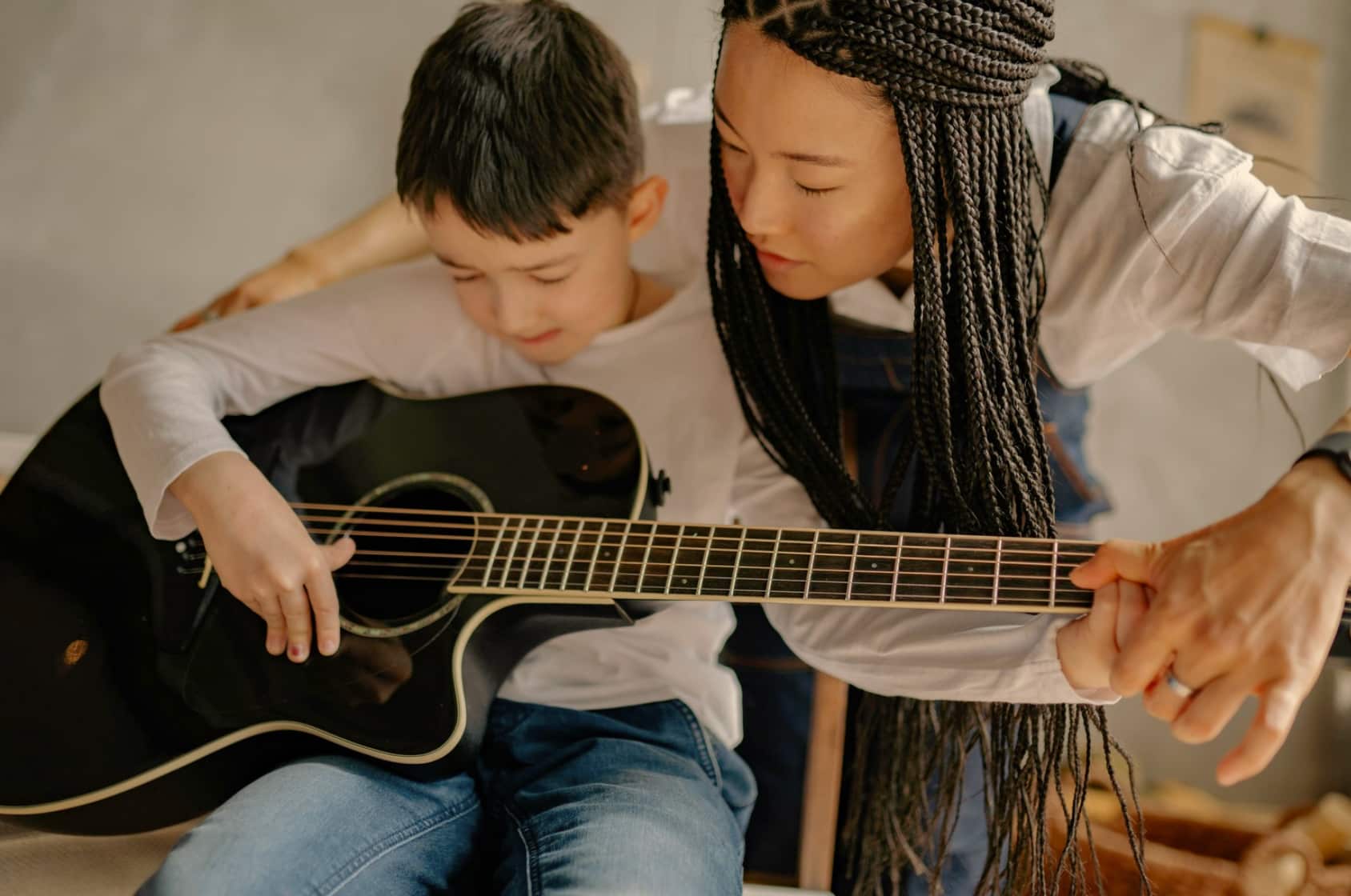
Finding the right guitar teacher is about finding someone who matches your goals, fixes what’s holding you back, and gives you a clear path forward.
Start by browsing different guitar lessons across Sydney based on location and price, and see who you connect with after comparing multiple teachers.
How do I know what I actually need from guitar lessons?
You need to decide your goal first, otherwise you’ll choose based on convenience instead of outcome.
If you want to play songs casually, you need someone focused on chords and rhythm. If you want long-term progress, you need structure and technique. If you’re self-taught and stuck, you need someone who can diagnose what’s wrong.
Most people skip this and end up thinking lessons are slow. In reality, the direction was never clear to begin with.
Should I choose the best guitarist or the best teacher?
You should choose the best teacher, not the best player.
A great guitarist can impress you. A great teacher makes things feel easier almost immediately.
If you finish a lesson and things still feel confusing, that’s not something you need to push through. It usually means the explanation didn’t match how you learn.
What should a guitar teacher ask me before starting?
They should ask about your goals, your experience, and what you’re struggling with.
If they don’t ask questions and just start teaching, they’re likely running the same lesson for everyone.
That’s where progress slows down, because the lesson isn’t built around you.
Should guitar lessons follow a strict plan or be flexible?
They should have direction, but adapt to you each lesson.
A rigid curriculum ignores your level. Completely unstructured lessons feel random.
The right teacher has a long-term plan, but adjusts based on what actually happens when you practise.
How do I know if a guitar teacher can actually teach?
You know they can teach if they make the next step obvious.
A strong teacher will:
- simplify things quickly
- correct mistakes you didn’t notice
- explain why something matters
- give you a clear plan to follow
If you walk out thinking “what do I actually do now?”, that’s not normal. That’s a clarity issue.
Should I take a trial lesson before committing?
Yes, because one lesson tells you more than any profile or review.
You’ll see how they explain, how they structure things, and whether they actually listen.
You’re not judging results yet. You’re judging whether the process makes sense.
In fact, you should compare guitar teachers, even if you have to pay for the first lesson, so you can see who you connect with the most and who is most conducive to your progress.
What should I expect from my first guitar lesson?
You should expect direction and next steps, not instant progress.
A good first lesson gives you a clear understanding of your level and something specific to work on straight away.
If it feels random or unclear, that usually doesn’t fix itself over time. It might be time to start looking for another teacher.
Does the teacher’s genre actually matter?
Yes, because it shapes what they prioritise from the start.
A classical teacher will focus on precision and reading. A rock teacher will focus on rhythm and riffs. A jazz teacher will focus on theory and improvisation.
If the style doesn’t match your goal, lessons start to feel disconnected very quickly. Get a teacher that matches your style and goals.
Should my teacher just teach me songs I like?
No, they should use songs to build skill.
A good teacher doesn’t just teach the song. They use it to clean up your timing, improve technique, and show you why it works. That’s what actually transfers to new songs later.
Many great teachers don’t teach songs as they’re a distraction from the fundamentals. You should be learning chord shapes and progressions and proper technique, as this will pay dividends down the line.
Otherwise, you end up like those people who can play songs on their guitar, but as soon as it comes learning something new or improvising, you are almost like a complete beginner in ability.
Do I need a strict teacher or a relaxed one?
You need the style that keeps you consistent while still pushing you forward.
Some people need encouragement to stay engaged. Others improve faster when they’re pushed harder.
If the teaching style doesn’t suit you, you’ll either lose motivation or stop progressing. Find a teacher that matches what you need to progress.
I’m self-taught. What should I look for in a teacher?
You need someone who can identify and fix gaps, not just give you more material.
Most self-taught players:
- can play songs but lack control
- have inconsistent timing
- rely on patterns without understanding
- have inefficient technique
The right teacher spots the bottleneck and fixes that first.
Most beginners assume slow progress means they’re not talented. In reality, it usually means the teaching approach doesn’t match how they learn.
What are the biggest red flags when choosing a guitar teacher?
Look for these early:
- they don’t ask about your goals
- lessons feel generic
- no correction of mistakes, too relaxed
- no clear practice direction or philosophy
- every lesson is just “what song do you want?”
That last one feels good at first, but it usually means there’s no long-term plan. You might see great gains in the beginning but you will pay for it in the future for not properly learning fundamentals.
Should I try more than one guitar teacher?
Yes, because without comparison you don’t know what good teaching actually feels like.
After even two different teachers, the difference in clarity and structure becomes obvious.
How does pricing affect guitar lessons in Sydney?
Price usually reflects demand, not fit.
Some of the best teachers aren’t the most expensive. They’re the ones who explain things in a way that actually clicks.
Your result depends on alignment, not their hourly rate.
However a higher price also indicates higher level of experience and credentials, which can very much mean better teaching. This is why you must try multiple teachers and use value for money as a strong factor in deciding.
Should I choose in-person or online guitar lessons?
If you’re a beginner, in-person is usually better. If you value flexibility, online can work well.
In-person helps with technique and correction. Online helps with convenience.
The best option is the one you’ll actually stick with consistently.
Do kids and adults need different guitar teachers?
Yes, because they learn differently.
Kids usually need shorter focus points and encouragement. Adults tend to benefit more from clear explanations and realistic practice plans.
A good teacher adjusts their approach depending on who they’re teaching. But some teachers specialise in a specific age group as well.
You don’t need to have a specialised-for-your-age-group teacher, some are truly comfortable and equally effective teaching any age group.
Why starting with the wrong teacher slows you down later
Starting with the wrong teacher doesn’t just slow progress, it builds habits that are hard to undo.
At the beginning, you can still play simple things even with inefficient technique. Your fingers find a way, even if it’s not the best way. That’s why it’s easy to miss early on.
The problem shows up later. When you try to play faster, cleaner, or more complex material, those habits become a ceiling. Things feel harder than they should, and progress stalls even if you’re practising consistently.
A good example is left-hand tension or poor picking control. You might get through basic songs fine, but once speed or precision matters, those issues start limiting everything else.
It’s also like training with bad form at the gym. You can still lift weight, but eventually you plateau or risk injury. Fixing it means going backwards before you can move forward again.
That’s why the early phase matters more than most people realise. Learning things properly from the start isn’t about perfection, it’s about avoiding friction later.
What a good teacher actually does between lessons
A good teacher doesn’t just run the lesson. They set up what happens after it.
They give you a clear, focused practice plan, not just a chaotic list of things to try for yourself. You should know exactly what to practise, how long to spend on it, and what improvement should feel like when you’re doing it properly.
They also prioritise. Instead of giving you five different things, they’ll focus you on one or two that actually move you forward. That’s what makes practice efficient.
I’m sure you don’t have hours to practice, more like 30-60 mins a day.
A good teacher can set you up so your small but frequent practice moves oceans of progress.
They’ll also adjust based on what actually happened during the week. If something didn’t stick, they’ll change the approach. If something improved quickly, they’ll build on it.
That feedback loop is where real progress comes from.
Most people who quit guitar didn’t lack motivation. They just never saw clear, consistent improvement, so they assumed they weren’t suited to it.
A good teacher removes that uncertainty by making progress visible and repeatable.
How do I find guitar lessons near me in Sydney?
Compare teachers based on fit and location together, not just proximity.
A great teacher might be worth travelling for, but if you’re travelling between the Shire and the Hills, or North Shore and St. George then you may start to resent having to travel for lessons, unless you don’t mind the travel and you enjoy the lessons.
Focusing on convenience factors is completely fine, see who’s closest and charges a reasonable rate for their experience. Other factors will likely fit as you try multiple teachers.
The right guitar teacher isn’t the most impressive or the most expensive.
It’s the one who listens, adapts, explains clearly, and gives you a path that actually fits how you learn.
When that’s in place, progress becomes predictable and sticking with guitar becomes much easier.
 September 30, 2026
Where Could I Find an Affordable Clarinet Teacher in Sydney?
TL;DR A limited monthly budget can still leave you with options for clarinet lessons in Sydney. Start with the price… September 26, 2026
Where to Actually Look Before You Buy an Instrument
The obvious first search usually isn't the right one. The instinct is almost always the same. A lesson gets booked,… September 23, 2026
What Should I Learn First on Piano? A Beginner’s Step-by-Step Guide
TL;DR Start by learning the keyboard pattern, a small group of notes, finger numbers and a steady beat. Practise a… September 23, 2026
How Much Does Logic Pro Cost for Beginners?
TL;DR Logic Pro is Apple's music production software for Mac. In Australia, Logic Pro for Mac costs $299.99 as a…