If you’ve recently started learning piano accompaniment, you’ve probably asked yourself the same question as almost every beginner: What are the easiest songs to learn for piano accompaniment?
Many beginners assume the easiest songs are simply the ones with the fewest chords. In reality, the best accompaniment songs are the ones that teach you transferable skills. A song with four simple chords can help you develop rhythm, timing, chord transitions, dynamics, and confidence that carry over into hundreds of other songs.
Whether you want to accompany yourself while singing, provide piano accompaniment for another musician, or simply become more comfortable playing chords instead of classical sheet music, choosing the right songs makes learning much more enjoyable.
Here are some beginner-friendly songs that will help you build practical piano accompaniment skills while keeping the learning process rewarding.
What Makes a Good Beginner Piano Accompaniment Song?
Before choosing songs, it’s worth understanding what actually makes a song “easy.”
Many beginners immediately search for songs with only three or four chords. While that’s certainly helpful, there are other factors that matter just as much.
The best beginner accompaniment songs usually have:
- Predictable chord progressions
- A steady rhythm
- Comfortable tempos
- Repeating song structures
- Simple left-hand patterns
- Familiar melodies
These characteristics allow you to focus less on reading music and more on developing the coordination needed to accompany confidently.
As your confidence grows, you’ll naturally find yourself recognising similar chord progressions across completely different songs.
Should I Learn Chords or Melodies First?
One mistake many beginners make is trying to memorise songs one by one.
While this feels productive at first, it often means starting from scratch whenever you learn something new.
Instead, think of every song as an opportunity to learn a pattern.
Thousands of popular songs use the same handful of chord progressions. Once you become comfortable moving between common chords like C, G, Am, and F, you’ll suddenly realise just how many songs become accessible.
Instead of learning ten completely different songs, you’re really learning one musical language that keeps repeating itself.
That’s why accompaniment develops so quickly compared to traditional note-by-note piano playing.
Songs to Learn for Piano Accompaniment with Easy Chords
Hey Jude – The Beatles
Hey Jude is a fantastic choice (and a friendly classic) for beginner pianists who want to develop their accompaniment skills.
Its slow tempo, recognisable melody, and straightforward chord progression make it easy to follow without feeling overwhelmed. Rather than focusing on complex piano parts, beginners can concentrate on keeping a steady rhythm and building confidence with smooth chord changes.
As your playing becomes more comfortable, you can experiment with different accompaniment patterns, chord voicings, or left-hand rhythms to make the song sound fuller while still using the same simple progression.
Someone Like You – Adele
This modern classic is excellent for developing expressive accompaniment.
Although the song sounds emotional and sophisticated, the chord progression repeats throughout much of the piece, allowing beginners to concentrate on dynamics rather than constantly learning new material.
It’s also a fantastic song for practising accompanying singers because the piano supports the vocal line instead of competing with it.
Lose – NIKI
For learners who enjoy contemporary pop and R&B, Lose is an excellent song to add to your repertoire.
Unlike some beginner songs that can feel dated, Lose introduces you to the slower, more atmospheric accompaniment style that is common in modern pop music. The song features a steady tempo, spacious chord progression, and repetitive harmonic structure, allowing beginners to focus on playing with expression rather than navigating technically demanding passages.
It’s also a great choice for anyone wanting to accompany themselves or another singer. The piano supports the vocals without becoming overly busy, helping you develop important accompaniment skills such as controlling dynamics, maintaining a consistent rhythm, and leaving space for the melody.
How Many Chords Do You Need to Learn?
Surprisingly few.
Many beginner-friendly songs can be played using only a handful of major and minor chords.
Learning common chords such as C, G, F, D, A, E, Am, Em, Dm, and G7 will unlock a huge catalogue of popular music.
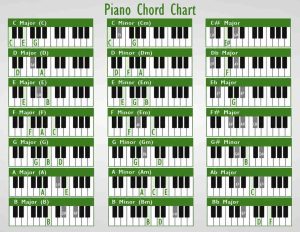
As you become more comfortable moving between these shapes, learning new songs becomes noticeably quicker.
Rather than memorising entirely new pieces, you’ll start recognising familiar patterns almost immediately.
Easy Songs to Play While Singing
Many people begin piano accompaniment because they want to accompany themselves.
If that’s your goal, choosing songs with comfortable chord changes is more important than choosing technically impressive music.
Some great beginner-friendly choices include:
- I’m Yours – Jason Mraz
- Count on Me – Bruno Mars
- You Are My Sunshine – Johnny Cash
- Can’t Help Falling in Love – Elvis Presley
- Lean on Me – Bill Withers
- Riptide – Vance Joy
- A Thousand Years – Christina Perri
These songs leave enough mental space for you to focus on singing while maintaining a steady accompaniment.
Over time, coordinating vocals and piano becomes much more natural.
Should You Learn Songs by Ear?
Many beginners immediately search for chord charts online.
While chord charts are incredibly useful, developing your ear is equally valuable.
Try listening for when chords change.
Notice repeating patterns.
See if you can identify whether a chorus repeats the same progression as the verse.
Even spending a few minutes doing this each practice session helps develop musicianship that extends far beyond a single song.
Playing by ear also makes accompanying other musicians much easier because you become less dependent on written music.
How Long Does It Take to Learn Piano Accompaniment?
Everyone progresses differently, but beginners are often surprised by how quickly they can accompany simple songs.
Unlike classical piano, accompaniment focuses more on functional playing than perfect note accuracy.
Many students can confidently accompany basic songs within a few months of regular practice.
Consistency matters far more than marathon practice sessions.
Practising for 15 to 20 focused minutes several times a week usually produces better long-term results than playing for hours once every fortnight.
What is the Best Way to Practise Piano Accompaniment?
Rather than constantly learning new songs, spend time improving the songs you already know.
Experiment with different rhythms, try changing your left-hand pattern, or play more softly during verses and build intensity into choruses. You can also practise accompanying recordings instead of always playing alone.
These small adjustments develop musicianship far more effectively than simply collecting dozens of unfinished songs.
As your confidence grows, you’ll naturally discover that one song can teach several different accompaniment techniques.
Key Takeaways
- Learning songs independently builds confidence, but progress tends to slow once the technical questions start appearing: why do my chord changes feel awkward, how do I make my accompaniment sound fuller, how do I support a singer without overpowering them
- These are not problems you can easily diagnose on your own, because they require someone to hear what you are doing and give you specific, actionable feedback
- The goal is not just to learn another song. It is to develop skills that improve every song you play
- Piano lessons in Sydney are available for all levels, for solo or accompaniment learning outcomes, whether you are starting from scratch or looking to sharpen what you already have.
 September 30, 2026
Where Could I Find an Affordable Clarinet Teacher in Sydney?
TL;DR A limited monthly budget can still leave you with options for clarinet lessons in Sydney. Start with the price… September 26, 2026
Where to Actually Look Before You Buy an Instrument
The obvious first search usually isn't the right one. The instinct is almost always the same. A lesson gets booked,… September 23, 2026
What Should I Learn First on Piano? A Beginner’s Step-by-Step Guide
TL;DR Start by learning the keyboard pattern, a small group of notes, finger numbers and a steady beat. Practise a… September 23, 2026
How Much Does Logic Pro Cost for Beginners?
TL;DR Logic Pro is Apple's music production software for Mac. In Australia, Logic Pro for Mac costs $299.99 as a…