The idea of mastering electric guitar can feel like a far-fetched goal. Many people dream about learning it but never commit; why is that? When you think of an electric guitar, you imagine rock bands and the overall alternative vibe it brings. The instrument almost feels as if it’s stuck in the 1970s by association, but it is making a fast comeback, gaining new learners every day, keeping it a very trendy instrument to learn.
Despite its reputation as one of the most iconic instruments and a staple of live music, rock, blues, and countless other genres, mainstream music production has increasingly shifted towards digital sounds, synthesizers, and software-generated instruments. As a result, many aspiring players wonder whether learning electric guitar is still worth it.
And let me tell you… It is definitely still worth it! The hardest challenge for beginners isn’t learning difficult solos or mastering advanced techniques. It’s staying motivated long enough to build confidence and avoid burnout. Whether you’re completely new to music or considering taking your first electric guitar lessons in Sydney, knowing how to set realistic expectations can make the difference between giving up after a few weeks and building a hobby that lasts a lifetime.
Is Electric Guitar Easy To Learn?
An electric guitar is a pretty easy instrument to learn, especially if you have experience with strings, but even for beginners, it’s very adaptable. The average time to learn the electric guitar is 3 to 6 months with constant practice, and by 3 to 5 years, you can master it. Electric Guitar is light and has thin strings and lower “action” (distance between the strings and the fretboard) which require far less finger pressure. This means less physical pain, giving the ability to practice for longer periods without hand fatigue.
If we look at electric legends like Jimi Hendrix, it took him 3 months to reach proficiency by practicing 8-12 hours a day and 7 to 9 years to reach fame.
Best Songs To Learn Electric Guitar On
The best songs to learn electric guitar on differ depending on what you specifically want to hit. The listed songs below show the most famous and best choices to:
Focus on finger independence
- “Smoke on the Water” by Deep Purple
- “Come As You Are” by Nirvana
- “Seven Nation Army” by The White Stripes
Focus on power chords
- “Smells Like Teen Spirit” by Nirvana
- “Brain Stew” by Green Day
- “Wild Thing” by The Troggs
Focus on rhythm and chord progression
- “Boulevard of Broken Dreams” by Green Day
- “Back in Black” by AC/DC
These songs are specifically best for electric guitar only; you wouldn’t typically imagine playing only bass guitar with these because they are different.
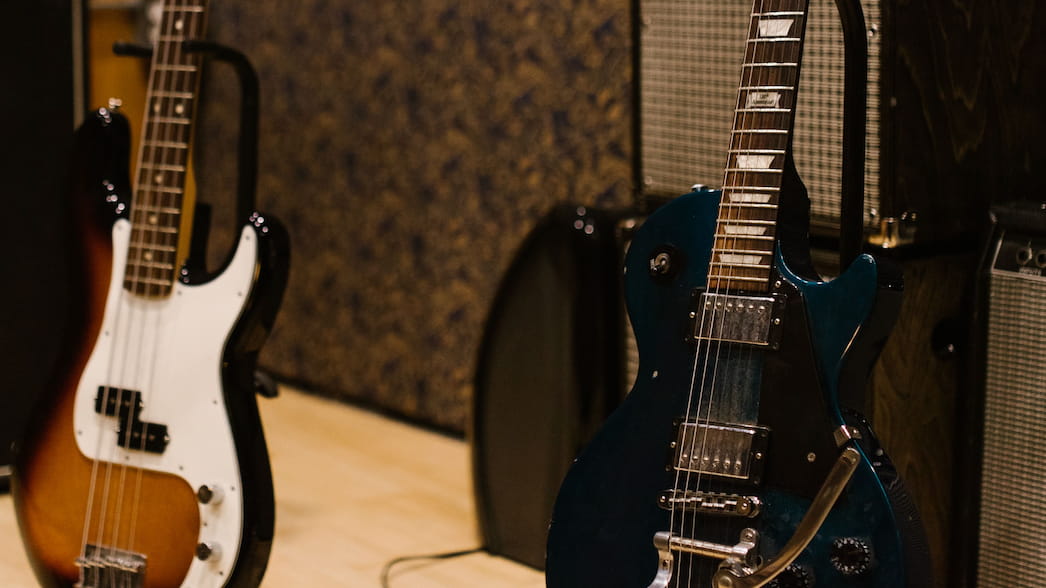
Electric Guitar Vs Bass Guitar
One of the most common questions beginners ask is whether they should learn electric guitar or bass guitar. While they may look similar at first glance, they play very different roles in music.
An electric guitar typically focuses on melodies, riffs, and solos, making it a popular choice for students who want to play well-known songs or express themselves creatively.
A bass guitar, on the other hand, provides the foundation of a song by connecting the rhythm and melody together through lower-pitched notes. Bass guitars usually have four strings compared to the six strings found on most electric guitars, and their playing style is often more rhythm-focused.
For beginners, the choice often comes down to personal preference and musical goals. Students who are inspired by iconic guitar solos and lead parts may naturally gravitate towards electric guitar, while those who enjoy groove, rhythm, and supporting the overall sound of a band may find bass guitar a better fit.
How To Start Learning Electric Guitar Without Burning Out
Step 1: Set realistic goals
Step 2: Learn songs you actually enjoy
Step 3: Focus on progress, not perfection
Step 4: Build a consistent practice routine
Step 5: Challenge yourself with new techniques
Step 6: Celebrate small wins along the way
What To Look Out For When Buying An Electric Guitar
When buying an electric guitar, there are a few things you want to look out for. The first is appearance; while it can be tempting to choose the guitar that looks the coolest, it’s important to consider comfort, weight, neck shape, quality, and overall feel, as it will have a big impact. It’s also important to inspect the electric guitar, checking for any physical defaults like warped or twisted necks, severe fret wear, and nonfunctional truss rods. Other red flags to look out for are structural wood cracks, non-corroded electronics that crackle loudly, and a bridge that cannot be intonated. These issues are often expensive or impossible to repair.
If the electric guitar has any warping down the neck to the body and twisted like a propeller or bowed severely, walk away. The neck should be mostly straight with a slight forward bow.
If the electric guitar has nonfunctional truss rods and the adjusting nut is completely tightened and the neck is still bowed, the guitar has a major structural issue. It’s important to remember that truss roads need to work because it adjusts the straightness of the neck.
Severe fret wear is another thing to look out for. To spot sharp fret ends, run your hands along the edges of the fretboard. If the metal frets are protruding and feel like a cheese grater, it means the wood has dried and shrunk. To distinguish fret wear, look at the first
5 to 7 frets. Deep grooves or flattened wire crowns mean the guitar will need a “fret level” or “refret,” which can end up costing more than a budget guitar.
Honorable mentions to keep another eye out for: crackle and cutout, tuning stability, corrosion, structural cracks, net pocket cracks, and high action.
Many beginners also assume they need expensive equipment to sound good, but in reality, a well-set-up beginner guitar is often more than enough to build strong foundations. An interesting fact is that some professional musicians still perform with relatively affordable guitars because consistency and technique matter far more than price. Before making a purchase, inspect the guitar, consider how the guitar feels in your hands, and whether it encourages you to pick it up regularly. The best electric guitar isn’t necessarily the most expensive one; it’s the one that makes you want to keep playing.
And to further push your motivation to keep playing, it’s important you find the perfect electric guitar teacher in Sydney, as they will help you develop lifelong creativity and be your stepping stones to your music career.
Key Takeaways
The cello is often easier to learn than many beginners expect.
Adults can learn the cello successfully at any age.
Good technique takes time, patience and regular practice.
Consistency matters more than natural talent.
The cello is known for its rich and emotional sound.
Lessons can provide structure, feedback and motivation.
 September 30, 2026
Where Could I Find an Affordable Clarinet Teacher in Sydney?
TL;DR A limited monthly budget can still leave you with options for clarinet lessons in Sydney. Start with the price… September 26, 2026
Where to Actually Look Before You Buy an Instrument
The obvious first search usually isn't the right one. The instinct is almost always the same. A lesson gets booked,… September 23, 2026
What Should I Learn First on Piano? A Beginner’s Step-by-Step Guide
TL;DR Start by learning the keyboard pattern, a small group of notes, finger numbers and a steady beat. Practise a… September 23, 2026
How Much Does Logic Pro Cost for Beginners?
TL;DR Logic Pro is Apple's music production software for Mac. In Australia, Logic Pro for Mac costs $299.99 as a…