

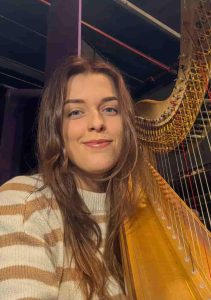
Justina
Ashfield
The harp is one of the most distinctive instruments you can learn, and one of the less commonly taught. It sits at the centre of orchestral music, solo repertoire, and contemporary performance, yet finding a well-qualified teacher has traditionally been harder than for most other instruments.
In the meantime, lessons are available in person in Ashfield or online if you’re elsewhere in Sydney, so you don’t have to be local to get started.
 View Teachers
Harp lessons with our Sydney teacher currently sit around $110 per hour. A few things also move that number when comparing teachers:
Experience: harp tends to run a little higher than more common instruments, reflecting the level of specialisation involved in teaching it well. Qualified harp teachers are harder to find than most, and that expertise is reflected in the rate.
Lesson length: Younger beginners often do well on 30-minute sessions to build focus and foundational habits gradually. Teens and adults generally get more out of 45 to 60 minutes, since there’s more to cover between technique, reading, and repertoire in a single session, and the instrument needs time to warm up properly.
Online vs in-person: Choosing online lessons saves you the cost and time of travelling to a lesson. For an instrument with fewer teachers spread across the city, that flexibility makes a real difference in how accessible lessons actually are.
When you enquire, we’ll get you started with the right format and lesson length for your goals and schedule.
The harp is a physically demanding instrument to learn well, so the format question is worth thinking through properly rather than just defaulting to whatever’s most convenient.
In-person lessons with your teacher right there to watch hand shape, check posture, and catch tension before it settles into habit. For an instrument where early technique matters as much as harp, that level of hands-on correction makes a real difference in the early stages.
Online lessons open things up considerably, being able to learn remotely means you’re not stuck commuting. You get the same structured lesson and expert guidance, just through a screen instead.
When you enquire, let us know which format suits you and we’ll get you set up accordingly.
String dampening taught hands-on, since controlling which notes ring and which stop is a physical skill
Lever or pedal changes observed live, so timing and foot coordination get corrected as they happen
Harp size and bench height assessed in person, which matters more for this instrument than most
Easier to hear dynamic subtleties that a microphone tends to compress or flatten
Better for younger students who need physical prompts to understand where their hands should sit
Your teacher can demonstrate directly on the instrument next to you, not through a screen
Useful for performance prep, where the physical experience of playing in front of someone matters
Posture and relaxed hand position
Finger placement, tone, and clean release
Right-hand and left-hand coordination
Rhythm, timing, and steady tempo control
Arpeggios, broken chords, and harp patterns
Lever changes or pedalling (where relevant)
Dynamics, phrasing, and musical expression
Reading music across both staves confidently
It’s very learnable for beginners, especially because you can make a pleasant sound early on. The tricky part is building a relaxed hand shape, clean finger release, and reading both hands together – that’s where good guidance makes progress feel much easier.
Harp lessons can be pricier than some instruments because qualified harp teachers are less common, and some lessons involve travel (or specialised gear). The good news is you don’t need a concert pedal harp to start – many beginners begin on a lever harp and still make strong progress.
You can learn basics from videos, but most self-taught players hit the same roadblocks: tension, messy tone, awkward hand position, and slow reading progress. A teacher fixes those early, so your technique stays comfortable and you don’t spend months practising the wrong thing.
Most beginners start on a lever harp (often 34–36 strings) because it’s more affordable and straightforward. Pedal harp is usually best if you’re specifically aiming for orchestral/classical repertoire long-term, but it’s not required to begin.
No – pedal harps have seven pedals for quick key changes, while lever harps use levers on individual strings. Many students start on lever harp and later transition if their repertoire needs pedals.
A common starting point is 34–36 strings because it gives you enough range for most beginner-to-intermediate pieces without being overwhelming. Smaller harps can still work, but you may outgrow the range sooner.
Tuning becomes routine quickly – most students can do it confidently after a little practice. As a guide, tune each time you play (or at least a few times a week), because harp strings respond to temperature and humidity changes.
Standard harp technique mainly uses fingers 1–4 because the pinky is shorter and weaker, which can create tension and uneven tone. In lessons, you’ll learn efficient fingering patterns so the hand stays relaxed and the sound stays consistent.
Your fingertips may feel tender at first, but it should not be sharp pain. Some players develop mild callusing over time; proper technique, gradual practise, and sensible session lengths keep your hands comfortable.
You can get started on YouTube, but most self-taught players hit the same wall. If you want quicker progress (and fewer bad habits), even fortnightly harp lessons can save you a lot of wasted practice.
For young beginners, 30 minutes can work well for consistency – but most teens and adults progress faster with 45–60 minute harp lessons, because you need time for technique, reading, and repertoire in the same session. If you’re serious about steady improvement, 60 minutes is usually the sweet spot.
Most students who start young begin around 6–8 years old, once they’re big enough to sit comfortably and coordinate both hands. That said, harp is very common as an adult-beginner instrument too – it’s never “too late” to start, and we can match you with a teacher and harp size that suits your age and goals.
Justina was incredibly attentive and meticulous in her teaching approach, and her ability to pinpoint areas that needed improvement in my daughter’s playing was truly commendable. We were thoroughly impressed with her passion for the harp.
Justina gave me several harp lessons when I was starting out on my lever harp. As a teacher she is incredibly friendly, fun and motivating – the lessons were really enjoyable. At the same time Justina is incredibly detailed, patient and knows her subject to the core. Managed to spot errors and fix problems even before they arose.
It gave me confidence that I am trusting myself in the hands of a true professional harp teacher.
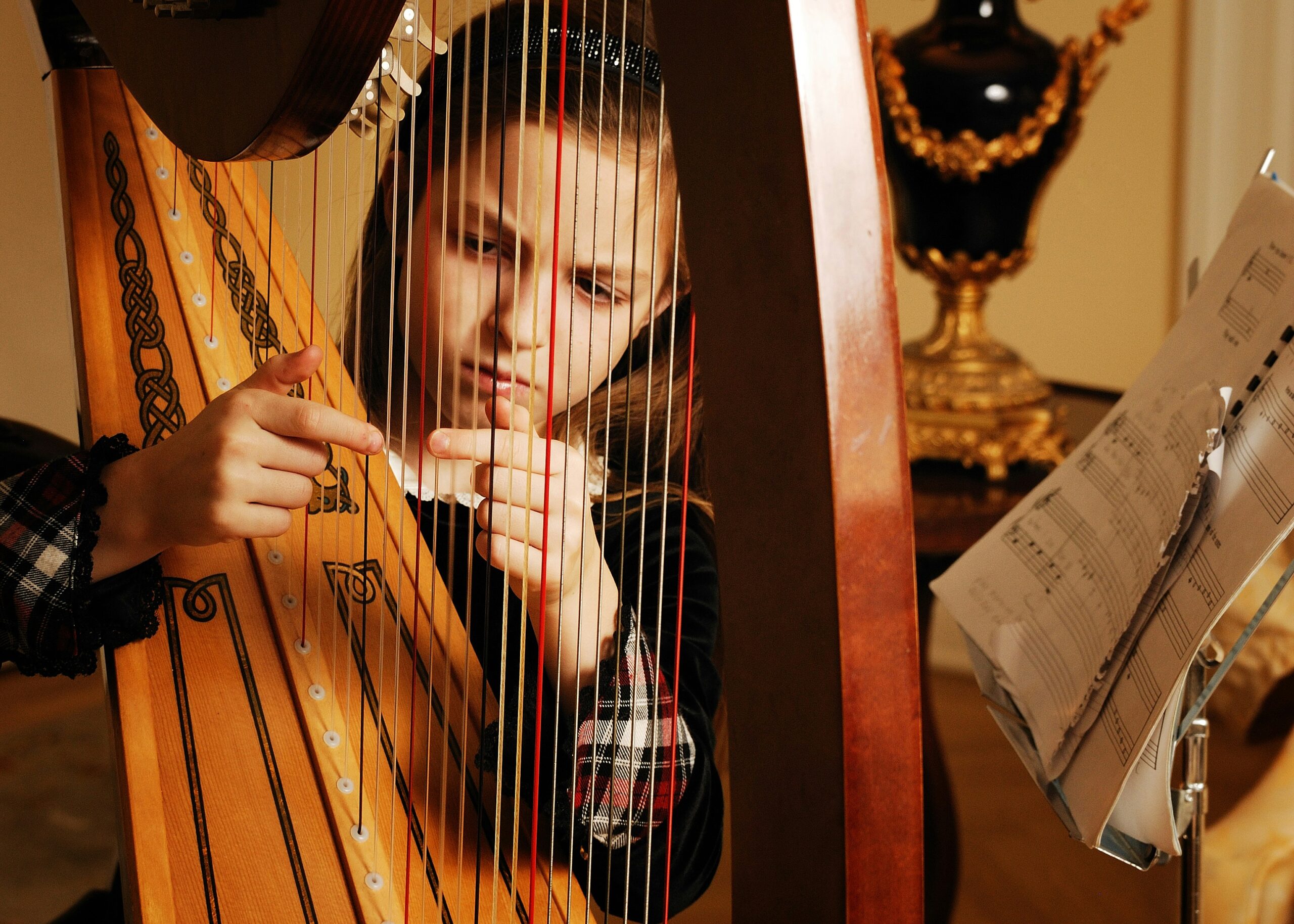
The first thing most people notice about harp is how physical it is before you even play a note. Where you sit, how the instrument leans, how your arms and wrists are positioned all matters before a single string gets plucked. Early lessons sort all of that out first, so you’re not building technique on a shaky foundation. From there you’ll get your first clean tones, learn basic finger patterns, and start playing simple melodies that actually sound like something.
Typical focus: bench and harp positioning, hand shape, clean tone production, basic finger patterns, first melodies